Dolphin Coloring Pages
Free printable dolphin coloring pages featuring leaping bottlenose dolphins, playful pods, baby dolphins, and detailed wave mandalas.
Create a Custom Coloring Page
Describe what you'd like and we'll generate it free, no account needed
Family-friendly only · 1 free per day
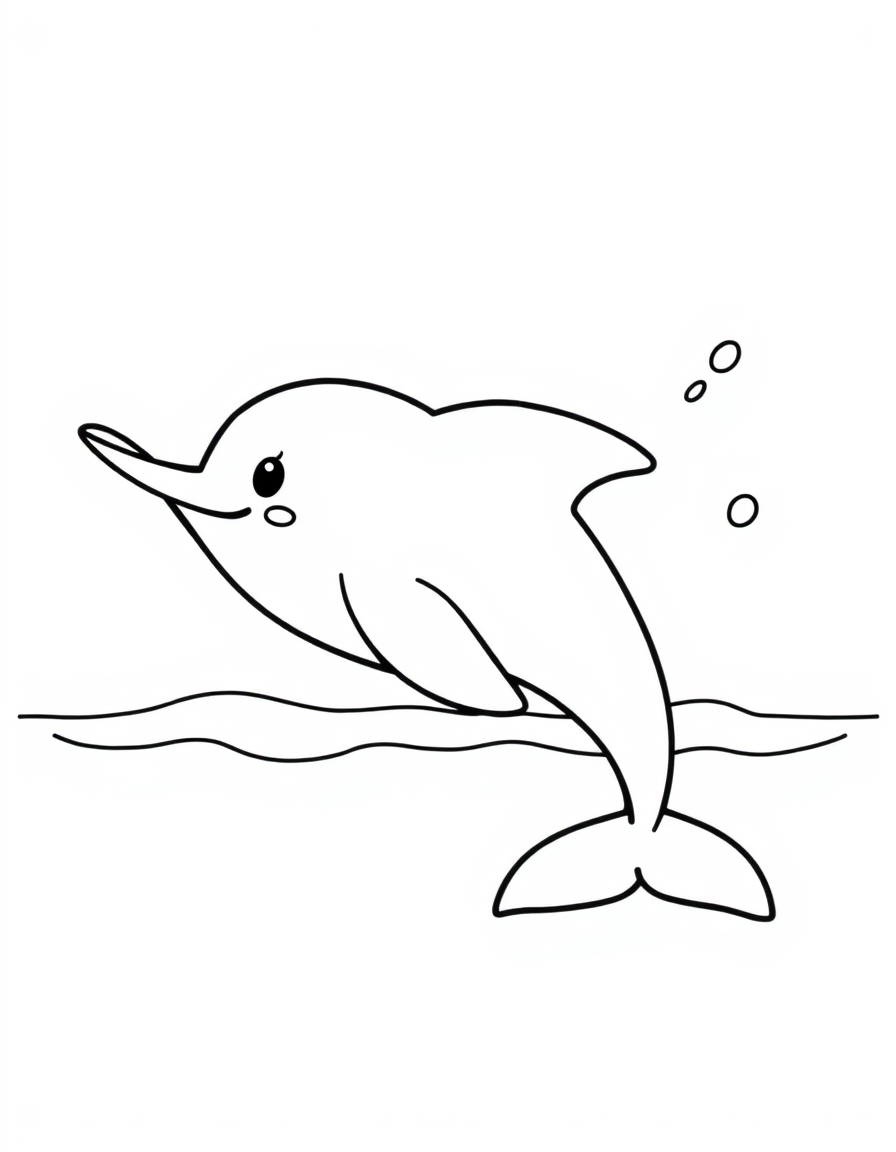
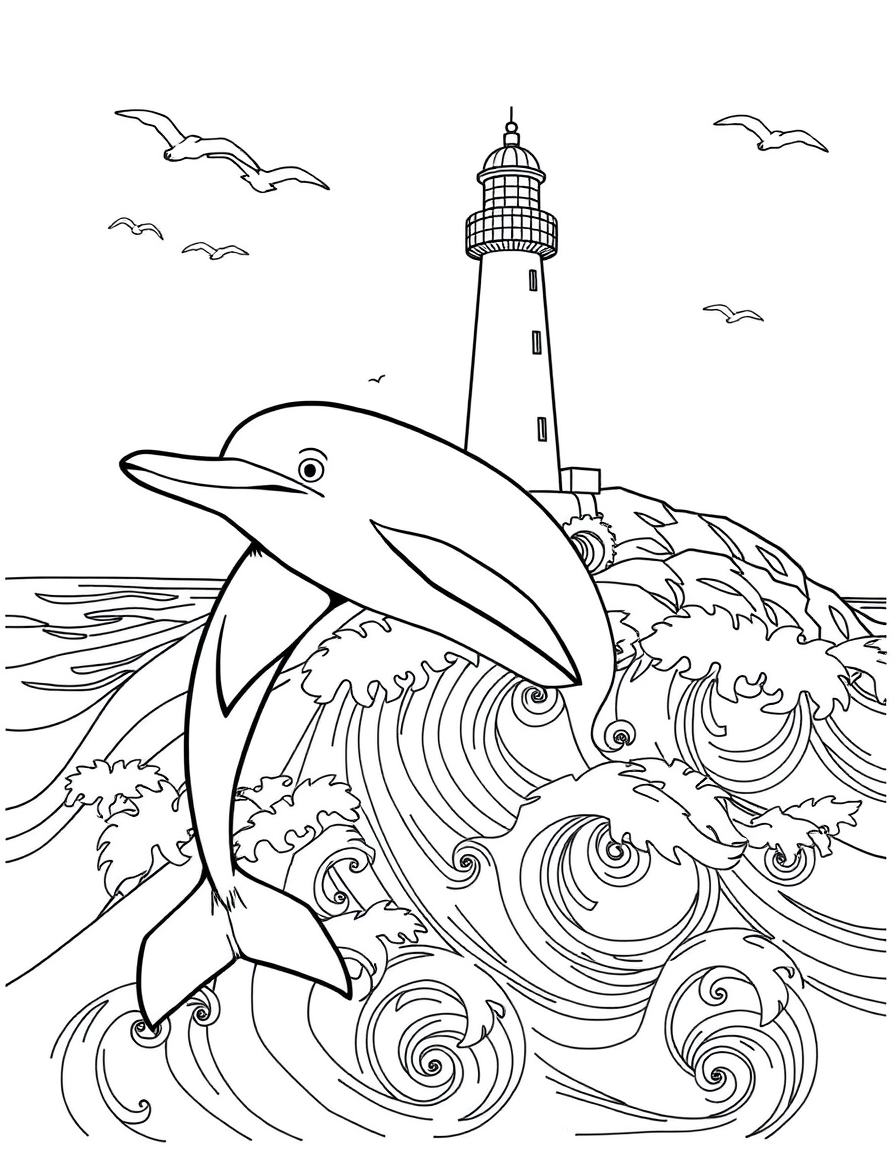
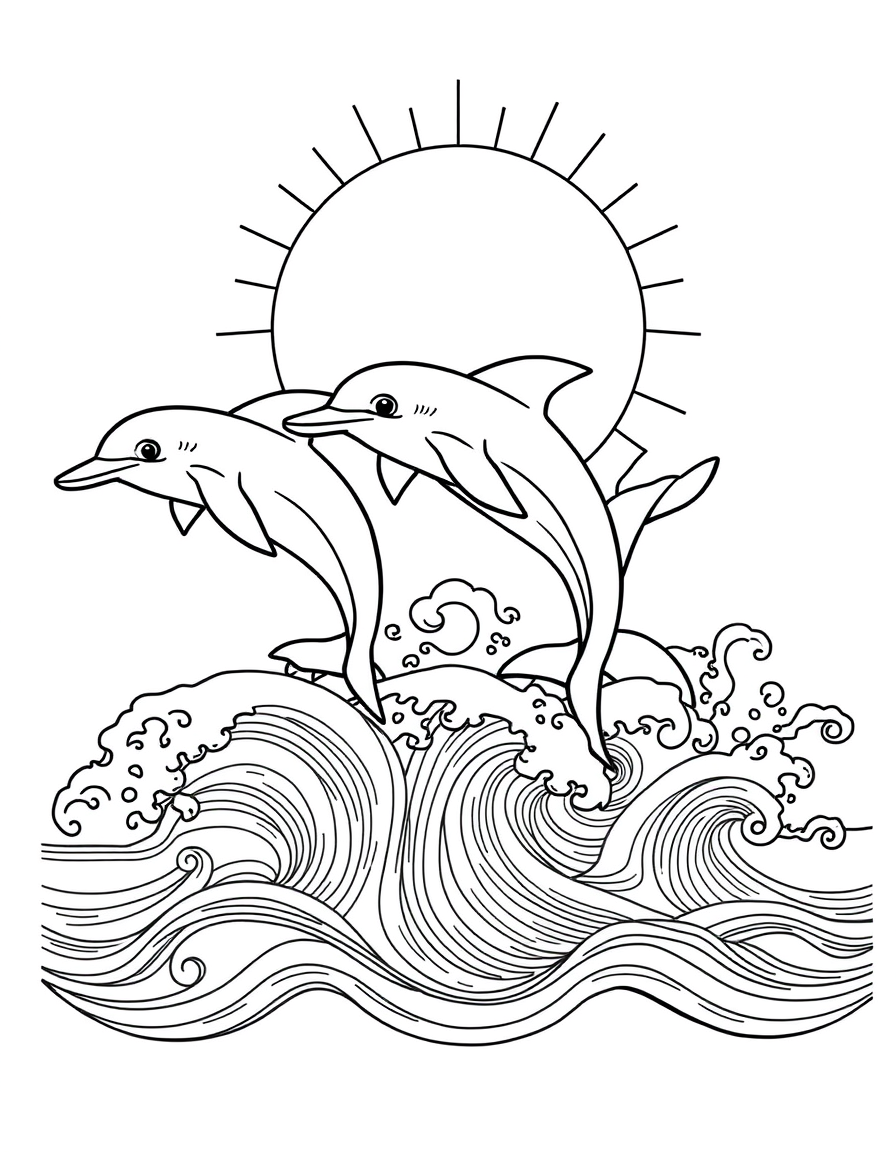
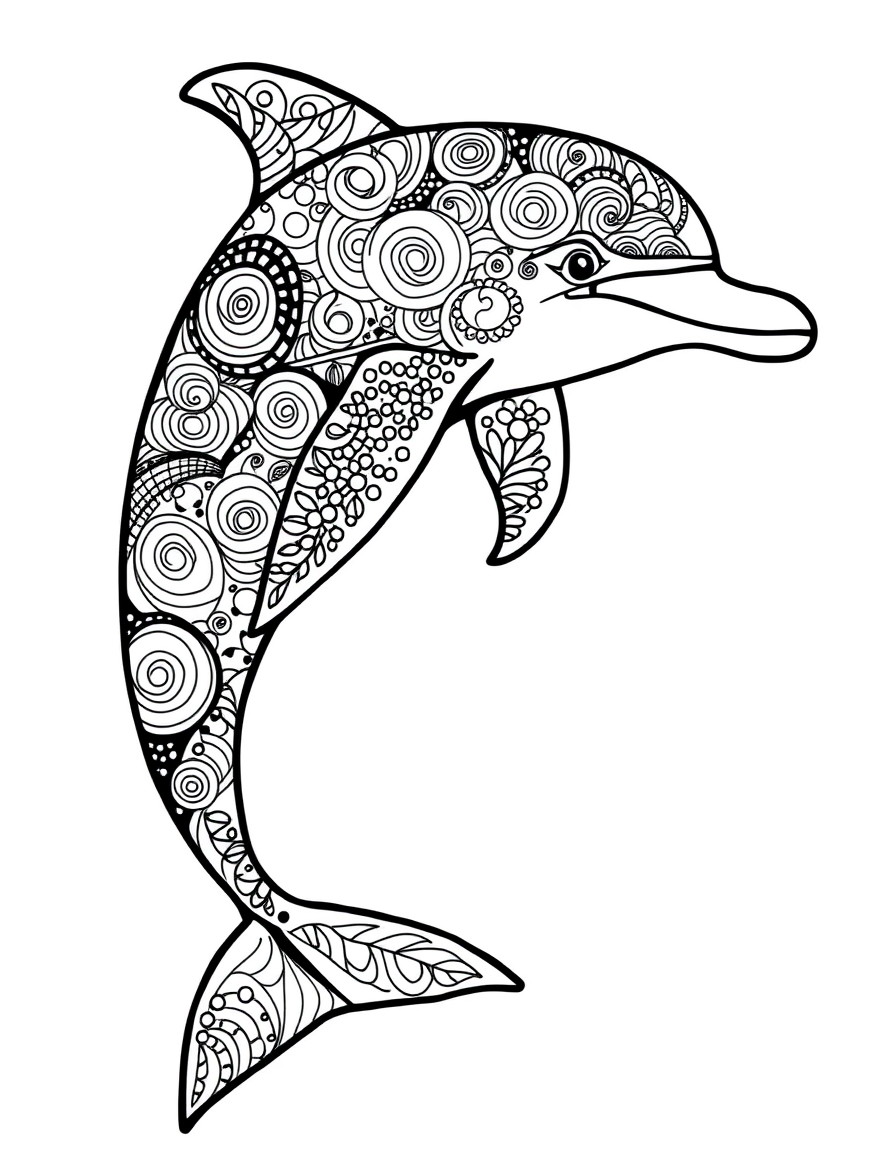
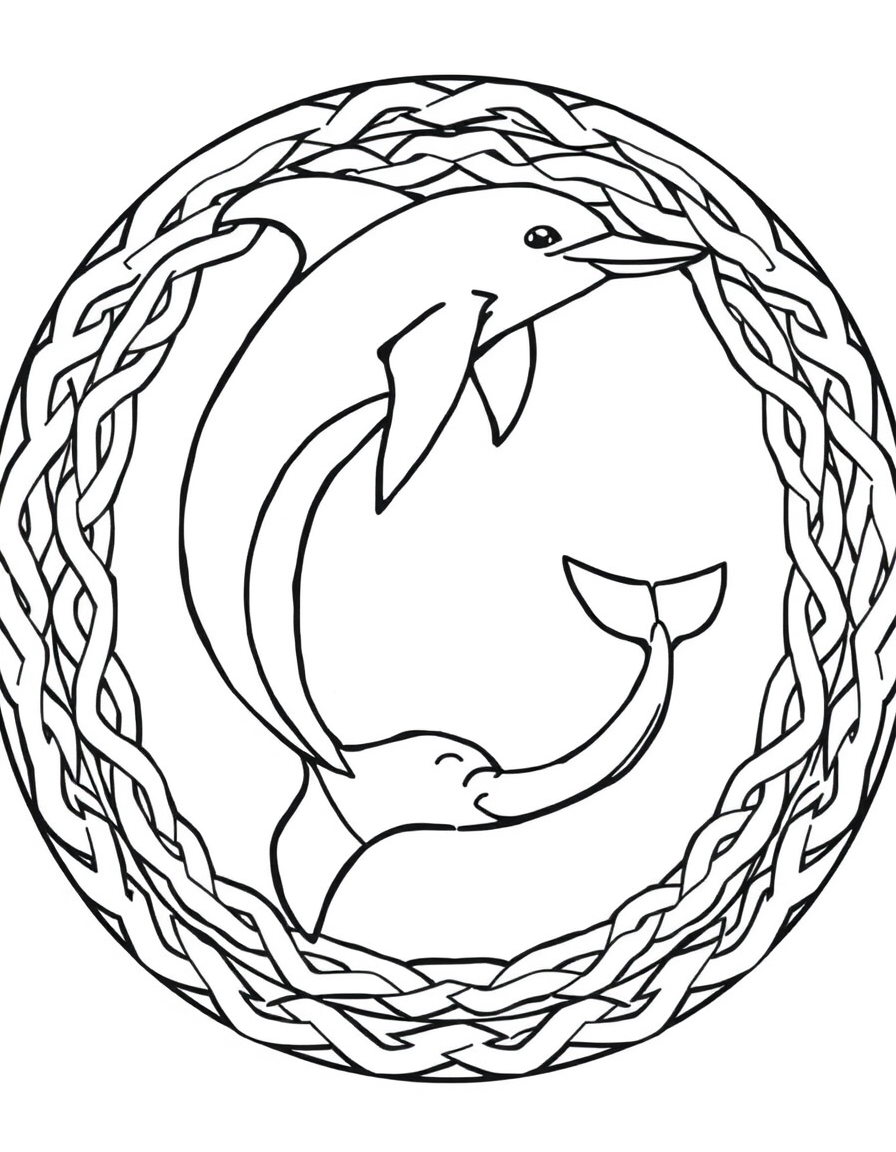
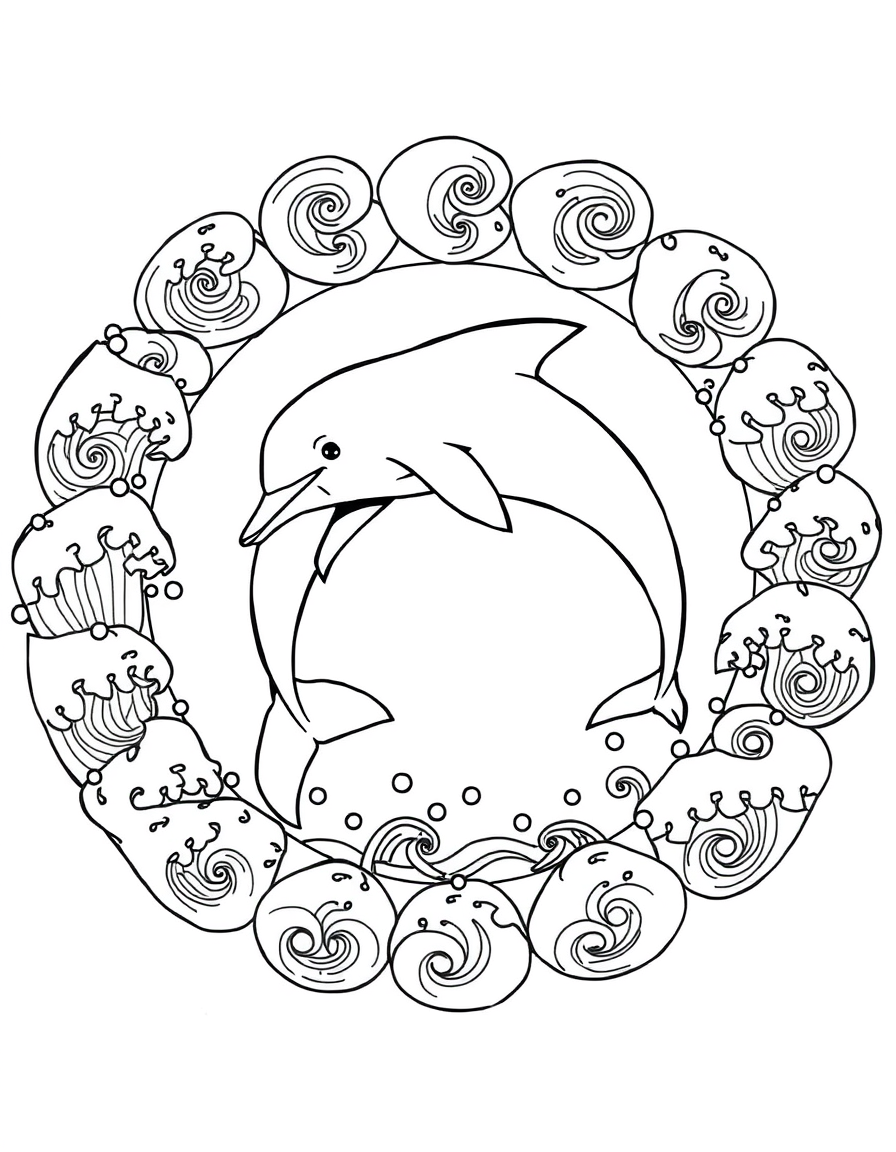
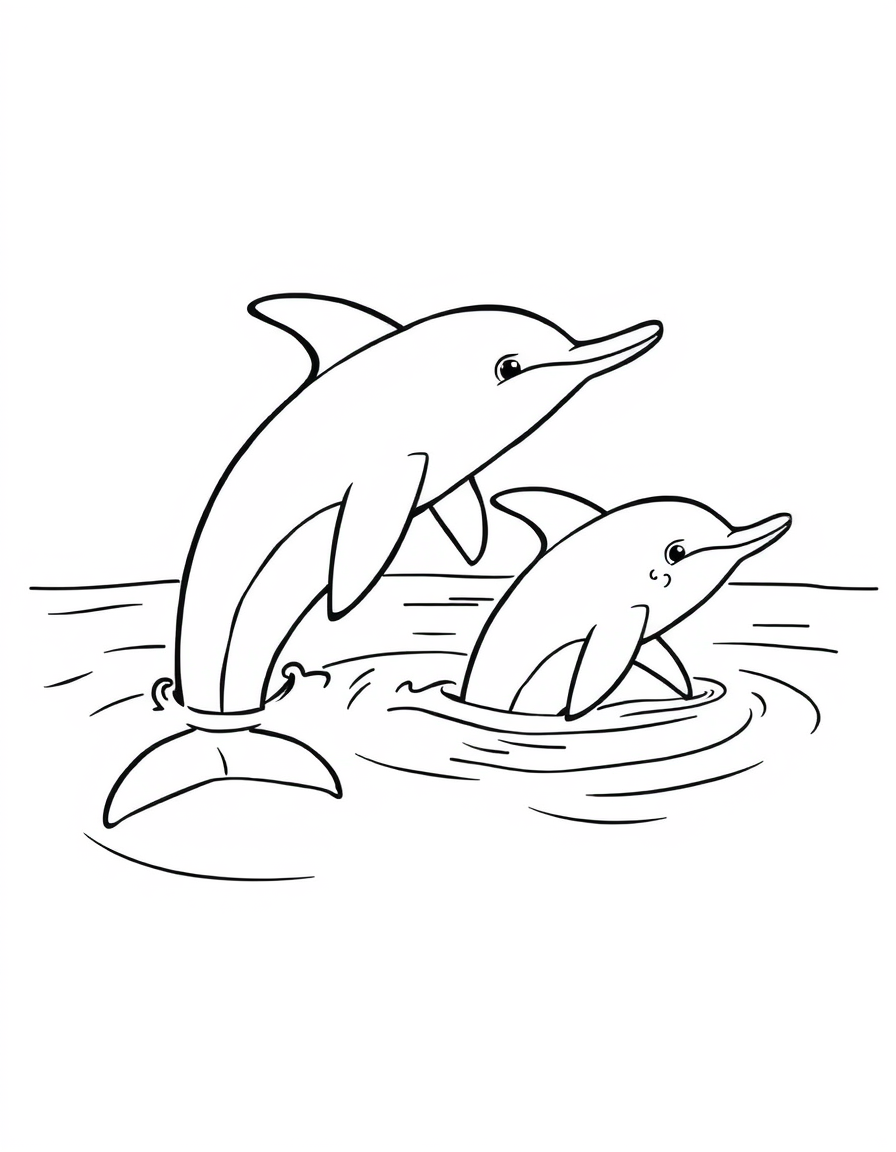
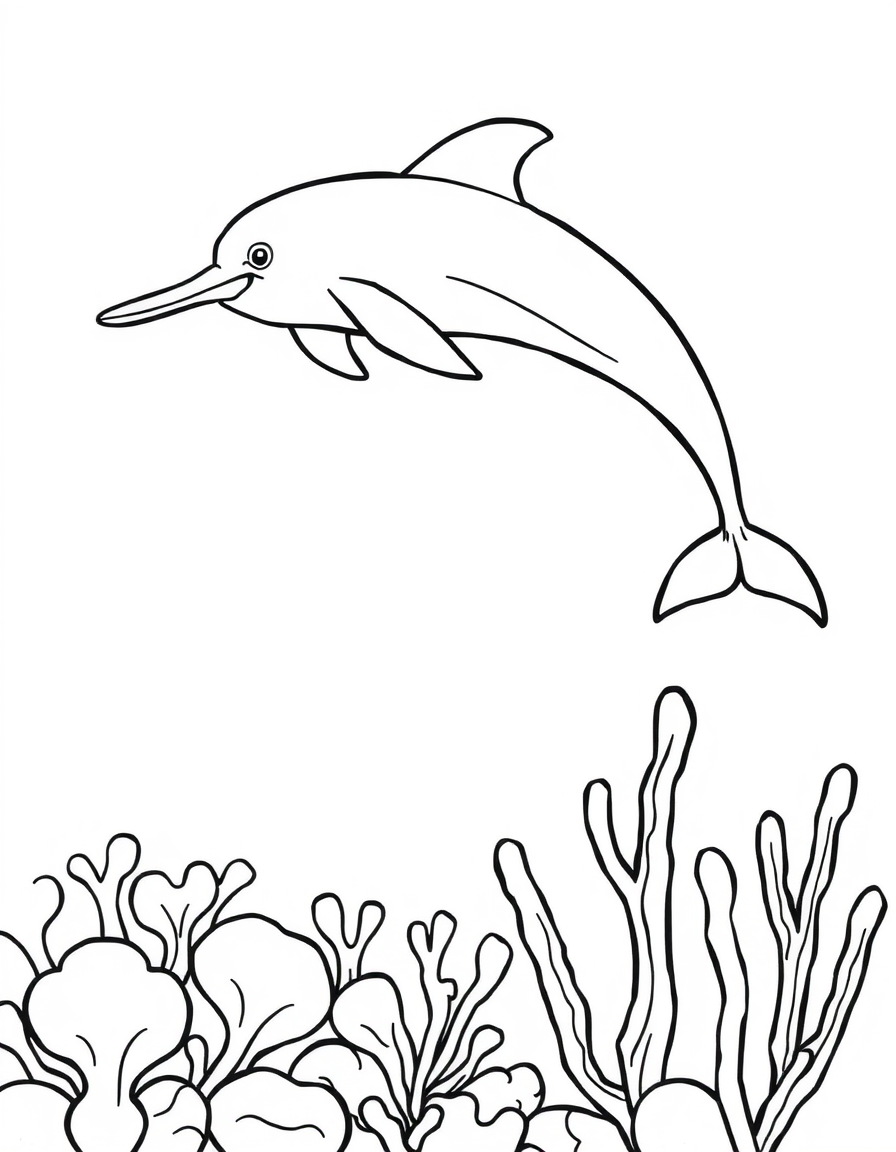
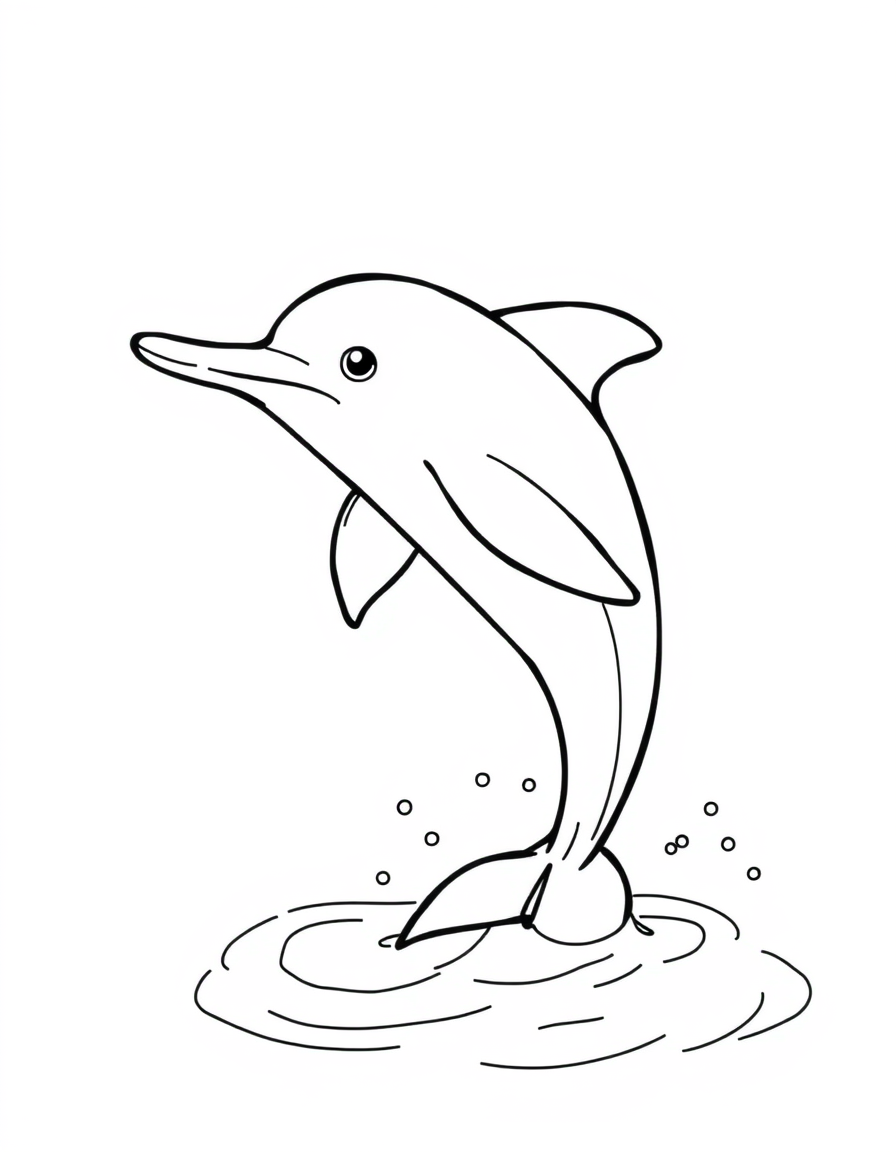
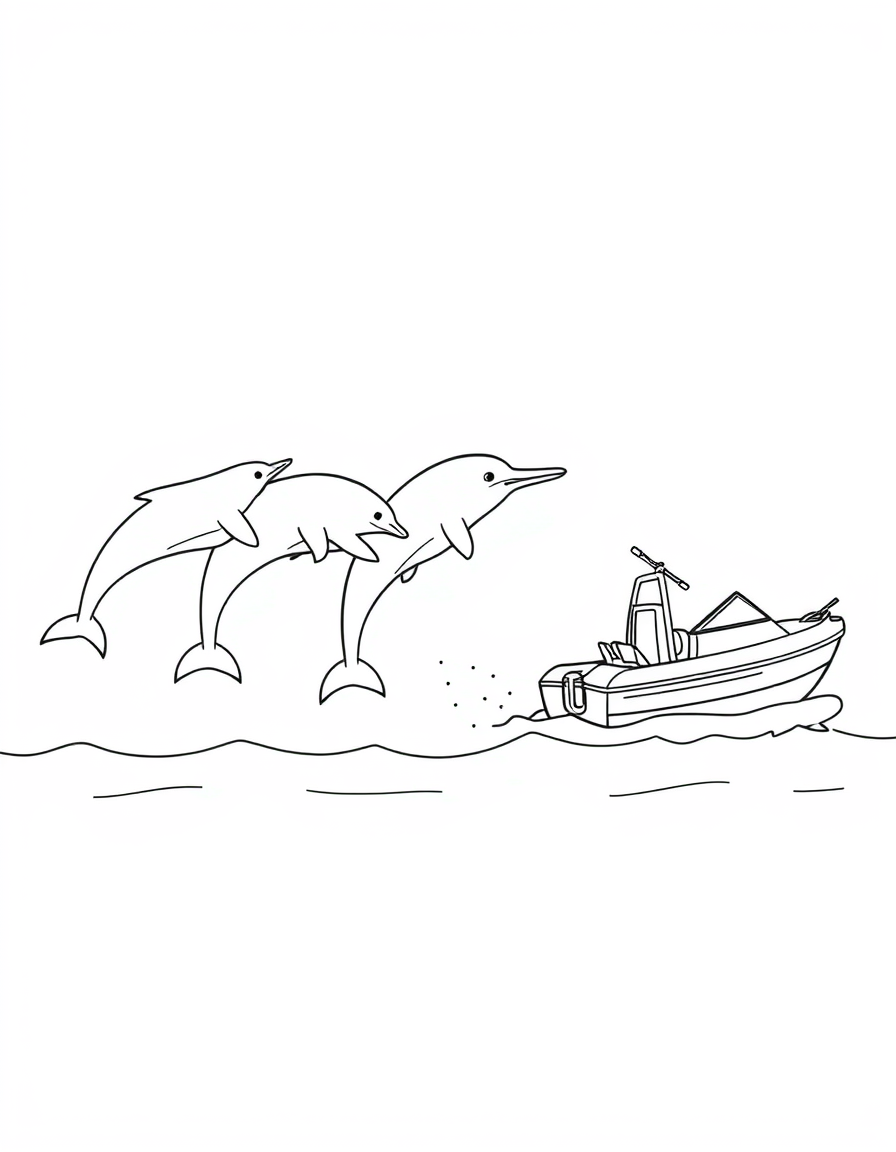
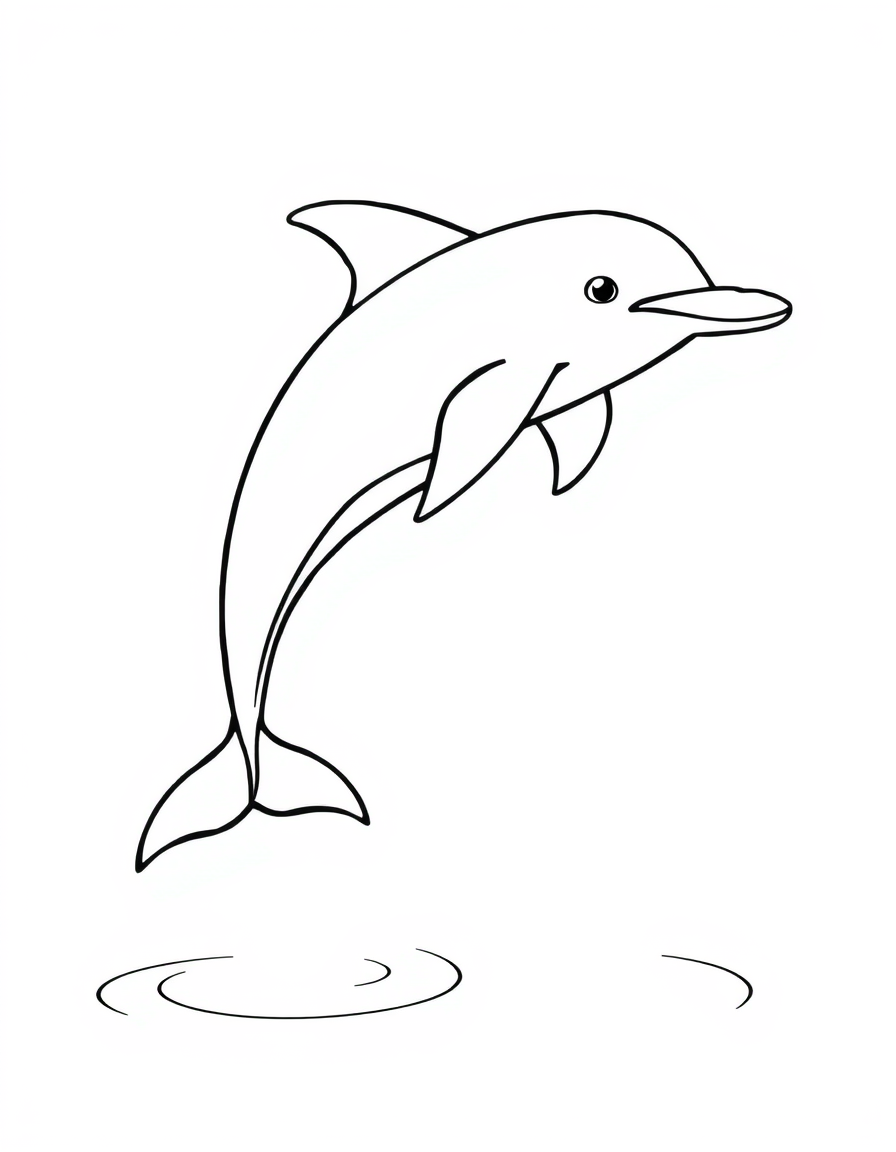
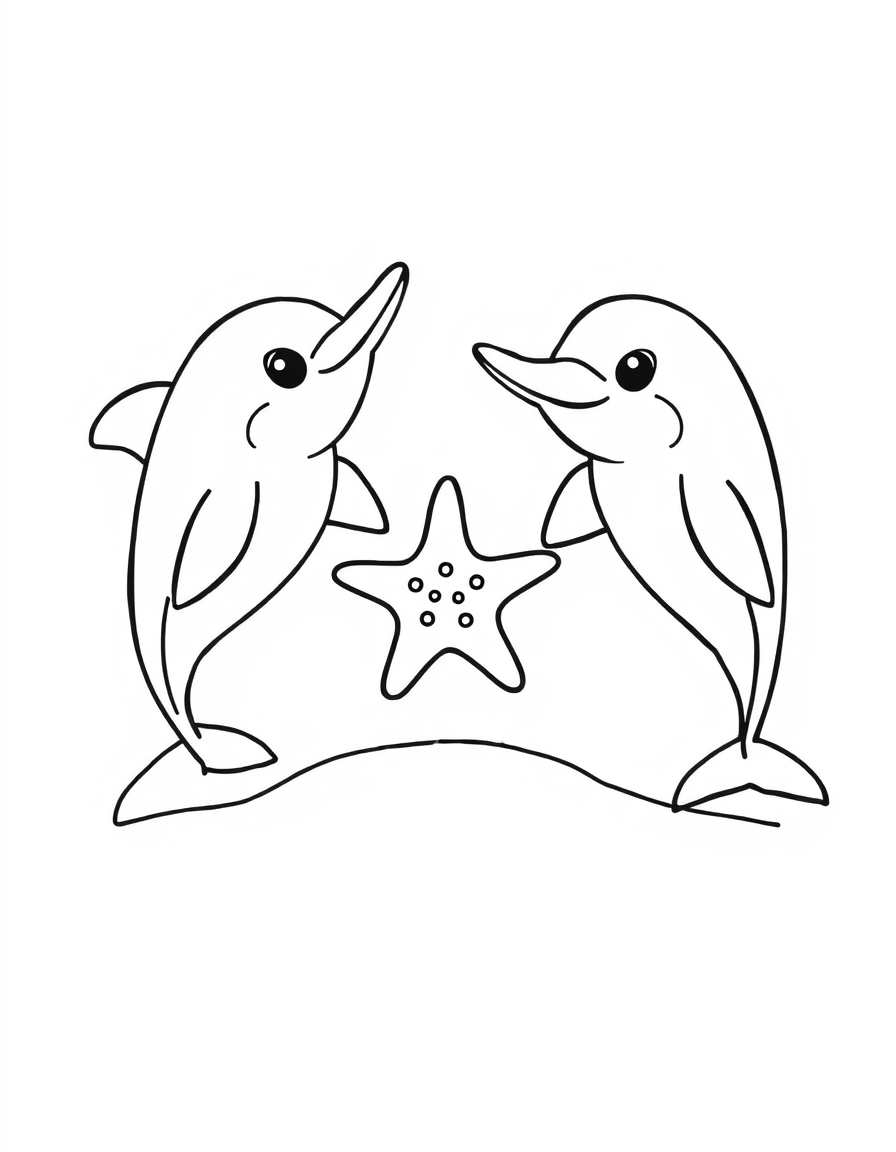
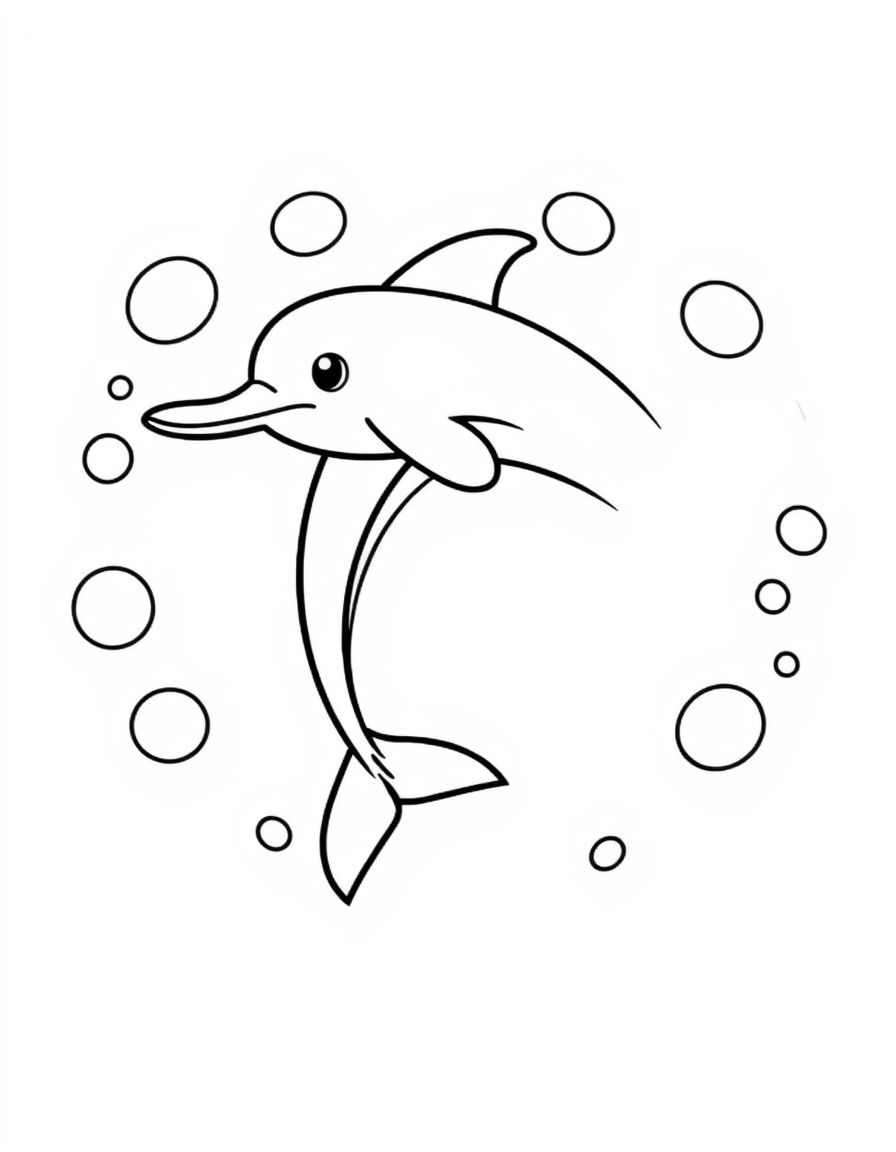
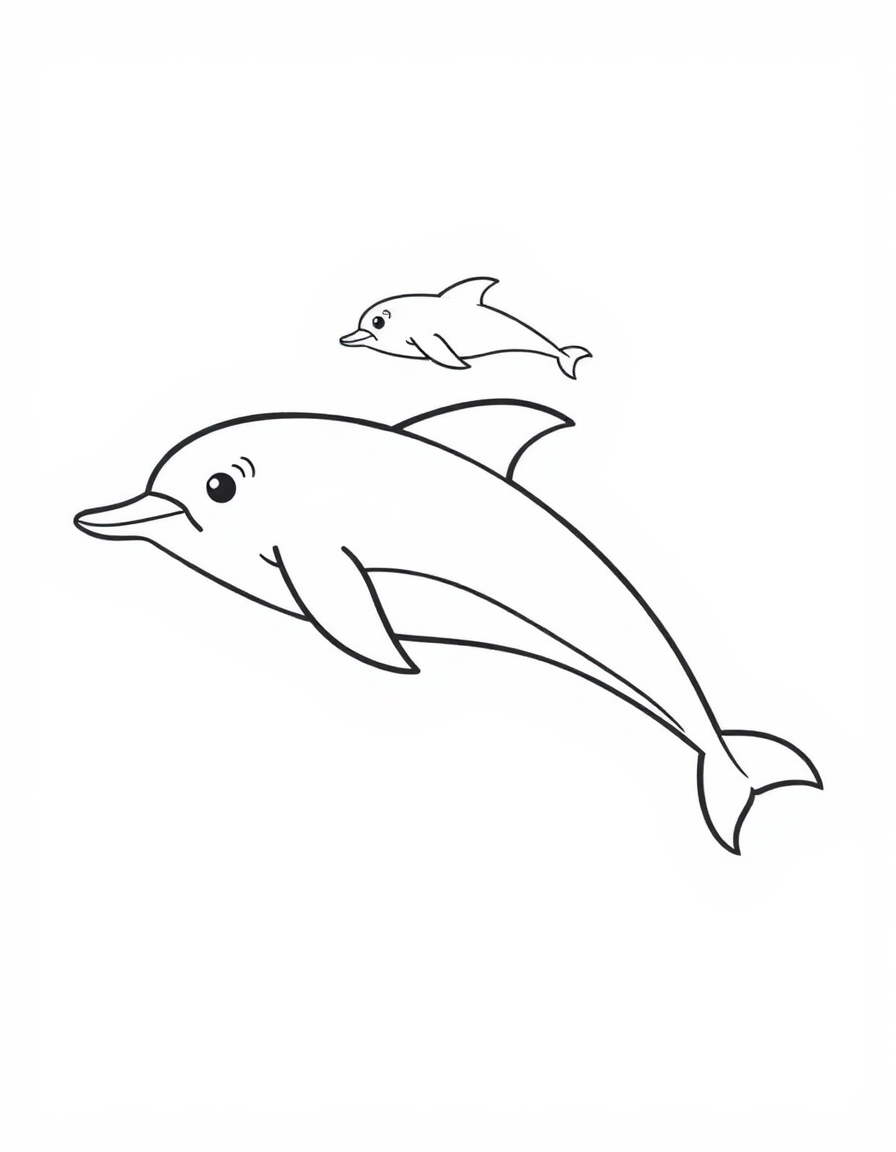
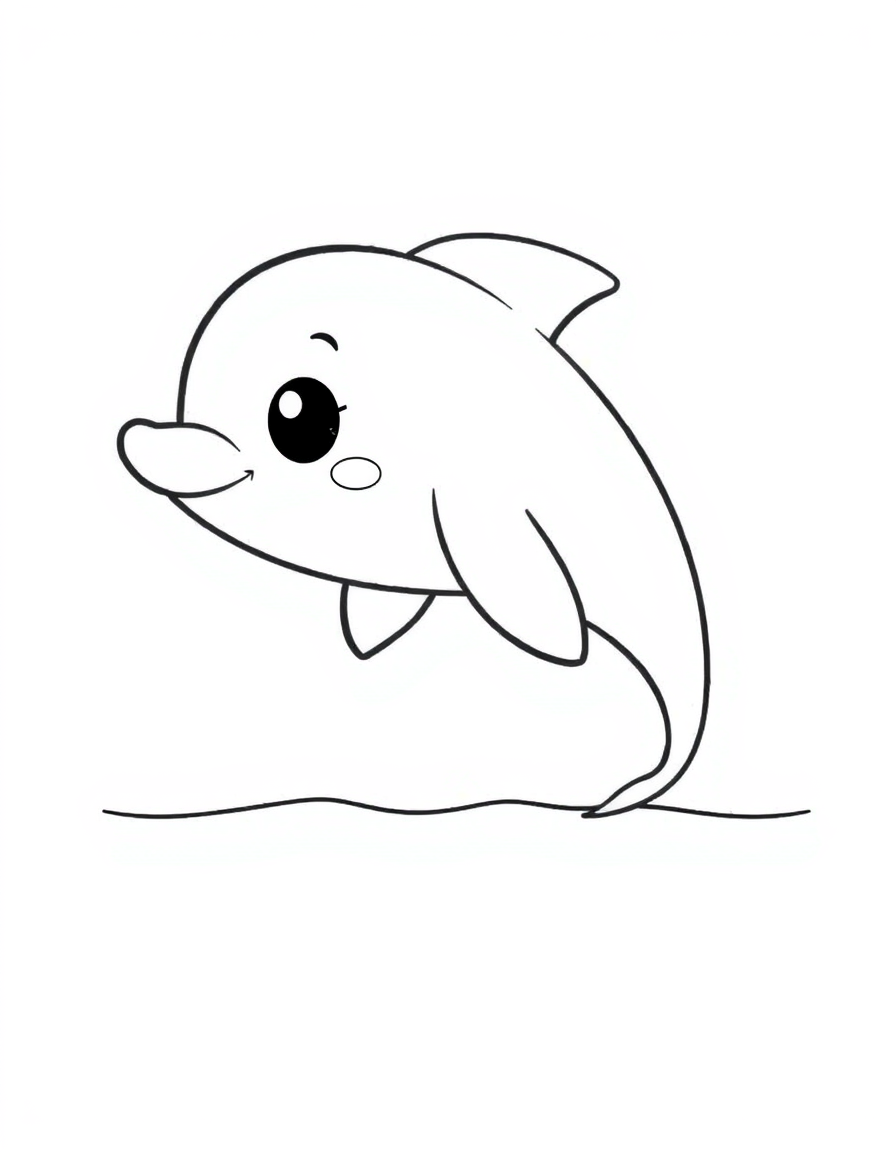
Dolphins are the rare wild animal that looks like it is enjoying itself, and that comes through in line art. Every sheet on this page is a free printable dolphin coloring sheet you can download as a PDF and print at home on ordinary paper. There are fifteen designs here, and they are deliberately split three ways, because a five year old and a parent who colors to unwind want very different things from the same animal.
Simple sheets for younger children
Five designs use big rounded shapes, thick outlines and almost no interior detail. These are the cute baby dolphin coloring pages: a smiling baby dolphin lifting its head above a single wave line, a mother and her calf swimming side by side, a dolphin leaping through a ring of bubbles, two cartoon dolphins playing over a starfish, and a dolphin slapping its tail flat onto the water.
Nothing on these five needs a fine tip. A four year old can fill the body with one crayon and still finish with something worth taping to the fridge. The ring of bubbles sheet is the one to reach for if you want a child to practice staying inside a small circle, since the bubbles give twelve little targets around an easy central shape.
Dolphins the way they really look
The middle five are drawn from real anatomy rather than cartoon proportions. A bottlenose leaps clear of the water in a high arc, which is the classic dolphin jumping coloring page most people picture when they search for one. A pod rides the wake behind a small boat. A spinner dolphin rises nose first out of the surface. One dolphin cruises above a coral reef, and an adult surfaces beside its calf to breathe.
These reward a little patience and suit roughly ages eight and up. The bodies are large and open, so they still color quickly, but the flippers, flukes and dorsal fins are shaped correctly and the reef sheet gives you something textured to work into.
Detailed sheets for adults
The last five carry dense line work and take real time. A dolphin arcs inside a mandala ring built from curling wave crests. Two dolphins circle nose to tail inside a braided Celtic knot border. One sheet fills an entire dolphin with zentangle spirals, dots and leaf shapes. A pod leaps beneath a sunburst over layered wave scrolls, and a dolphin jumps past a lighthouse in heavy rolling surf.
The zentangle dolphin and the Celtic knot are the two longest sits here. Either will absorb a couple of hours, and both look best with a limited palette repeated around the design rather than a different color in every cell.
Getting the color right
Most people reach straight for gray, and the animal is more interesting than that. Bottlenose dolphins are counter shaded, meaning they run dark on the back and fade to near white underneath, which is camouflage that works from above and below at once. Blend from a deep blue gray along the spine down to a cream or bare paper belly and the body immediately reads as three dimensional instead of flat.
Water is where these sheets are won or lost. Leave the foam and the droplets as bare white paper. If you color every wave line, the splash disappears and the dolphin looks like it is lying on a patterned rug. On the lighthouse and sunburst sheets, try keeping the sky pale and pushing your darkest values into the water, which throws the animal forward.
More line art in this direction: Ocean Animals, Sharks and Summer.
Frequently Asked Questions
Why do the mother and calf sheets show stripes on the baby?
Newborn dolphins arrive with fetal folds, a set of pale vertical creases along the body left over from lying curled up inside the mother. They fade within a few weeks to a few months as the calf straightens out, so they are a genuine mark of a very young animal. On the mother and calf sheets, color the folds a shade lighter than the surrounding body rather than outlining them darker, which is how they actually catch the light.
Do dolphins really ride behind boats, or is that just an illustration?
They really do it. A moving hull pushes a pressure wave ahead of it, and a dolphin that slots into that wave gets carried along without swimming, in much the way a surfer is carried by a breaking swell. Bottlenose dolphins bow ride for long stretches and appear to do it for no reason beyond that it works and costs them nothing. That is the behavior drawn on the boat wake sheet.
How does a spinner dolphin spin, and how many times?
A spinner dolphin builds rotation underwater, then breaks the surface and keeps turning on its long axis while airborne. Individuals have been recorded completing about seven full rotations in a single leap before landing. The sheet here catches the animal at the start of the move, rising nose first, which is the moment the spin begins.
Are dolphins fish?
No. Dolphins are mammals. They breathe air through a blowhole on top of the head, give birth to live young, and nurse their calves. That is why the surfacing sheet matters more than it looks: a dolphin has to come up and take each breath deliberately, so it never fully falls asleep. It rests one half of its brain at a time and keeps the other half awake to keep breathing and watching.
Which sheet should I print first for a young child?
Start with the smiling baby dolphin above the water. It is the simplest design on the page, with one large body, one wave line and no background to negotiate. The two dolphins with the starfish is a good second, because the starfish gives a small separate shape to finish once the two big bodies are done.