Deer Coloring Pages
Free printable deer coloring pages featuring bucks, does, fawns, antler patterns, and woodland forest scenes.
Create a Custom Coloring Page
Describe what you'd like and we'll generate it free, no account needed
Family-friendly only · 1 free per day
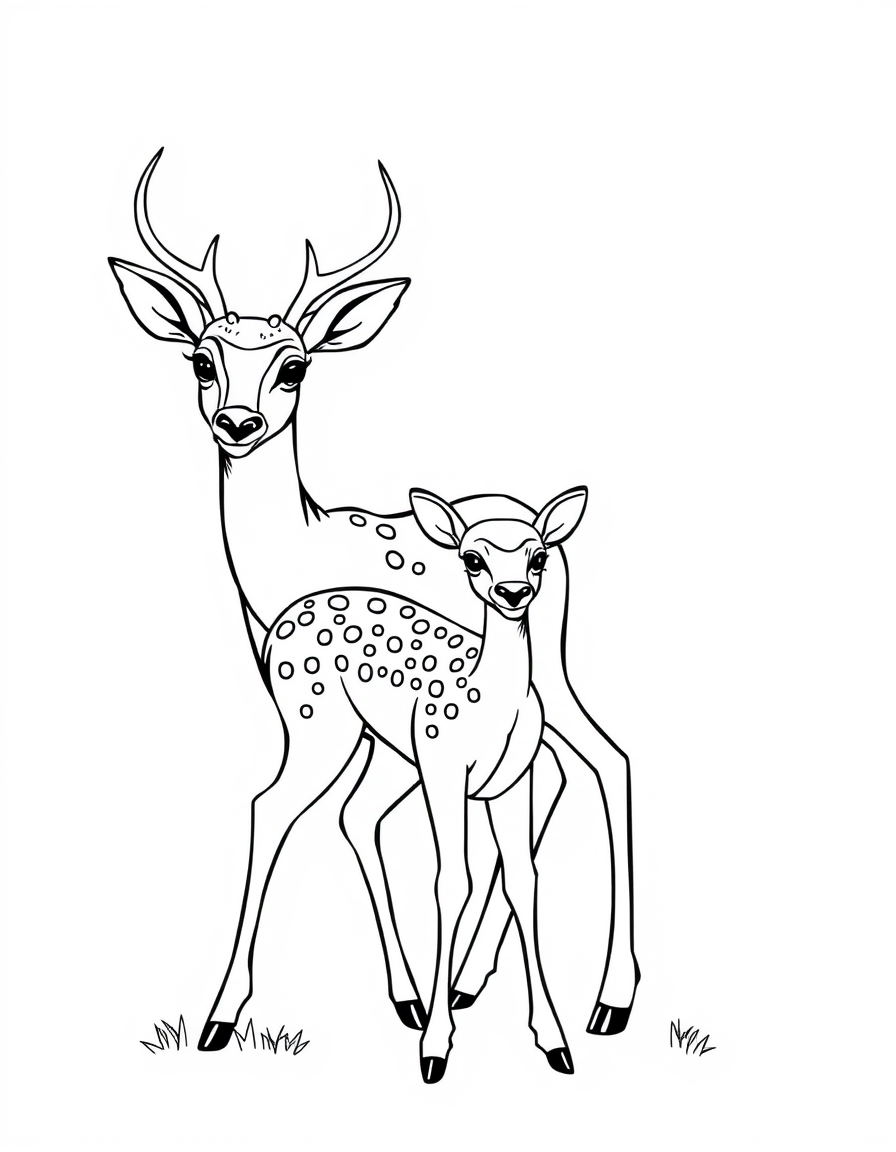
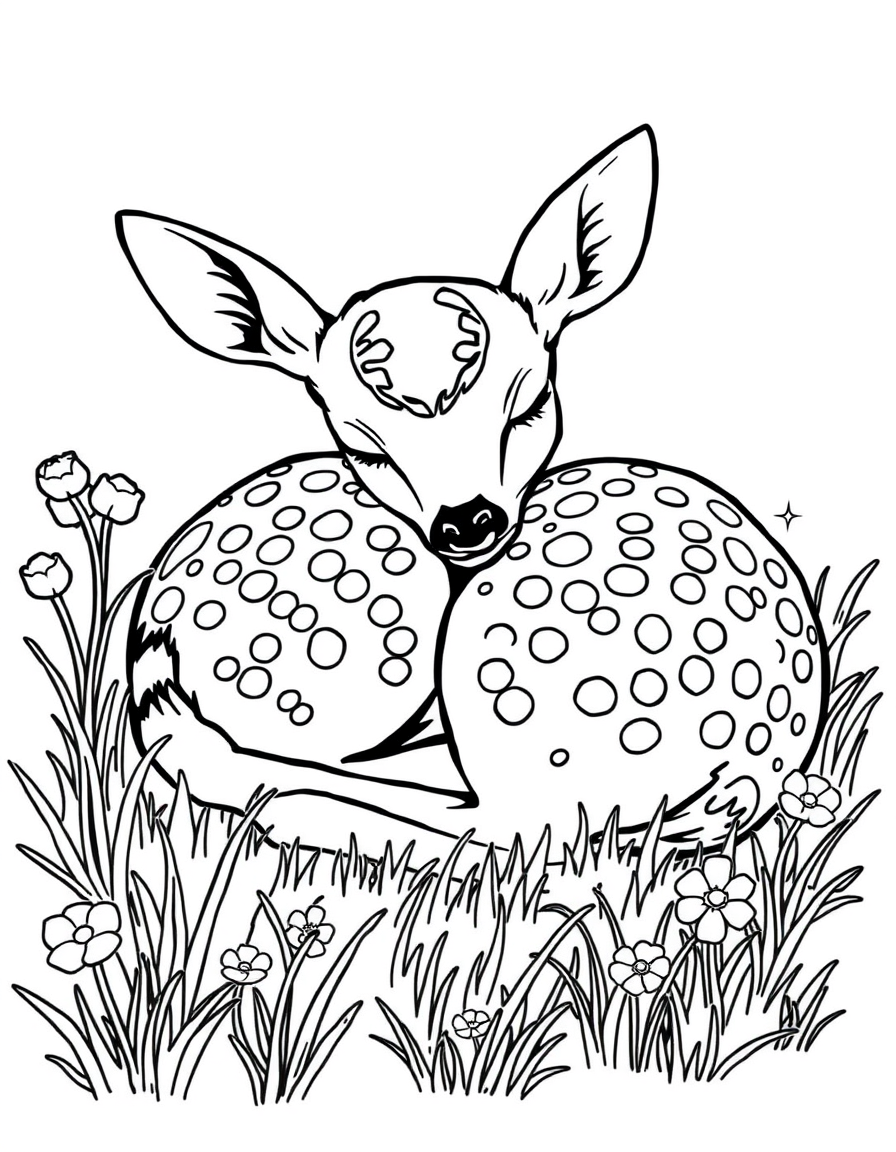
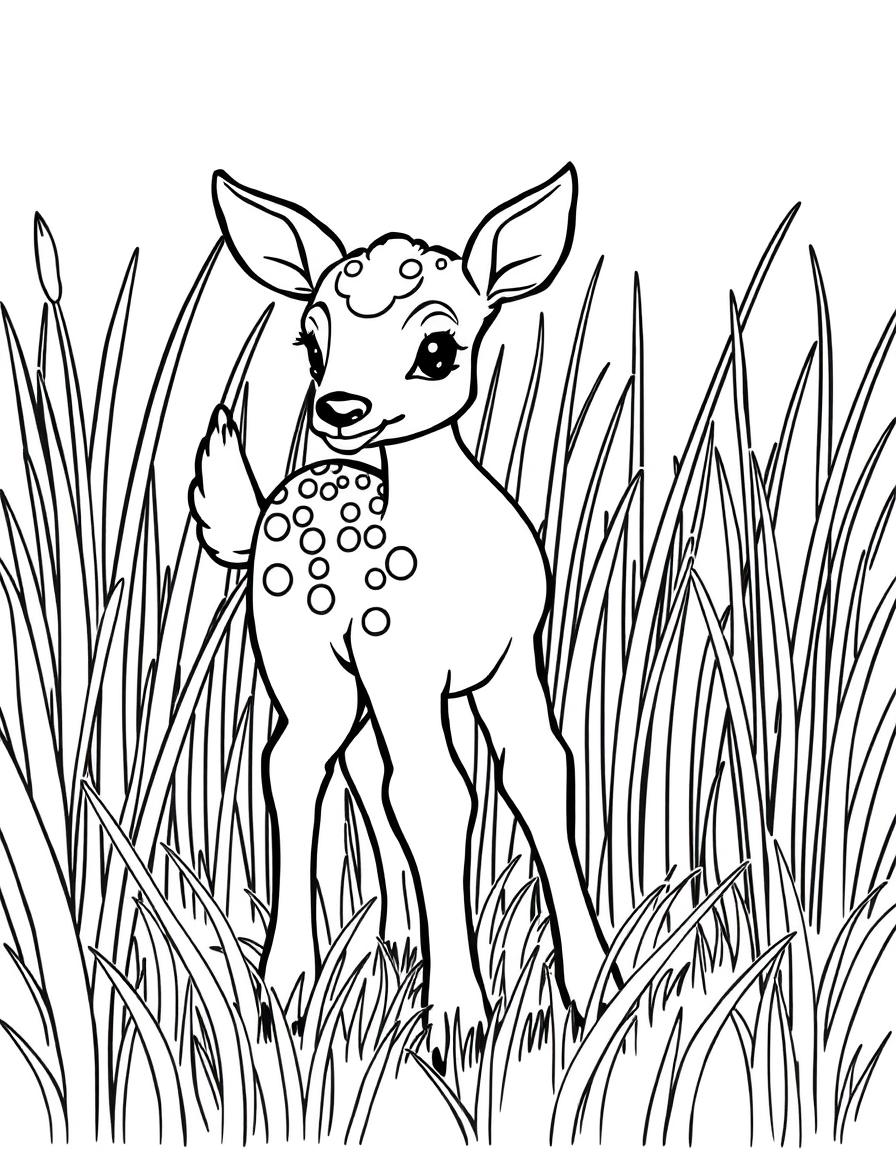
A deer holds still. That is the whole reason the subject works as line art, because the ears, the legs and the antlers stay put long enough for an artist to draw every edge cleanly, and the colorist gets a calm shape to work inside. These 15 deer coloring pages split three ways: simple fawn outlines for young children, realistic buck and doe scenes for steady hands, and antler and mandala detail for adults. Every design downloads as a free printable PDF sized for US Letter paper, 8.5 by 11 inches.
What Is in the Collection
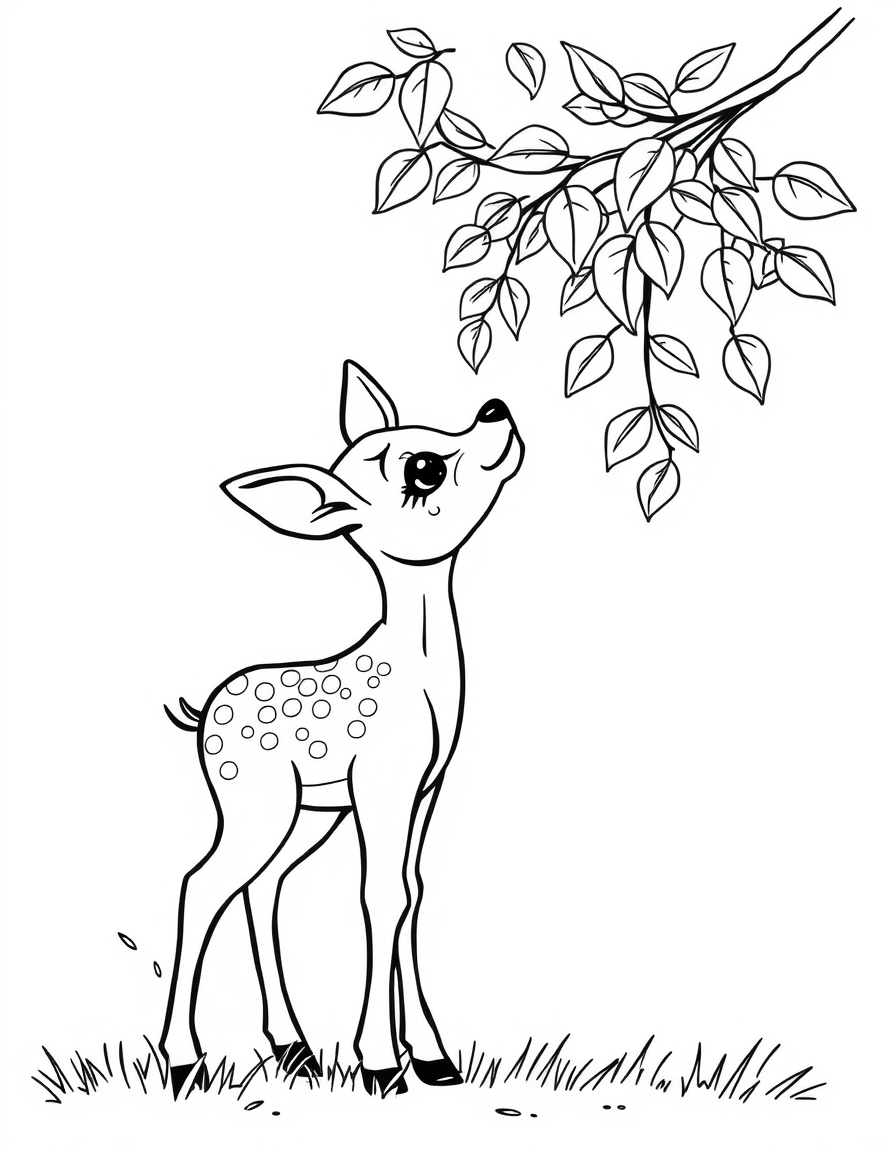
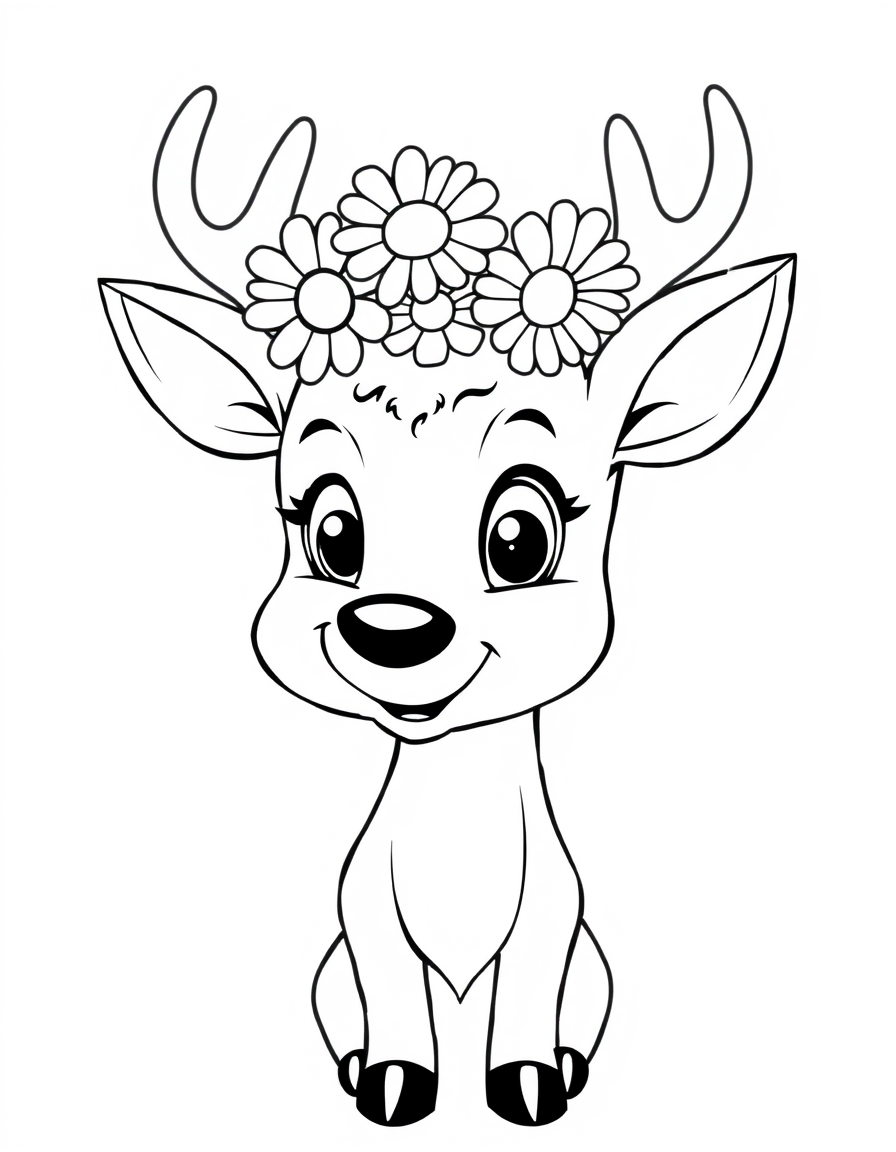
Five sheets are drawn for young children. Baby Deer Fawn Standing in Tall Grass, Sleeping Fawn Curled Up in a Meadow, Doe and Her Fawn Standing Together, Cute Cartoon Deer Wearing a Flower Crown and Fawn Nibbling Leaves From a Low Branch use thick outlines and large open areas. Start here if you want a baby deer coloring page a four year old can finish in one sitting.
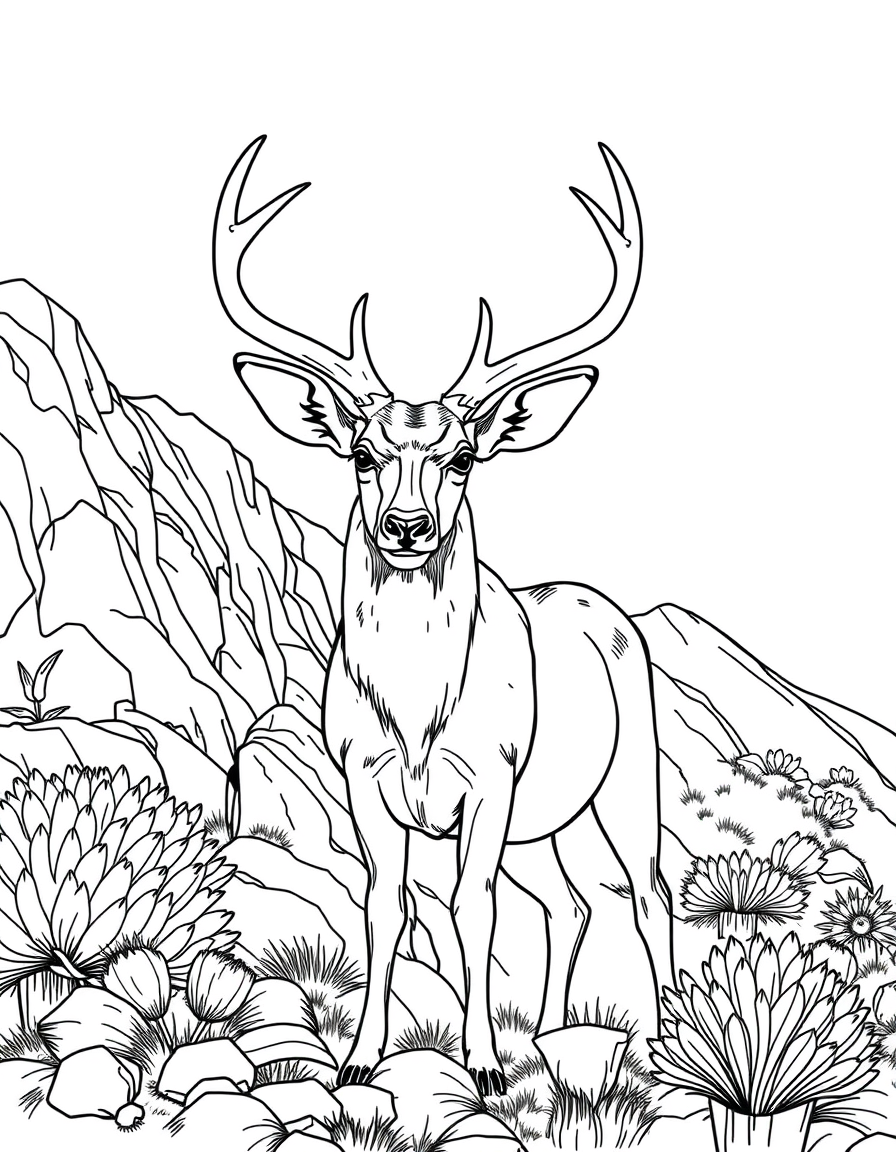
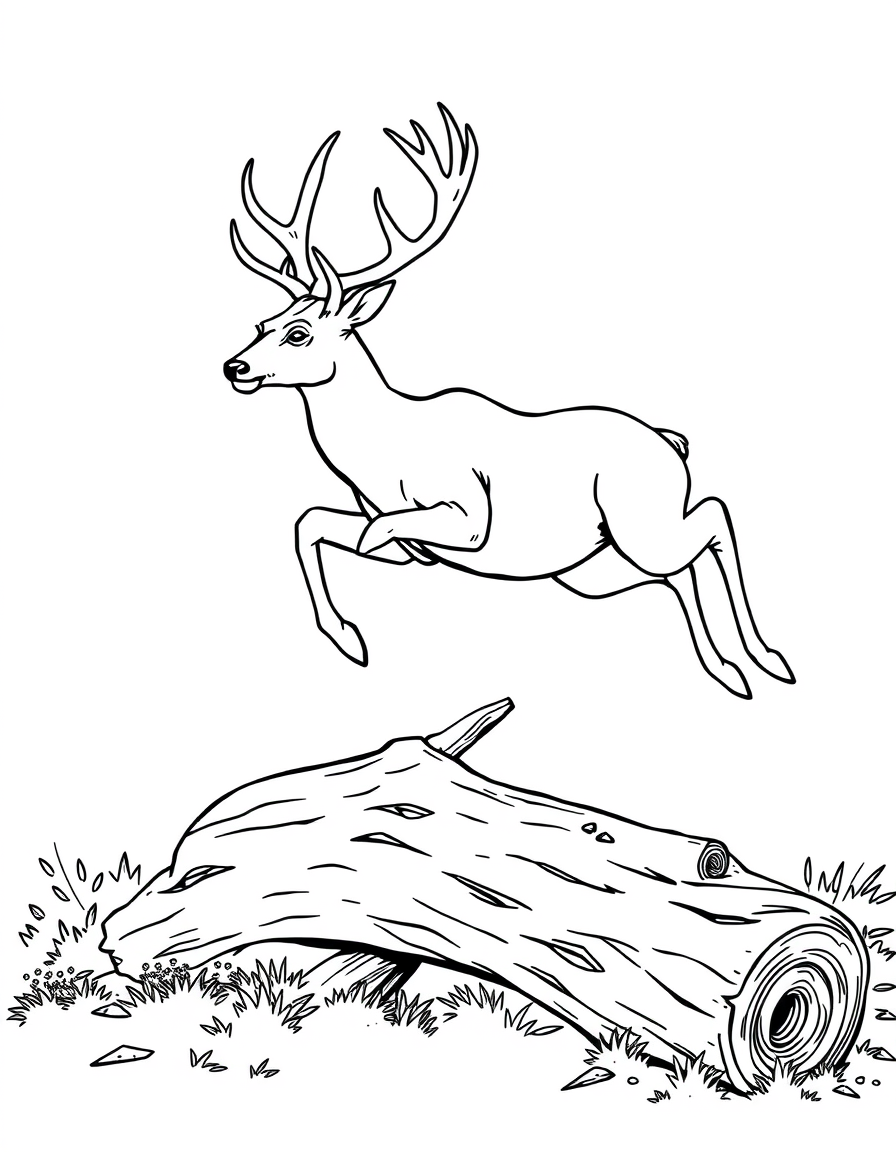
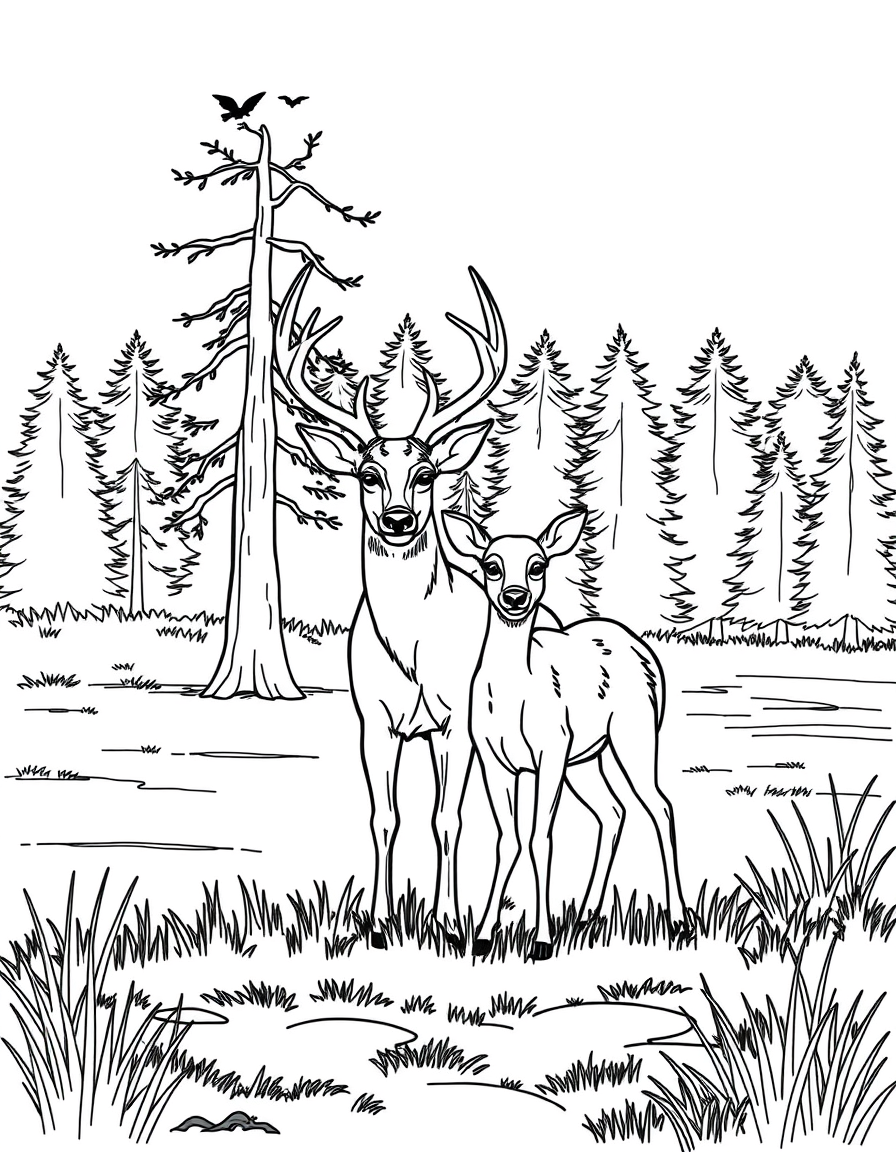
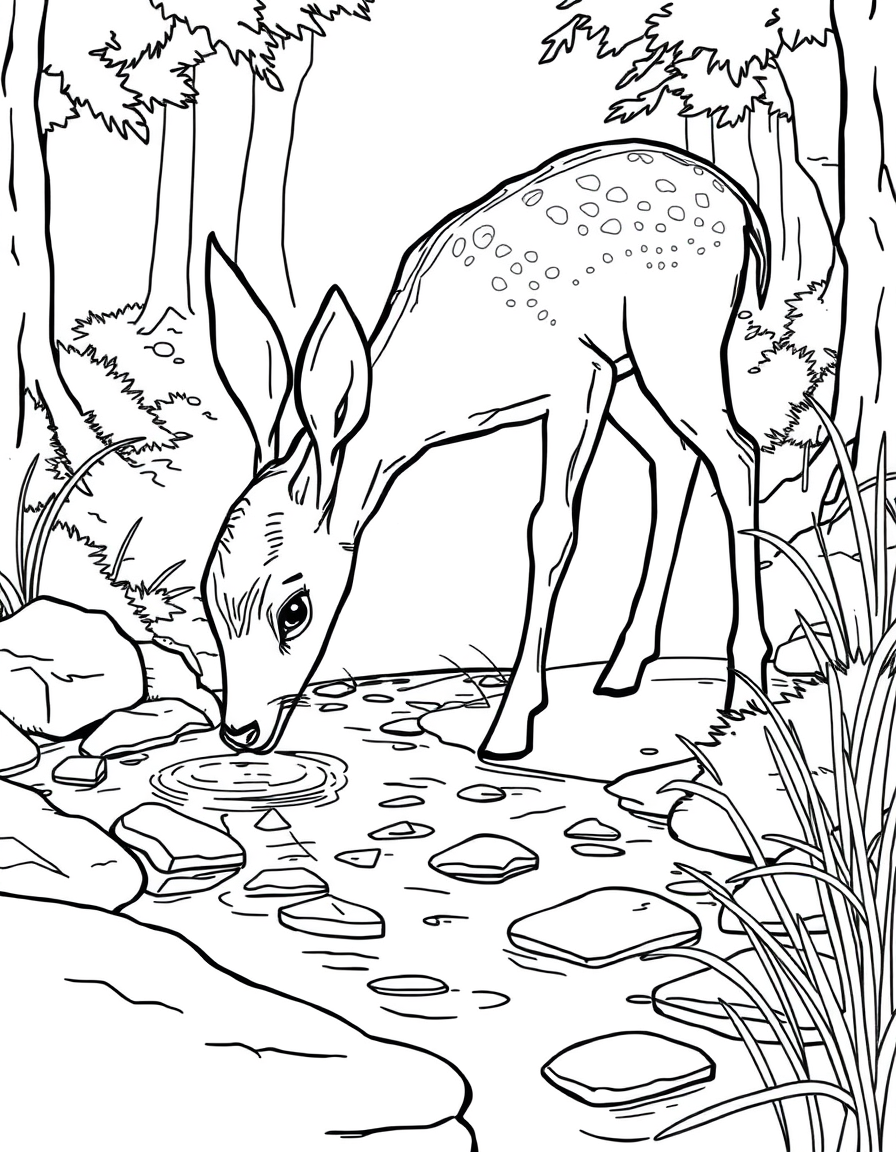
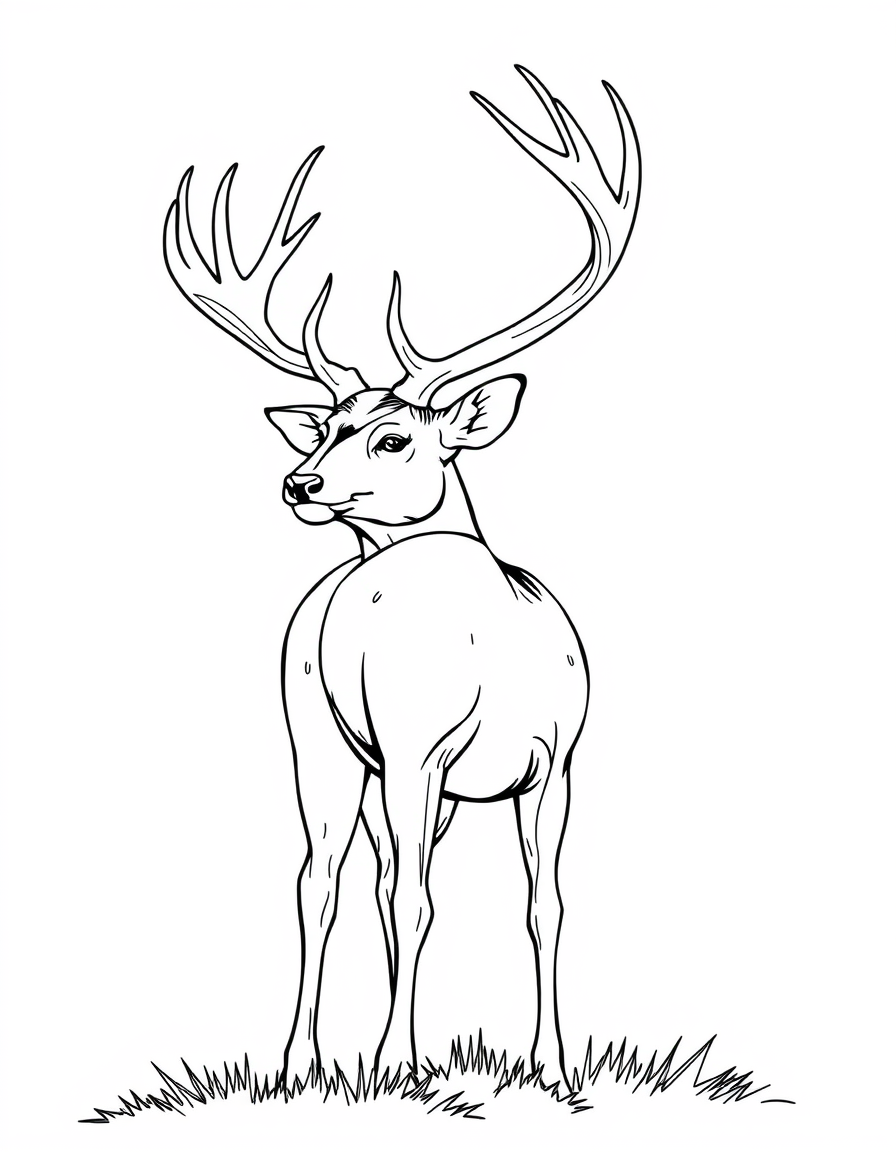
Five more are realistic. Buck With a Full Rack of Antlers Standing Alert, Doe Drinking From a Forest Stream, Buck and Doe at the Edge of a Clearing, Whitetail Deer Leaping Over a Fallen Log and Mule Deer Standing on a Rocky Hillside keep correct anatomy and ask for shading instead of flat fill. These are the buck and doe coloring sheets to print for an older child or a teenager.
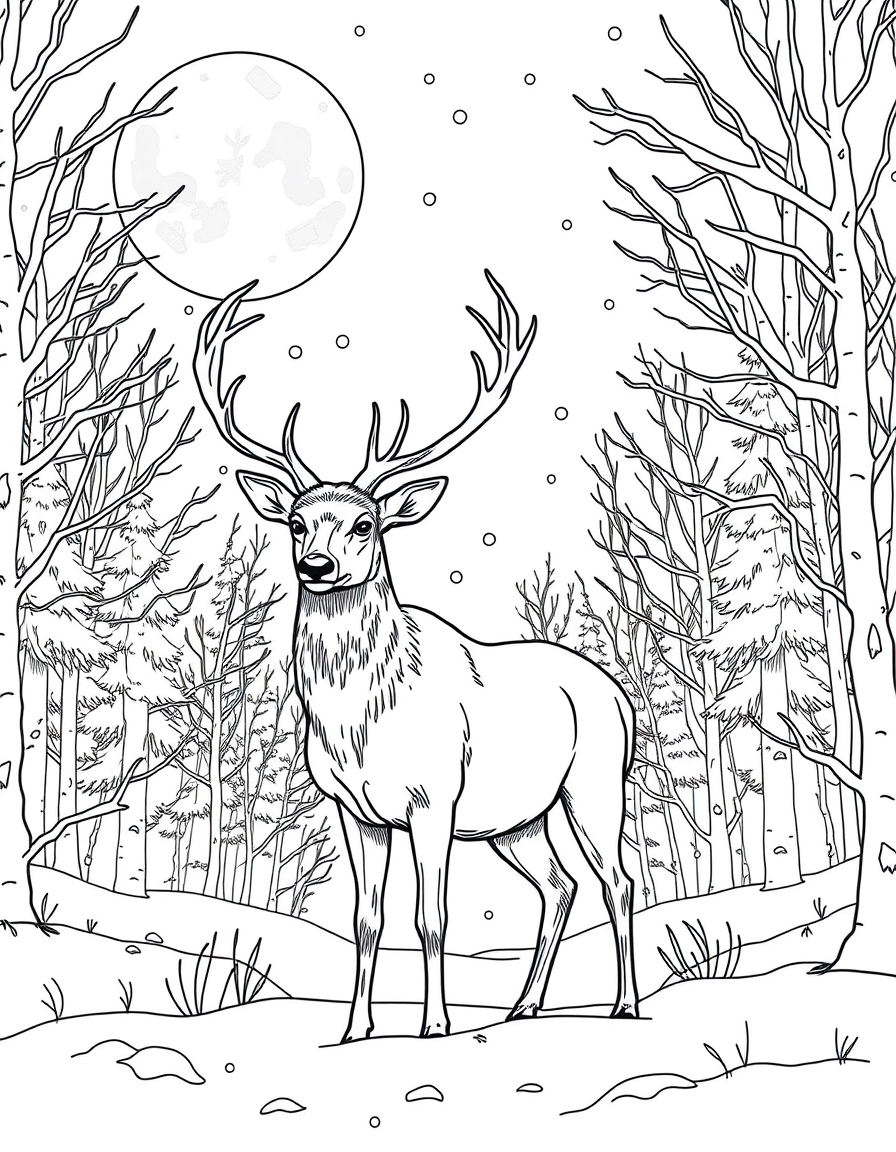
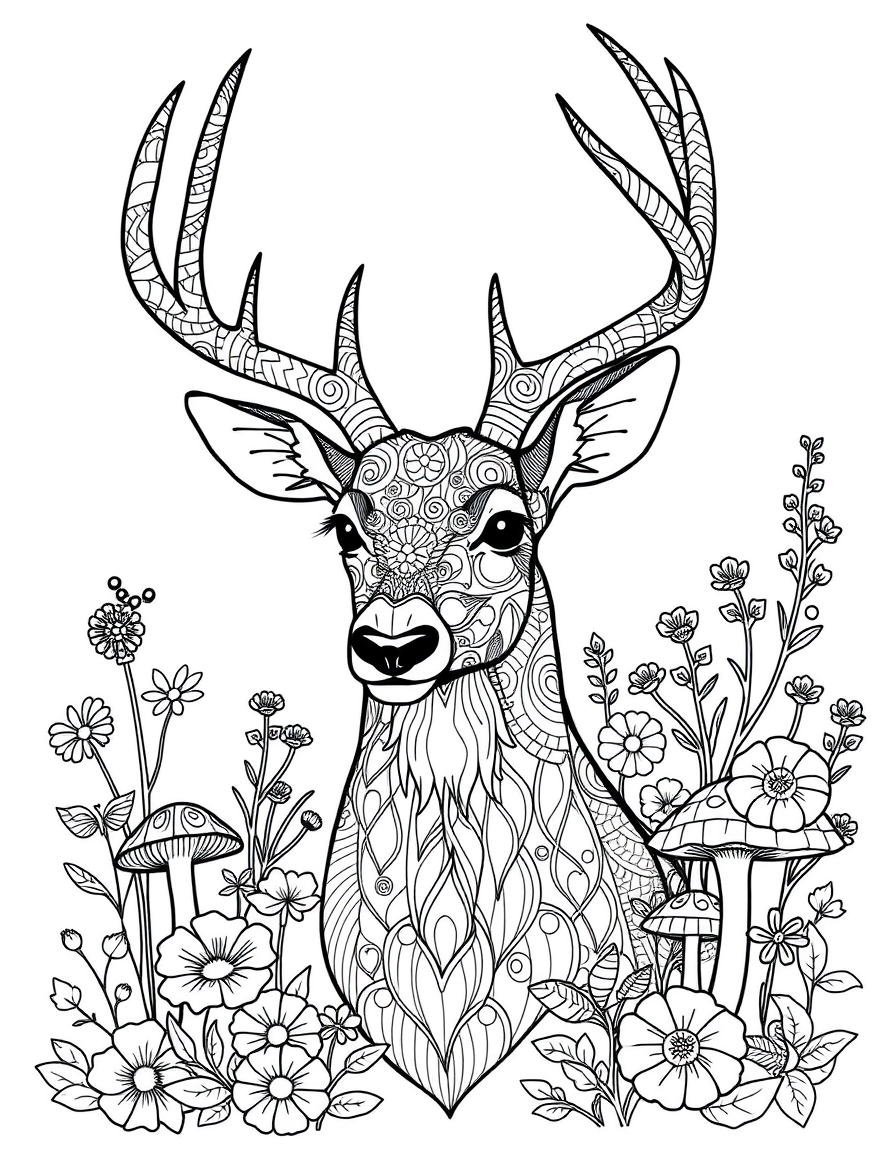
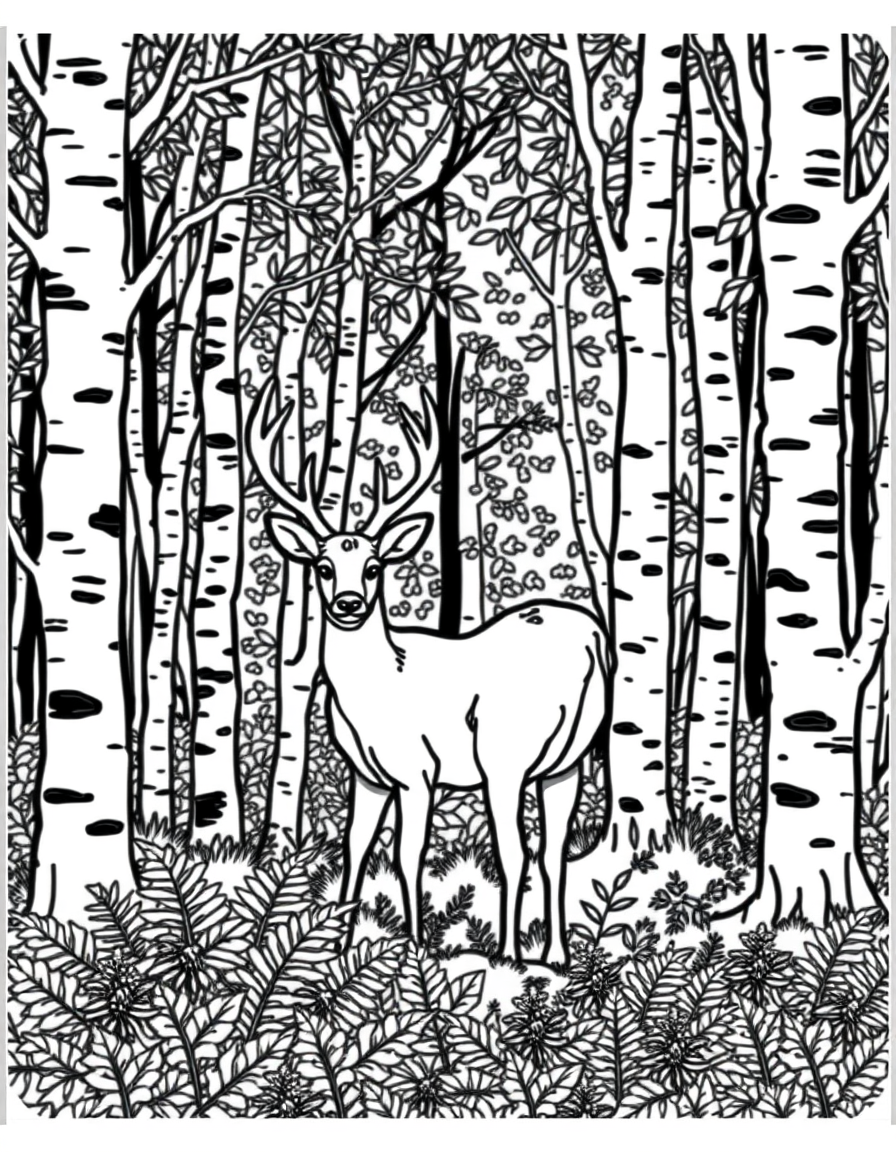
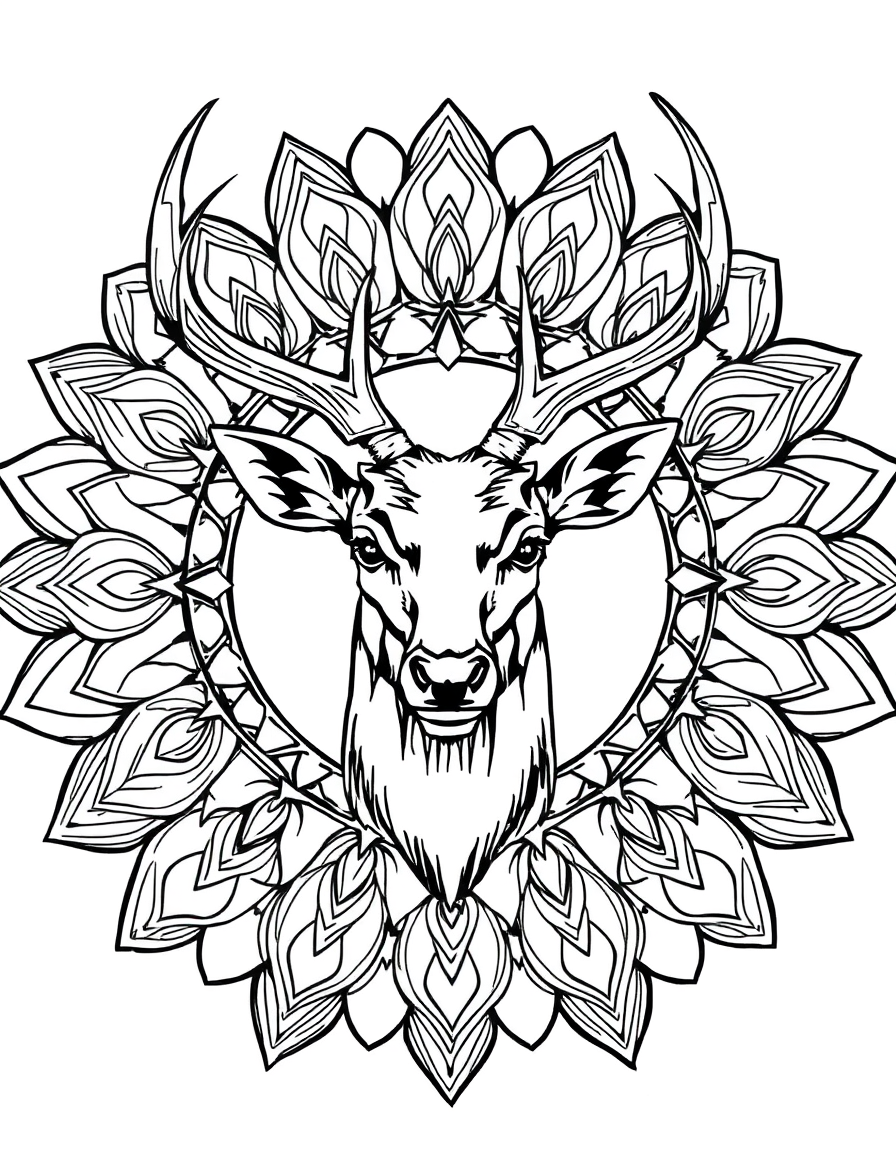
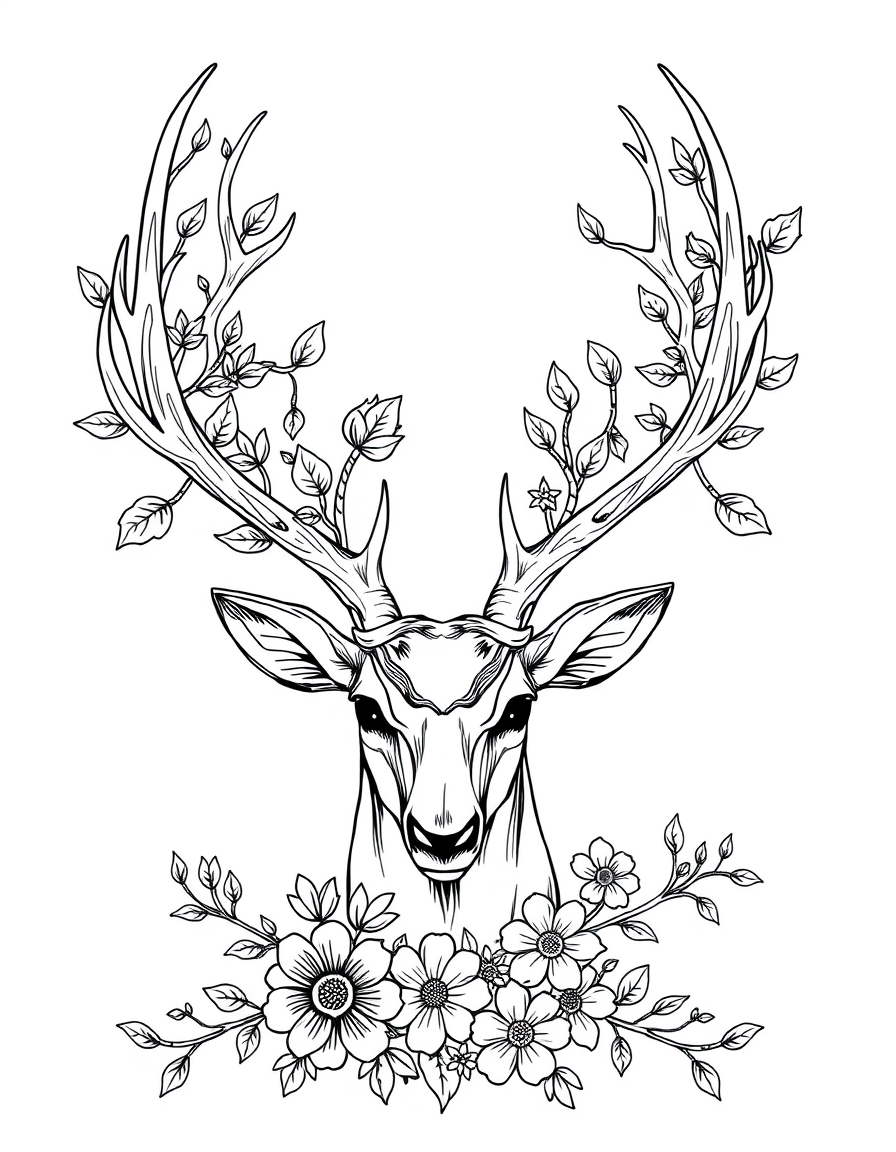
The last five carry the most line work. Deer Antlers Branching Into Leaves and Flowers, Stag Head Inside a Mandala Frame, Deer in a Birch Forest With Ferns and Dappled Light, Deer With Patterned Antlers and Woodland Flowers and Stag Under a Full Moon in a Winter Forest hold an adult for an hour or more.
Who These Pages Are For
Ages 4 to 8 do best with the fawn sheets. A fawn has short legs, a rounded body and a large head, so the shapes stay big even at kid scale, and the spots give a child something to do beyond filling a field of brown.
Older children and teenagers get more out of the realistic sheets. The leaping whitetail and the mule deer on the hillside both show muscle and coat direction, which is a real step up from cartoon animals without turning frustrating.
Adults should go straight to the antler and mandala sheets. Teachers pair deer pages with woodland units alongside Foxes and Forests, and the whole set gets used hardest in October and November, when deer turn up in classroom Fall displays.
Printing and Coloring Tips
All of these printable deer coloring pages open as a single page PDF, so printing takes one click. What happens after that decides whether the sheet reads as a deer or as a brown shape.
Do not color the coat one flat brown. A deer changes coat twice a year, wearing warm red-tan in summer and dull gray-brown in winter. Pick the season your scene sits in, lay that tone down first, then darken along the spine and down the outside of each leg and leave the flank lighter. The animal reads as round the moment you do.
Leave the white markings as bare paper. Whitetails carry white on the throat, the belly, the inside of the ears, the ring around the muzzle and the underside of the tail. Coloring over those areas is the most common mistake on this subject, and skipping them costs nothing.
Color antlers as bone, not wood. Antler is bone, so it runs pale ivory or gray at the polished tips and darker at the ridged, knobby base near the head. Work a warm gray into the grooves and leave the tips almost white.
Print the birch forest and the mandala sheets on 65 lb cardstock. Both pack thin lines into a small area, and heavier stock stops marker bleeding through and filling them in.
Frequently Asked Questions
What is a baby deer called, and why is it covered in spots?
A baby deer is a fawn. A newborn whitetail fawn carries roughly 300 white spots, and they work as camouflage: on the forest floor the pattern breaks up the fawn's outline and mimics sunlight coming through leaves. The fawn lies still and lets the pattern do the work while the doe feeds nearby. The spots fade at three to four months, when the fawn grows its first winter coat. On the fawn pages here, leave the spots as bare white paper and color around them rather than adding them at the end.
Do female deer grow antlers?
Whitetail and mule deer does do not. Only bucks grow antlers, they grow a fresh set every spring, and they drop them in late winter. Reindeer and caribou are the exception, because both sexes grow antlers. That leads to a detail worth knowing in December: reindeer bulls shed their antlers in early winter while cows keep theirs until spring, so a reindeer drawn with a full rack pulling a sleigh on Christmas Eve is almost certainly female.
What is the difference between antlers and horns?
Antlers are solid bone. They grow from the skull each year under a layer of blood-rich skin called velvet, harden, get rubbed clean, then fall off and regrow. Horns are permanent, built as a keratin sheath over a bony core, and cattle, goats and sheep keep the same pair for life. Deer grow antlers, which is why a buck looks so different from one season to the next.
Which deer coloring pages work best for a preschooler?
Baby Deer Fawn Standing in Tall Grass, Sleeping Fawn Curled Up in a Meadow and Cute Cartoon Deer Wearing a Flower Crown. All three use thick outlines and a small number of large regions, so a child holding a chunky crayon can stay inside the lines. Save the birch forest and the mandala frame for a much older colorist.
Can I print these deer coloring pages on A4 paper?
Yes. Every file is sized for US Letter, 8.5 by 11 inches. Choose "Fit to page" in your print dialog and the design scales down to A4 with nothing clipped off the edges.