Bunny Coloring Pages
Free bunny coloring pages featuring baby rabbits, lop ears, Easter bunnies, and woodland rabbit scenes.
Create a Custom Coloring Page
Describe what you'd like and we'll generate it free, no account needed
Family-friendly only · 1 free per day
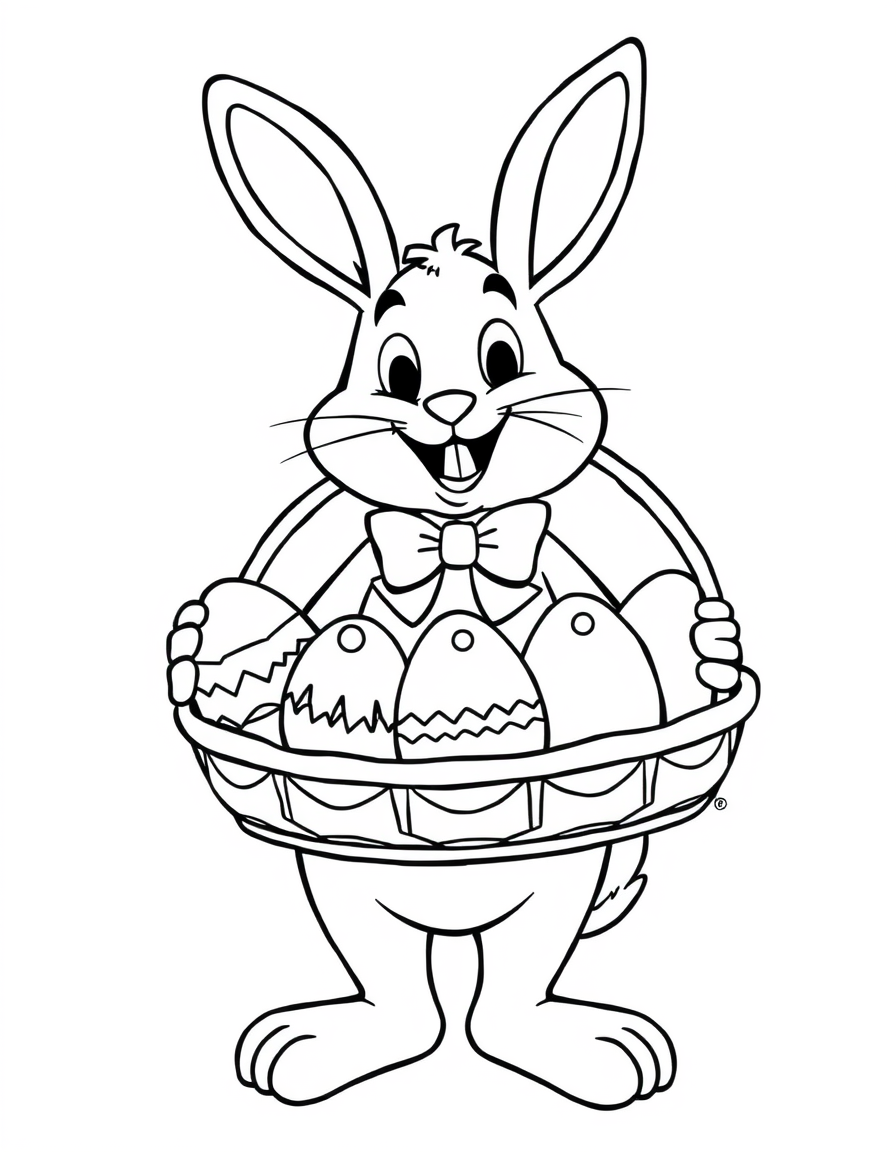
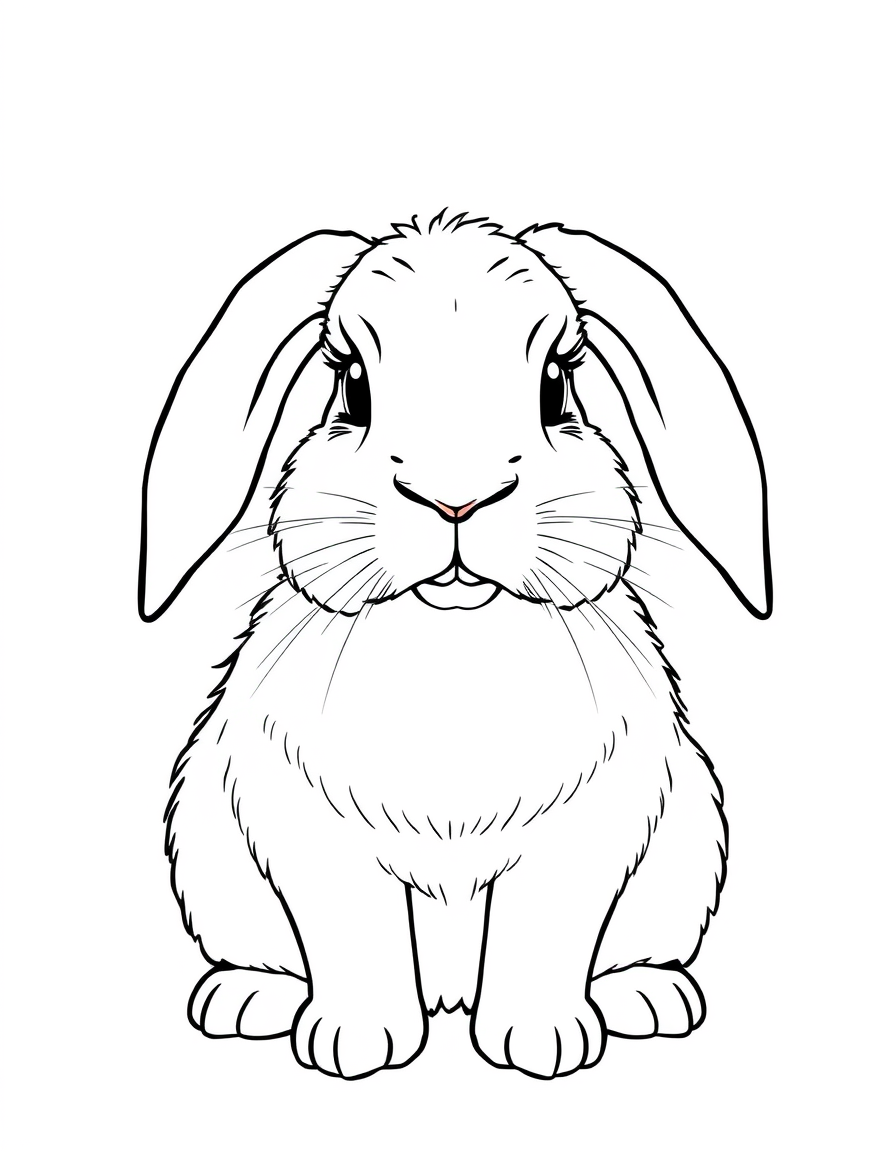
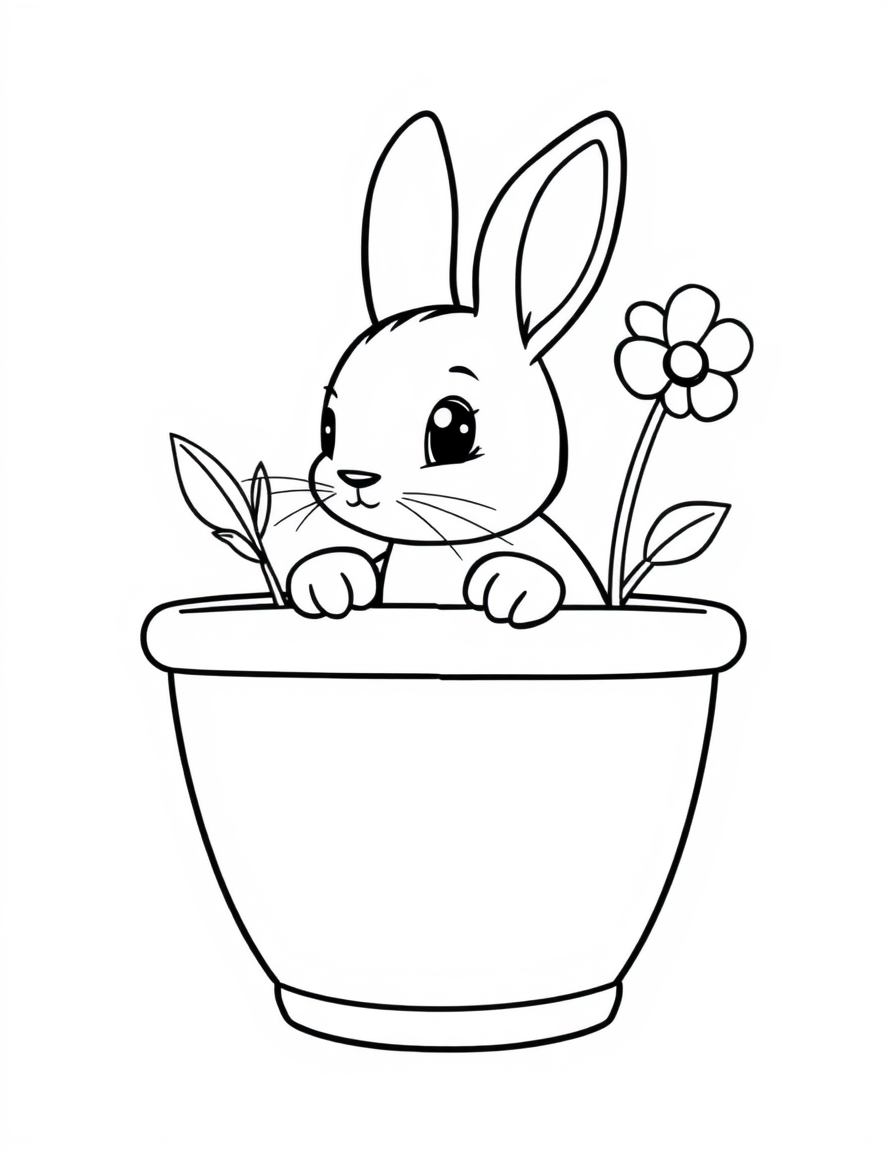
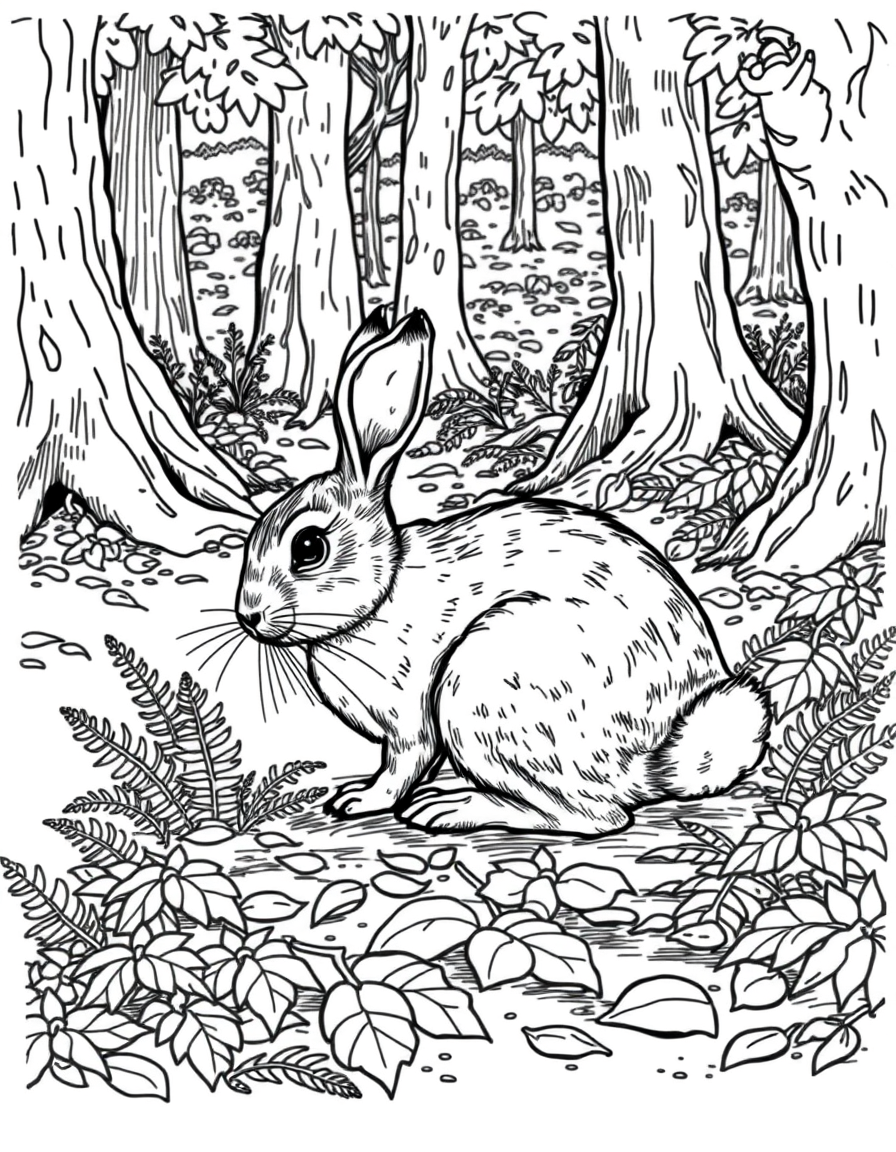
Rabbits and hares are not the same animal, and the difference shows up the moment you start coloring one. A rabbit is born blind and hairless in an underground burrow, it sits compact, and its ears stay shorter against the head. A hare is born furred with its eyes open, above ground, and it carries longer ears and much longer hind legs. This collection covers both, plus the storybook Easter bunny that belongs to neither. All 14 pages download as free printable PDFs sized for US Letter paper, 8.5 by 11 inches, with instant download and no account needed.
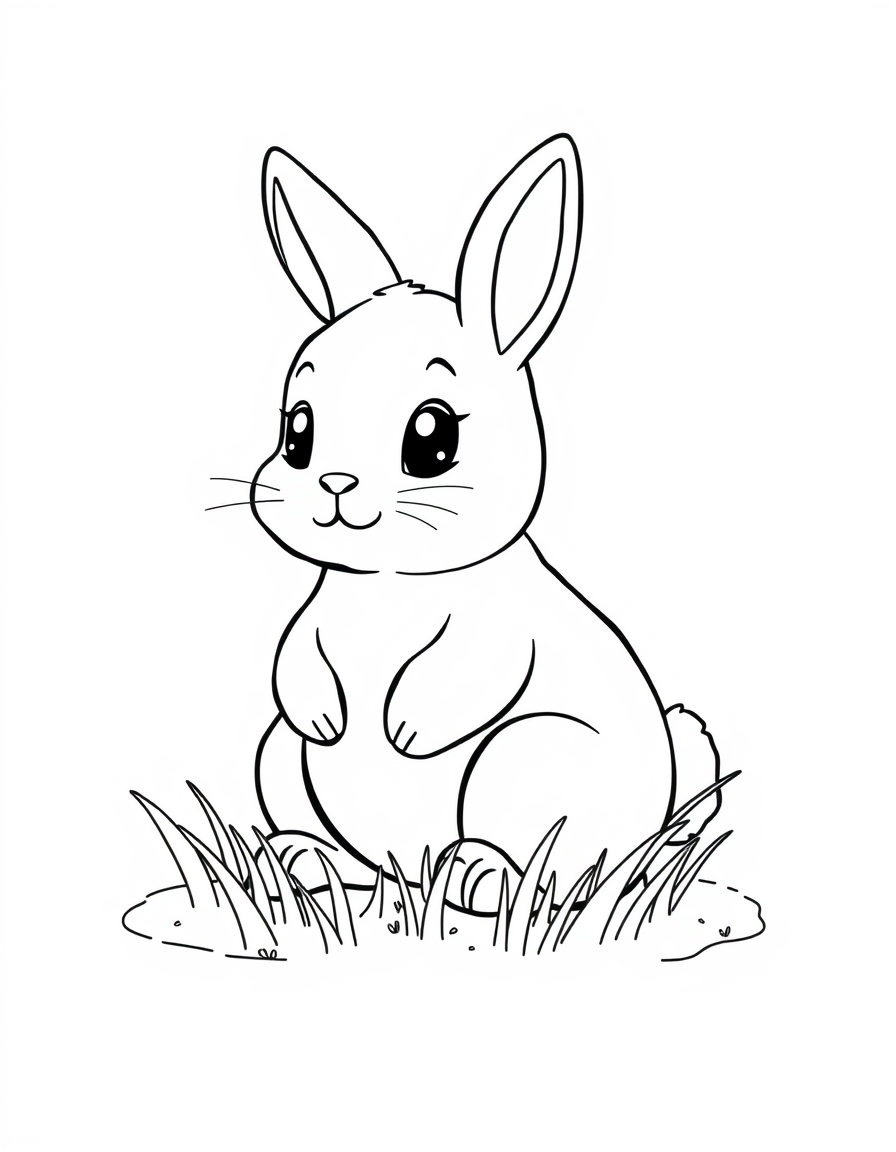
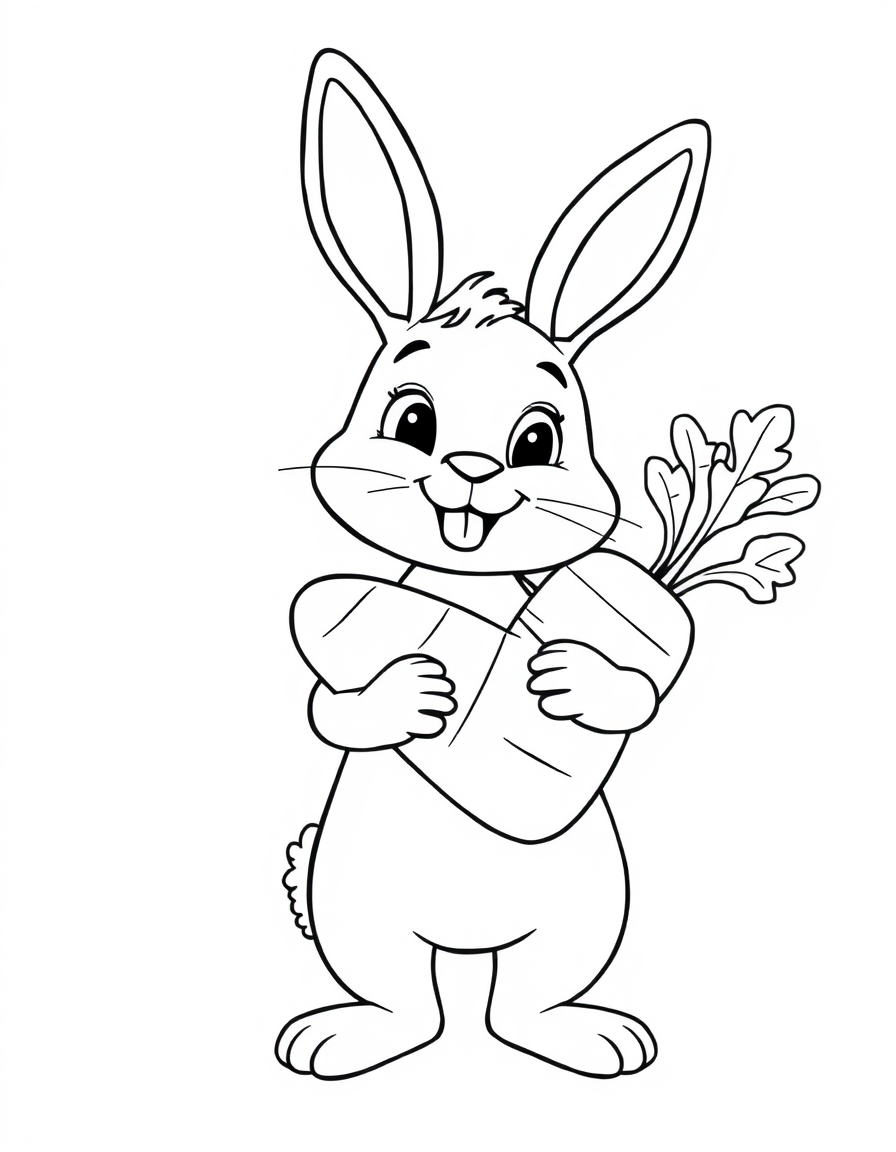
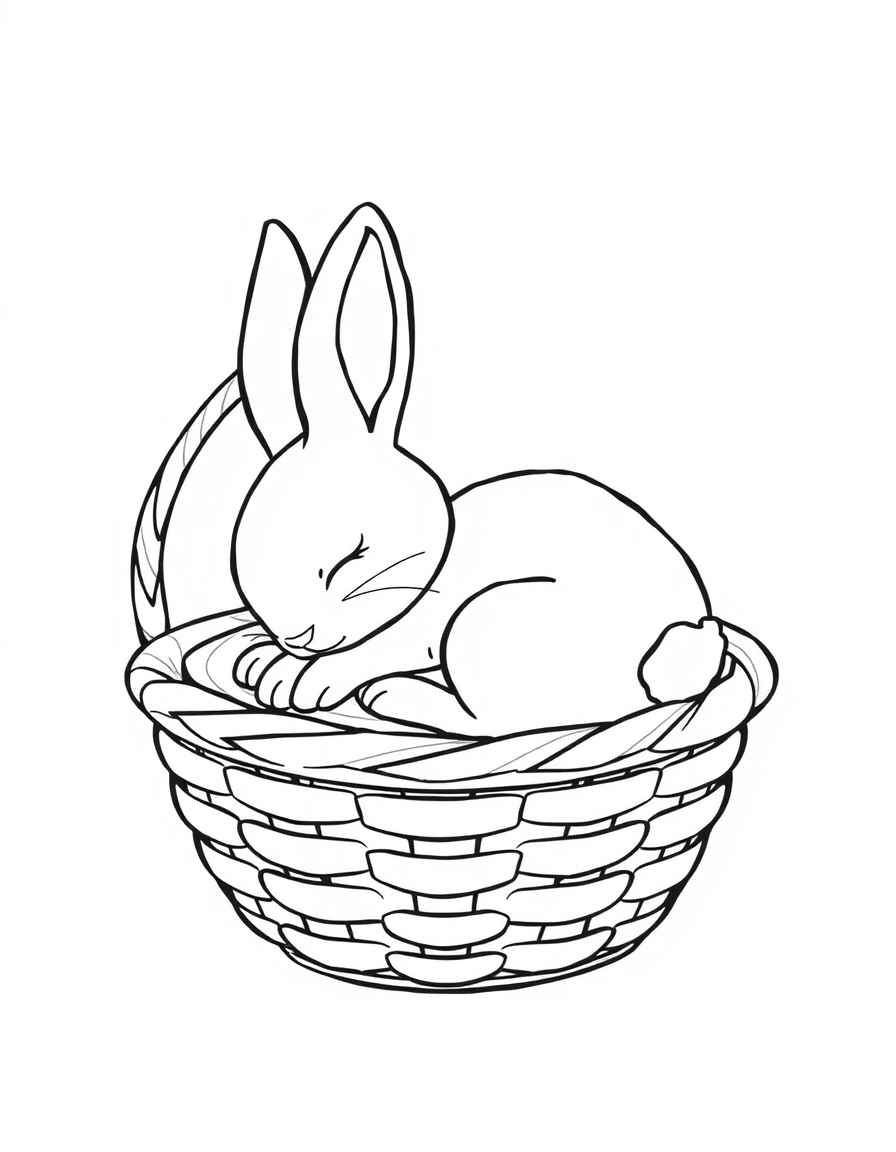
Simple sheets keep the animal as one large shape with a clean outline, which is what a three to six year old can actually finish. Cute Baby Bunny Sitting In The Grass, Bunny Holding A Large Carrot and Sleeping Bunny Curled Up In A Basket each give one subject and an uncluttered background. Fluffy Lop Eared Rabbit With Long Ears and Bunny Peeking Out Of A Flower Pot add a little more line work without crowding the page. These are the cute bunny coloring sheets for kids to start with.
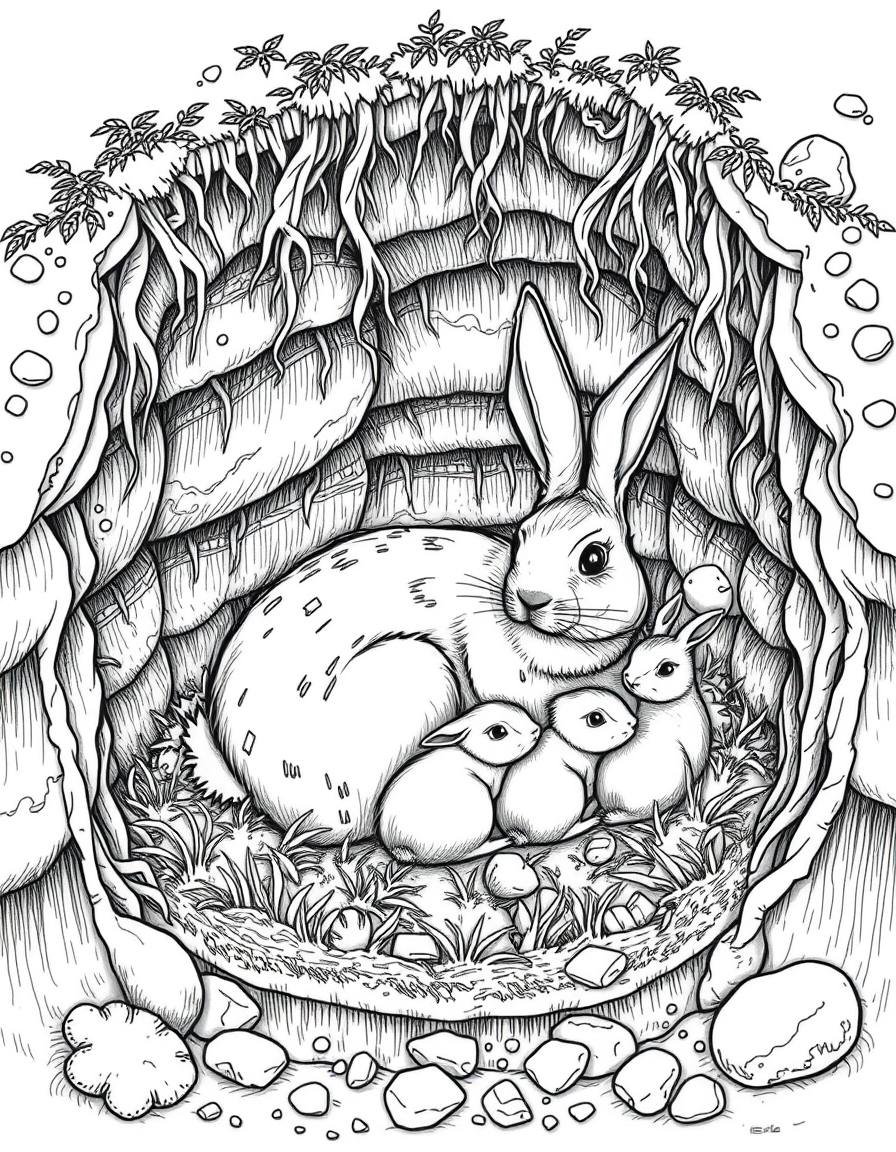
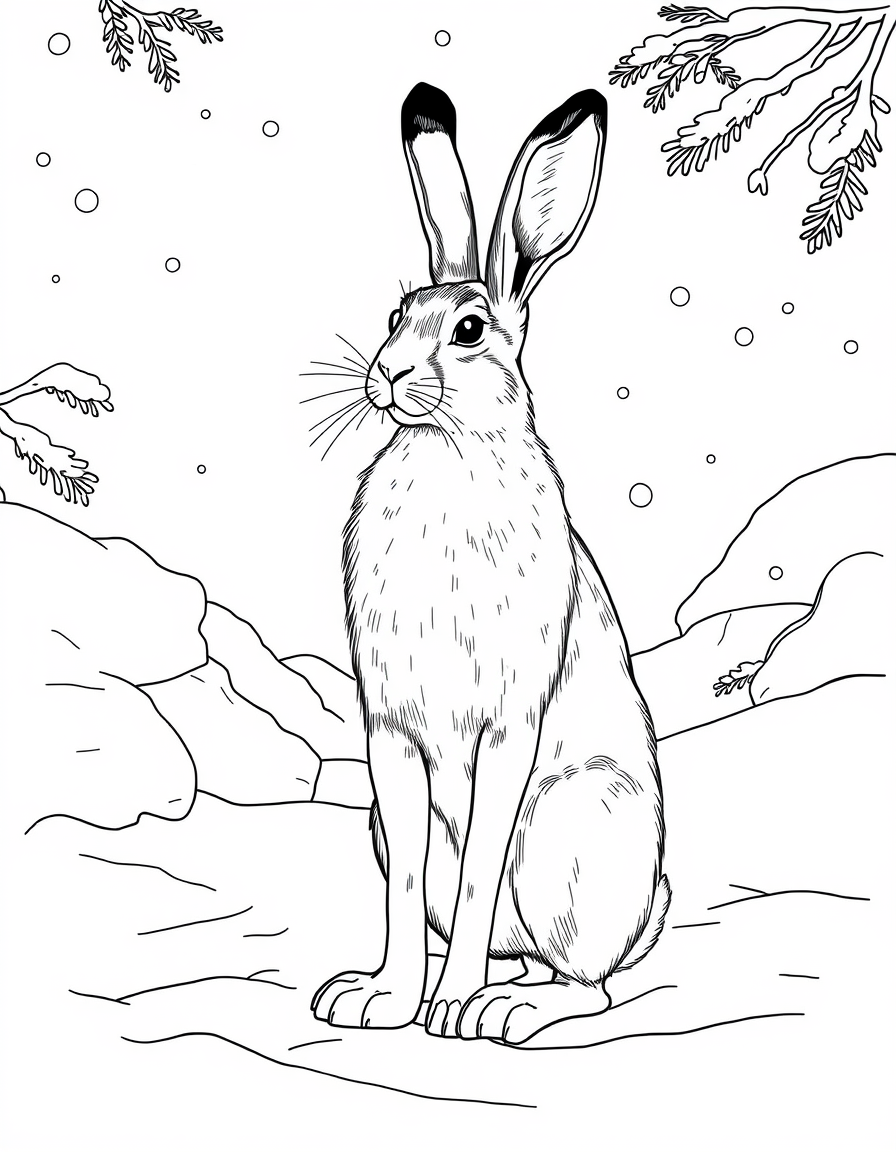
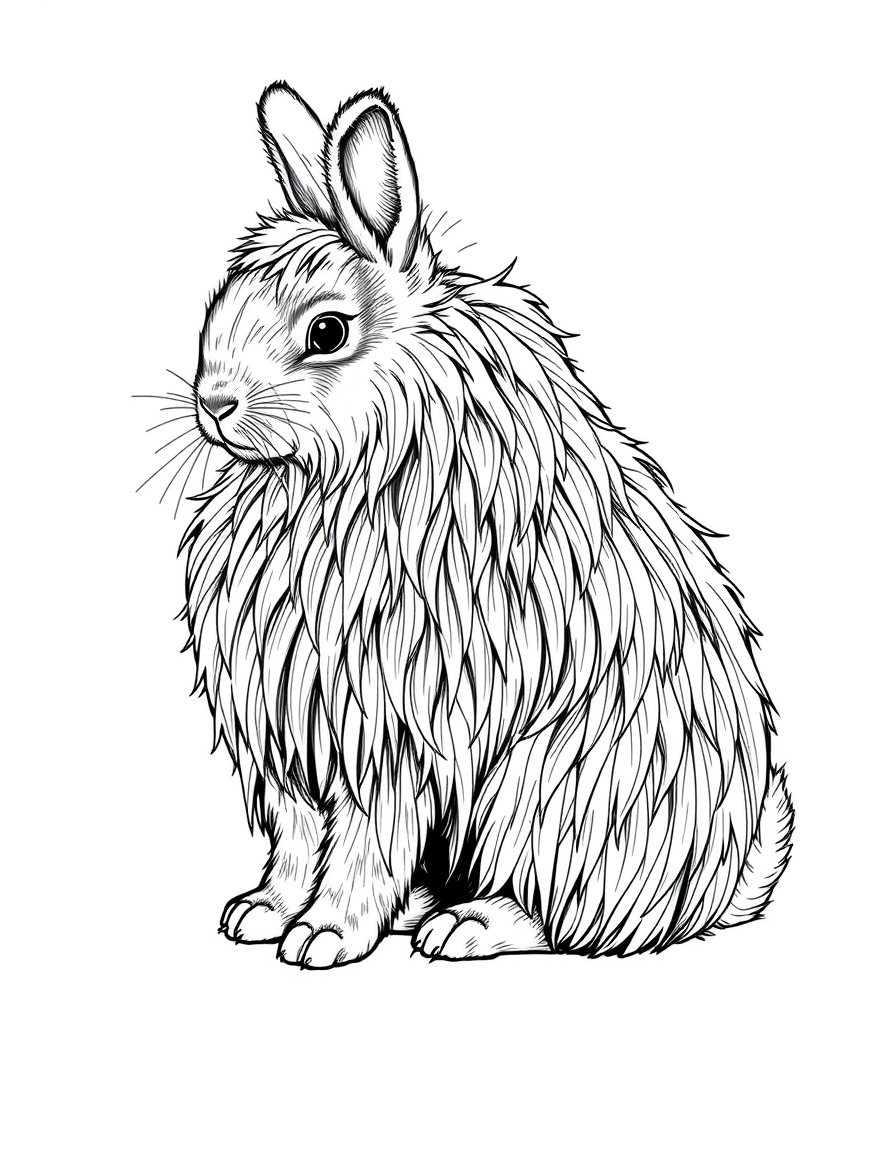
Detailed sheets carry fur texture, foliage and more than one animal, and they hold an adult for an hour or longer. Wild Rabbit In A Woodland Clearing and Mother Rabbit With Her Baby Bunnies In The Burrow are the two most demanding pages in the set. Angora Rabbit With Long Fluffy Fur is the texture study, and Snowshoe Hare In A Winter Landscape is the one design here that belongs to January rather than spring, since the hare turns white in winter and brown again in summer.
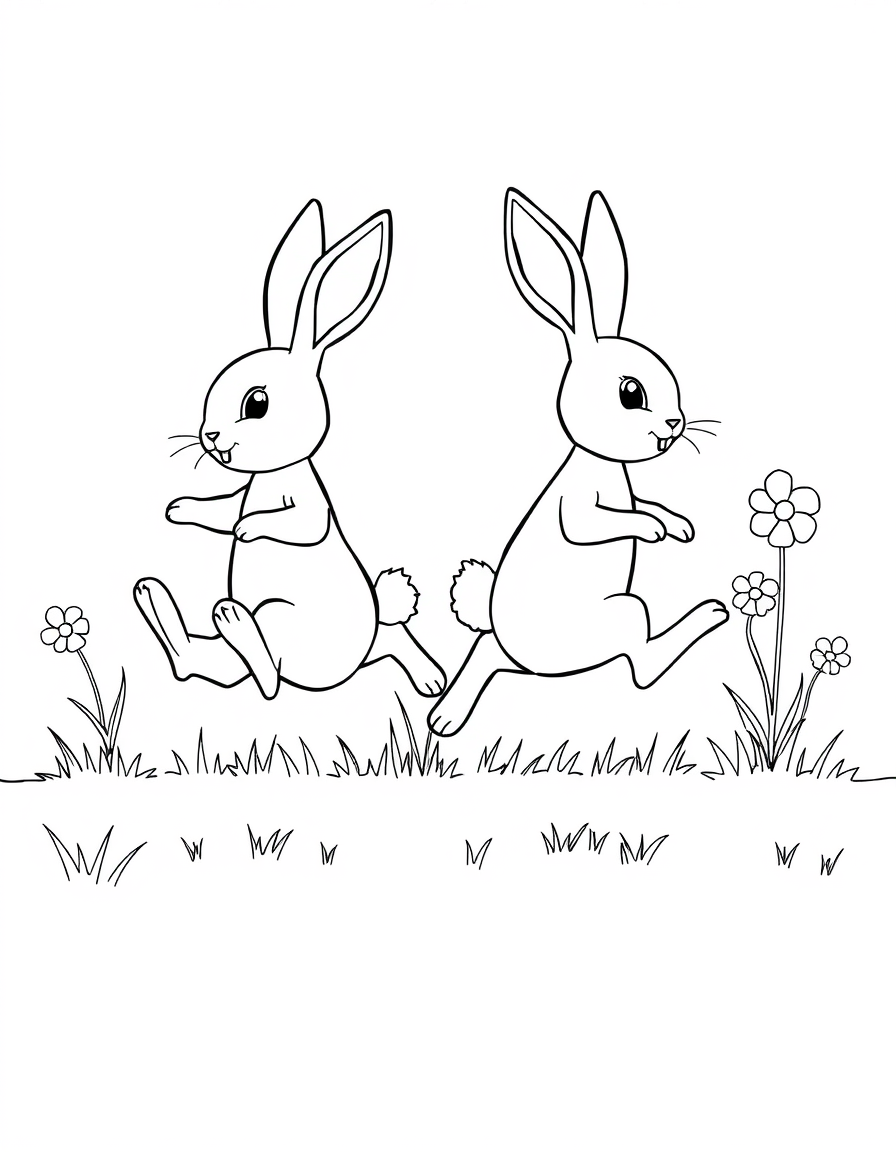
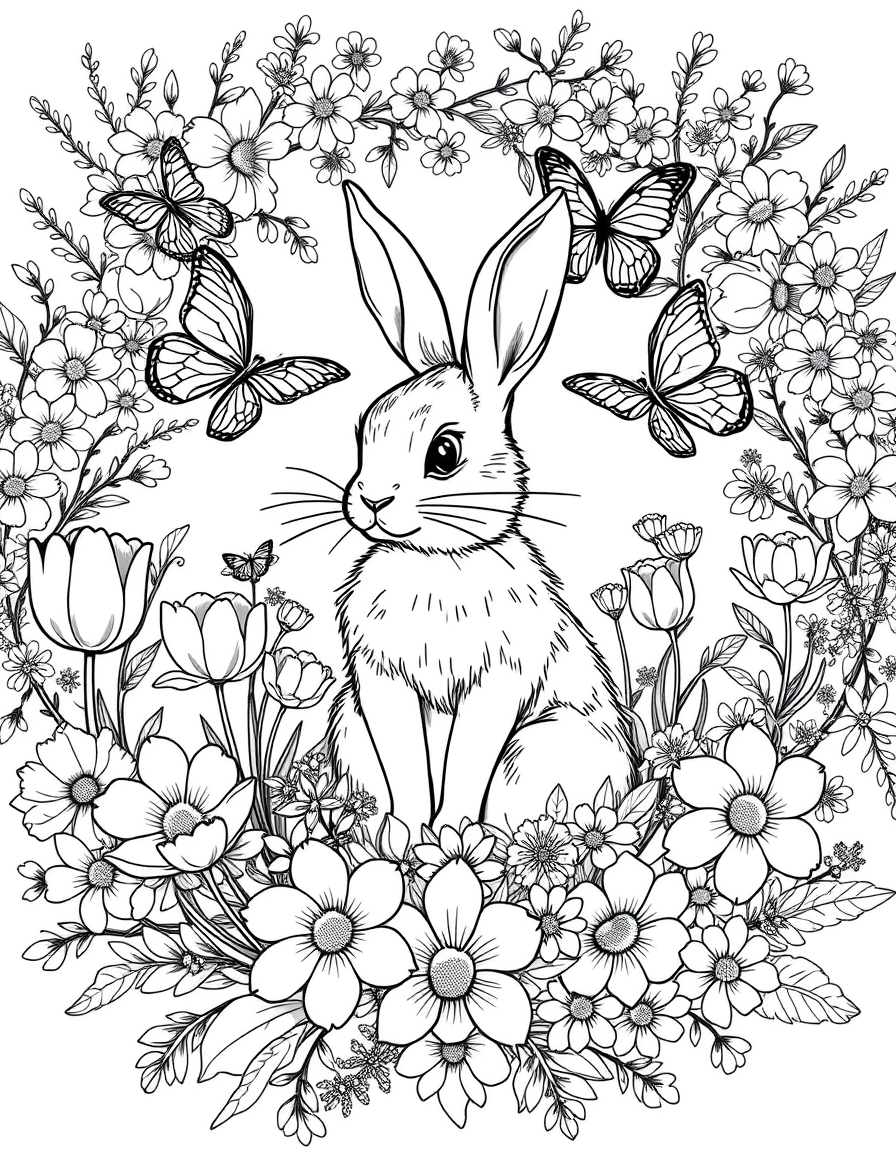
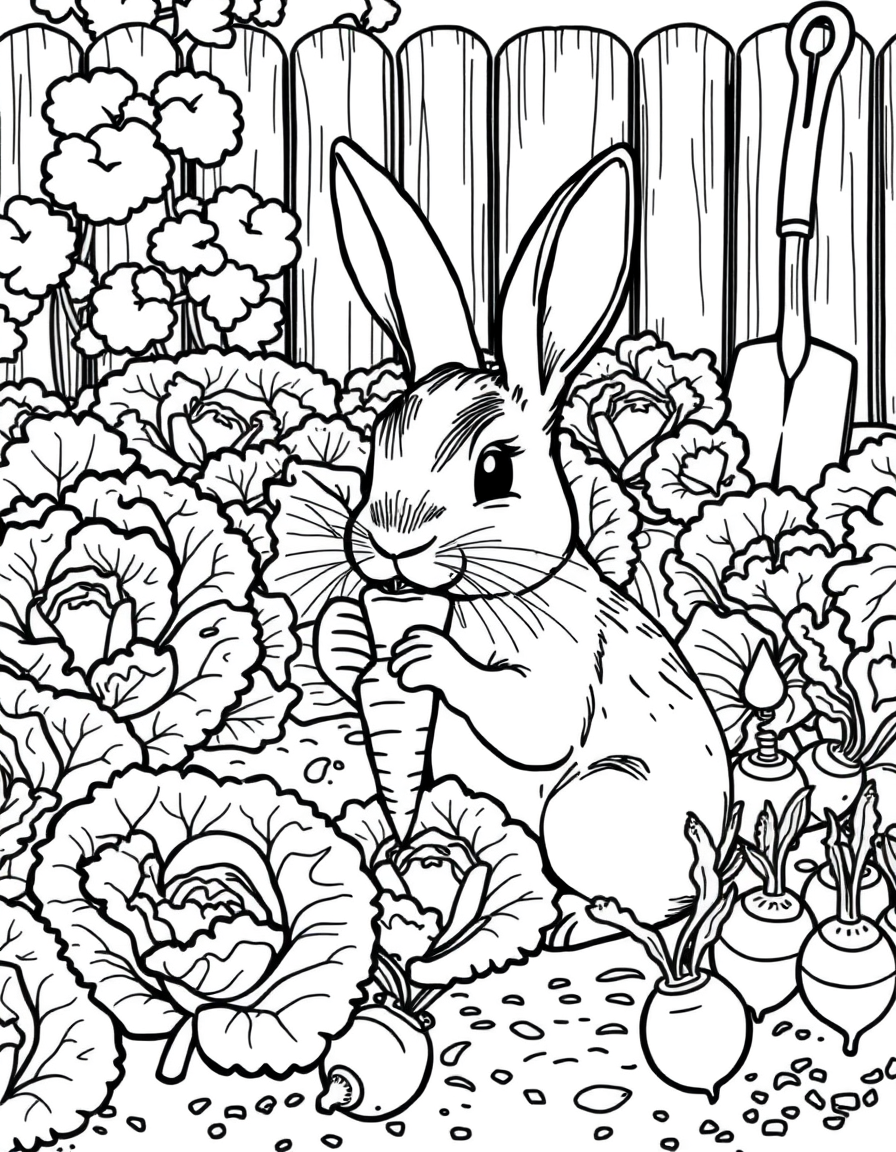
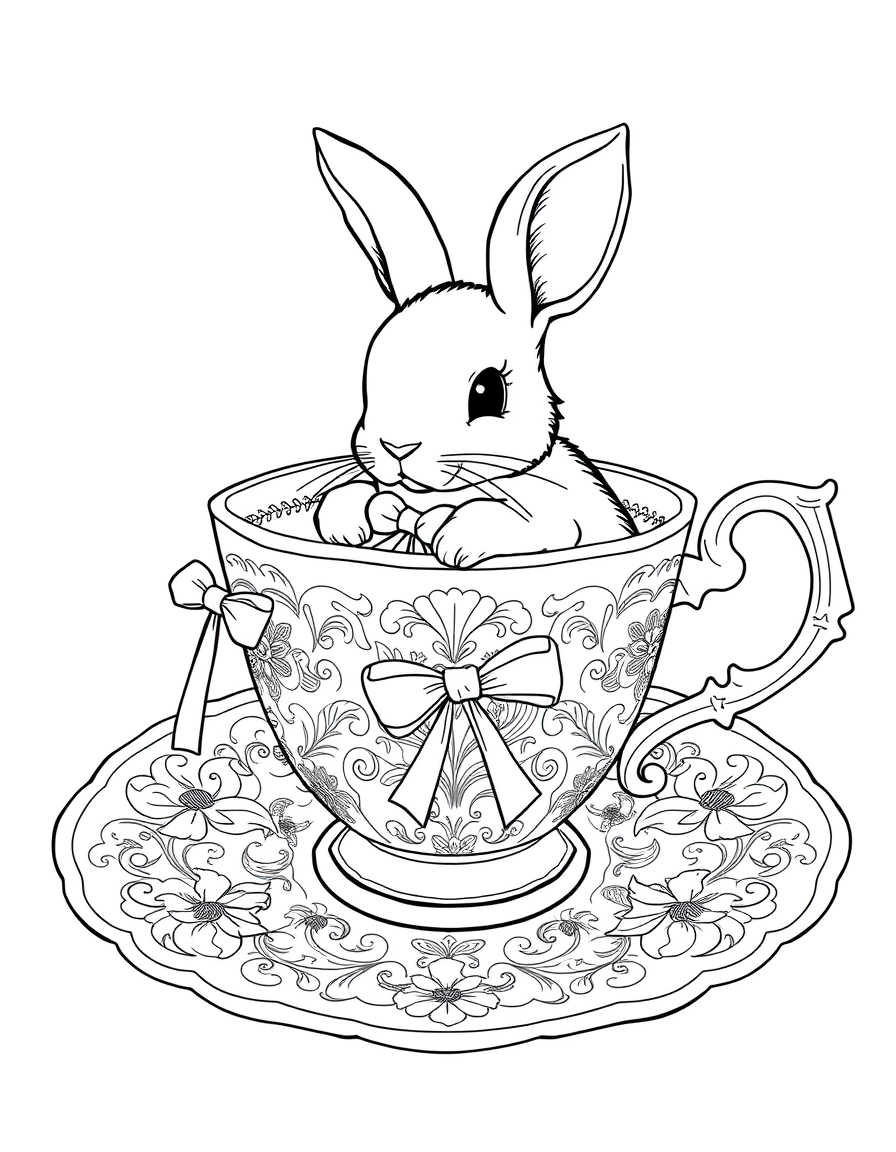
Easter drives most of the year's demand for free rabbit coloring pages, so this collection meets it head on. Easter Bunny With A Basket Of Eggs and Bunny Surrounded By Spring Flowers And Butterflies print heavily through March and April, and both pair with the wider Easter set. Rabbit Eating Vegetables In A Garden, Two Bunnies Hopping Through A Meadow and Bunny In A Teacup With Ribbons And Bows work in any month.
Two decisions separate a convincing rabbit from a flat one. The first is the ears. Rabbit ears are thin enough that light passes straight through them, so the inner ear reads as a warm glow rather than a solid block. Leave the inner ear pale, lay a soft pink or peach down the center only, and keep the edges lighter than the middle. The second is that almost no wild rabbit is a single color. A cottontail is agouti, meaning each individual hair carries bands of brown, black and tan, and the result is a speckled grey brown back over a pale belly and a bright white tail. Build it with a light tan base across the whole animal, scribble a darker brown over the back and shoulders only, then leave the chin, belly and tail almost untouched. That contrast is what makes the tail read as a signal flag, which is exactly what it is.
Frequently Asked Questions
What is the difference between a bunny, a rabbit and a hare?
Bunny is an informal word for a rabbit, usually a young one, and it carries no biological meaning. Rabbit and hare are genuinely different animals. Rabbits are born helpless in a burrow and live in groups, hares are born furred and mobile in a shallow surface nest and live alone. If you want the distinction on paper, color Snowshoe Hare In A Winter Landscape with longer ears, longer legs and black ear tips, and keep the cottontail in Wild Rabbit In A Woodland Clearing rounder and lower to the ground.
Which bunny coloring pages are easiest for toddlers?
Cute Baby Bunny Sitting In The Grass, Bunny Holding A Large Carrot and Sleeping Bunny Curled Up In A Basket. All three hold the rabbit as one large closed shape with thick outlines and very little background, which works from about age three. Save Mother Rabbit With Her Baby Bunnies In The Burrow and the woodland clearing for ages eight and up, because both pack several animals and a lot of texture into the same sheet.
What color should I make a wild rabbit?
Grey brown on the back and flanks, cream or white on the belly and throat, and pure white on the underside of the tail. Skip grey pencil for the shading and use a warm brown instead, since wild rabbit fur reads warm, not cool. Domestic rabbits are a different matter and are genuinely free choice: black, chocolate, blue, lilac, cream, broken white with patches, and the dark points on the ears, nose and feet that make a Himalayan.
How do you color an angora rabbit's fur?
Do not draw individual hairs. Lay a flat, very light base over the whole coat, then work a slightly darker tone in long sweeping strokes that all follow the same direction, heavier underneath the body and around the legs where the wool hangs and casts shadow. Keep the top of the head and shoulders nearly white. The eye reads the difference in density as depth, and the uniform stroke direction is what makes the coat look soft rather than dirty.
Are these printable bunny coloring pages free?
Yes. All 14 are free printable PDFs with no sign-up, no account and no watermark, sized for standard US Letter paper. They print correctly on A4 as well if you select "Fit to page" in your print dialog.