Tiger Coloring Pages
Free printable tiger coloring pages featuring cute baby tigers, prowling jungle tigers, tiger faces and detailed stripe patterns.
Create a Custom Coloring Page
Describe what you'd like and we'll generate it free, no account needed
Family-friendly only · 1 free per day
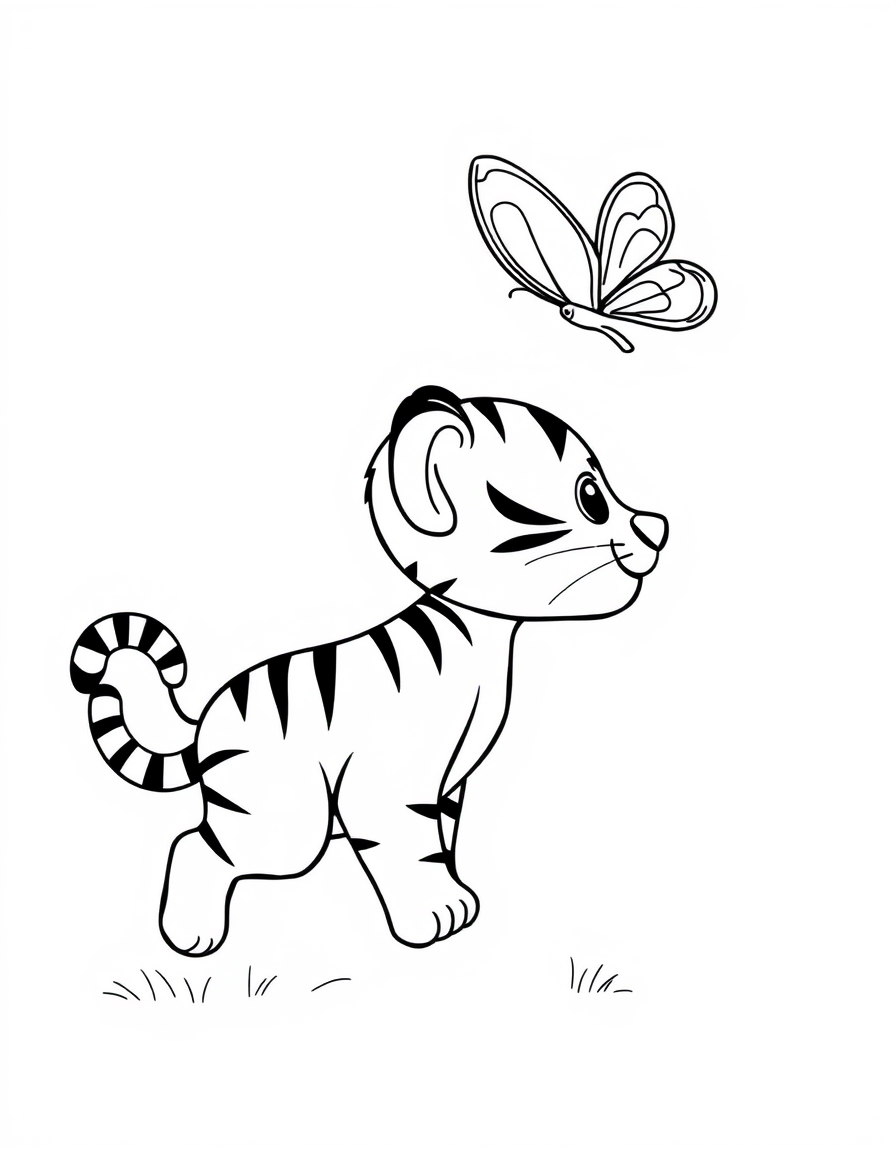
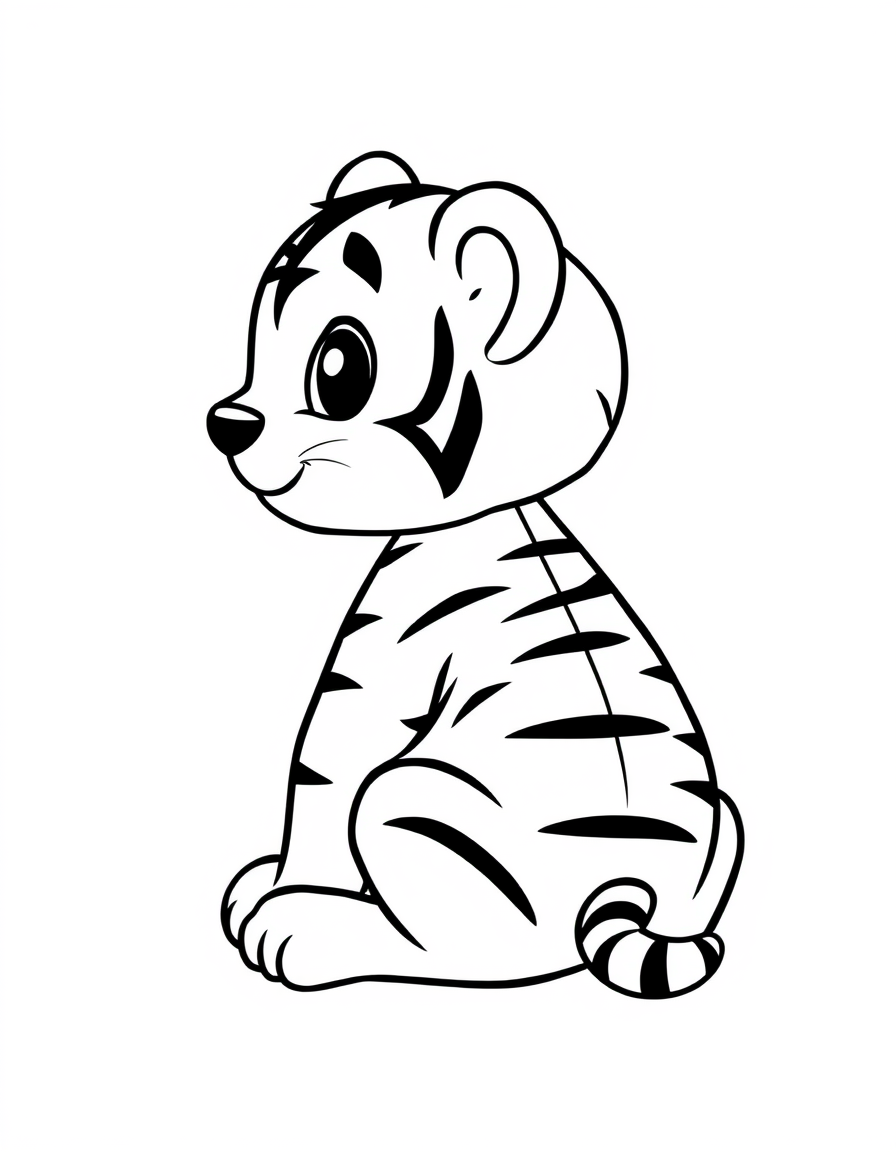
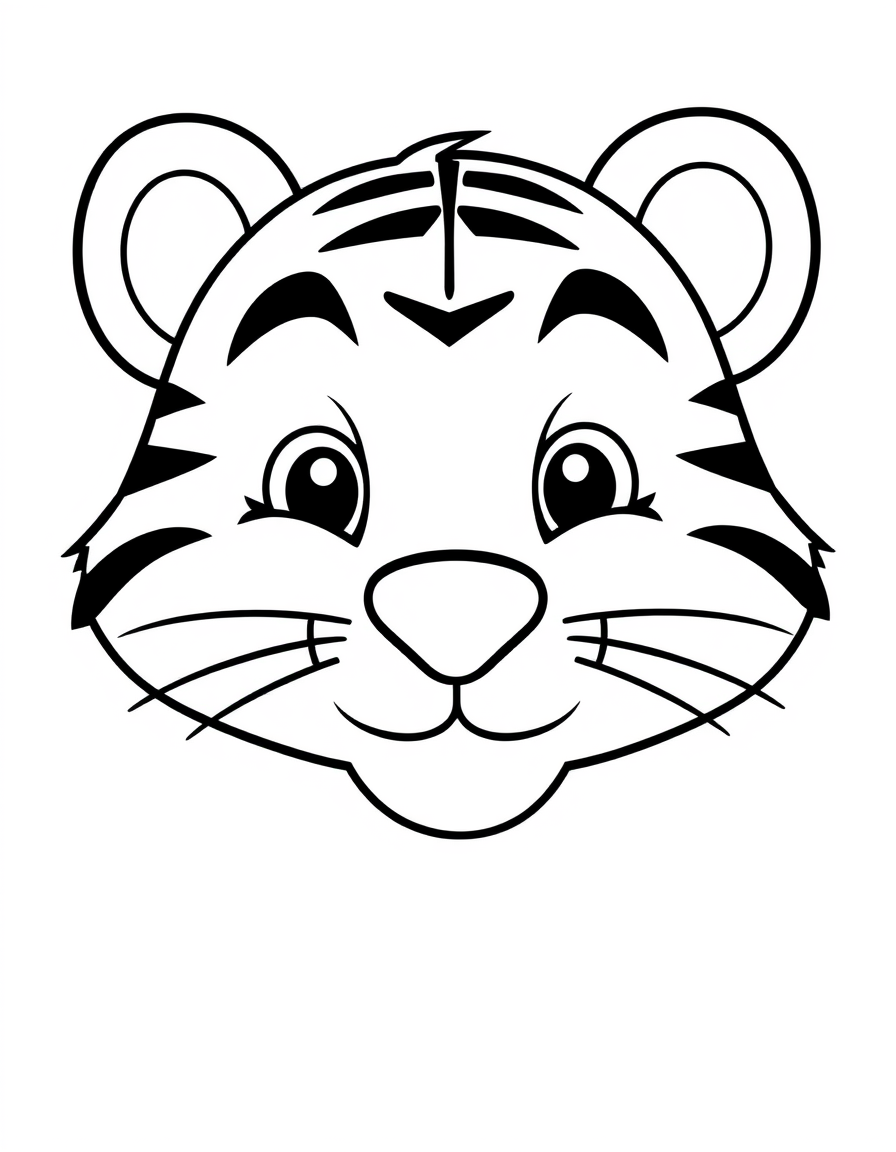
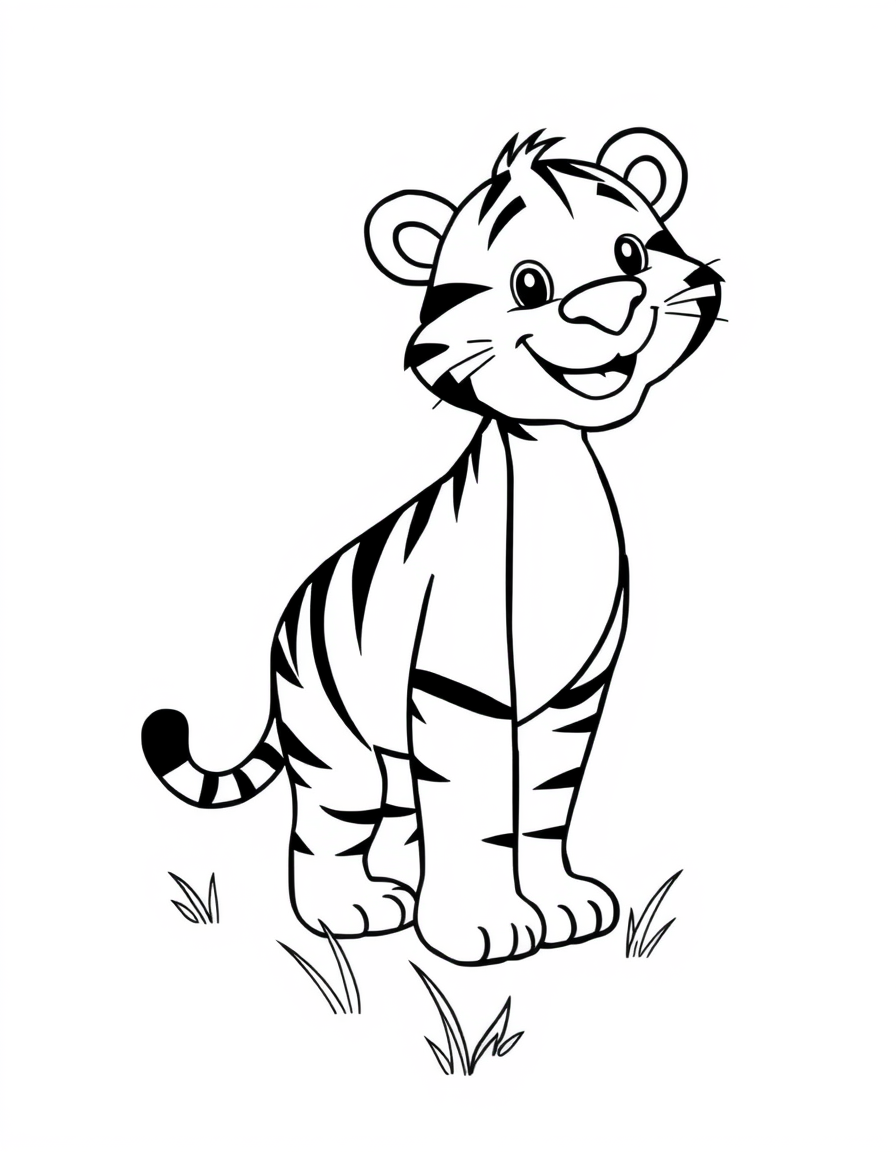
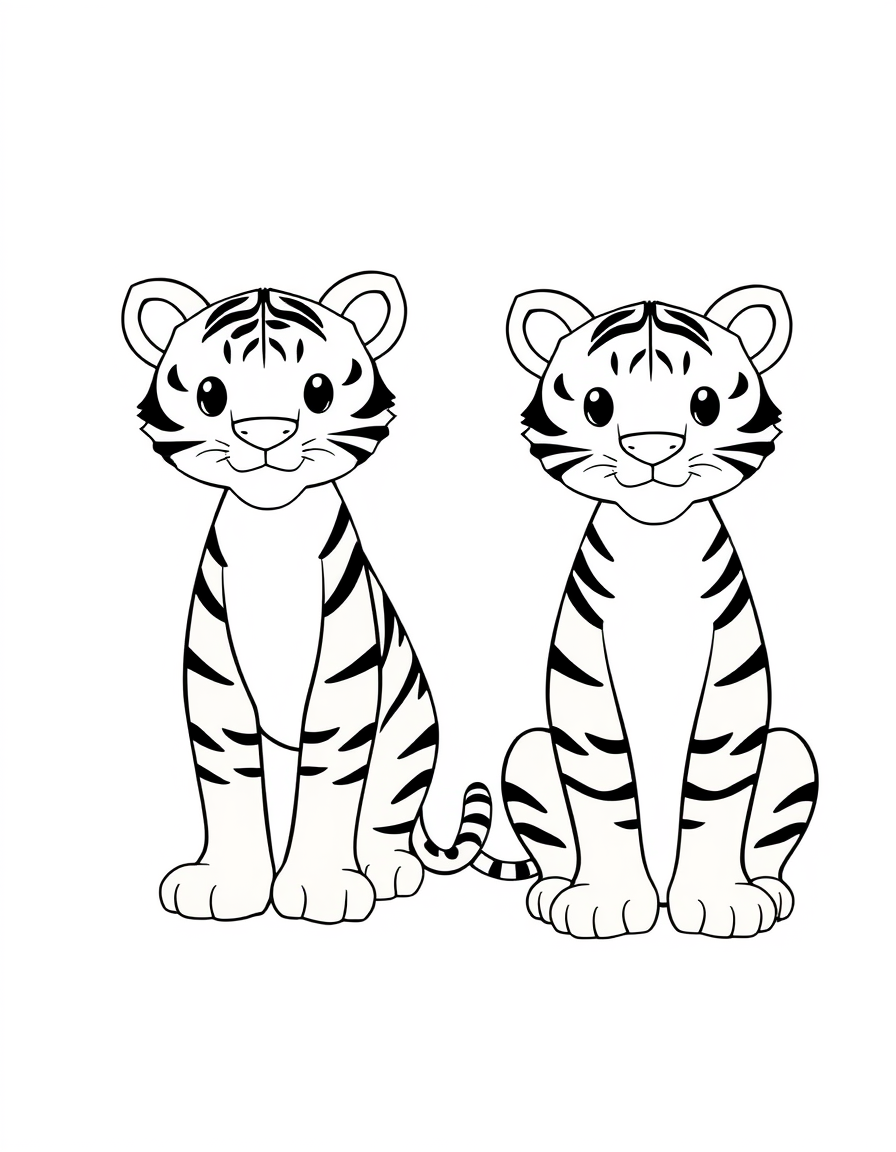
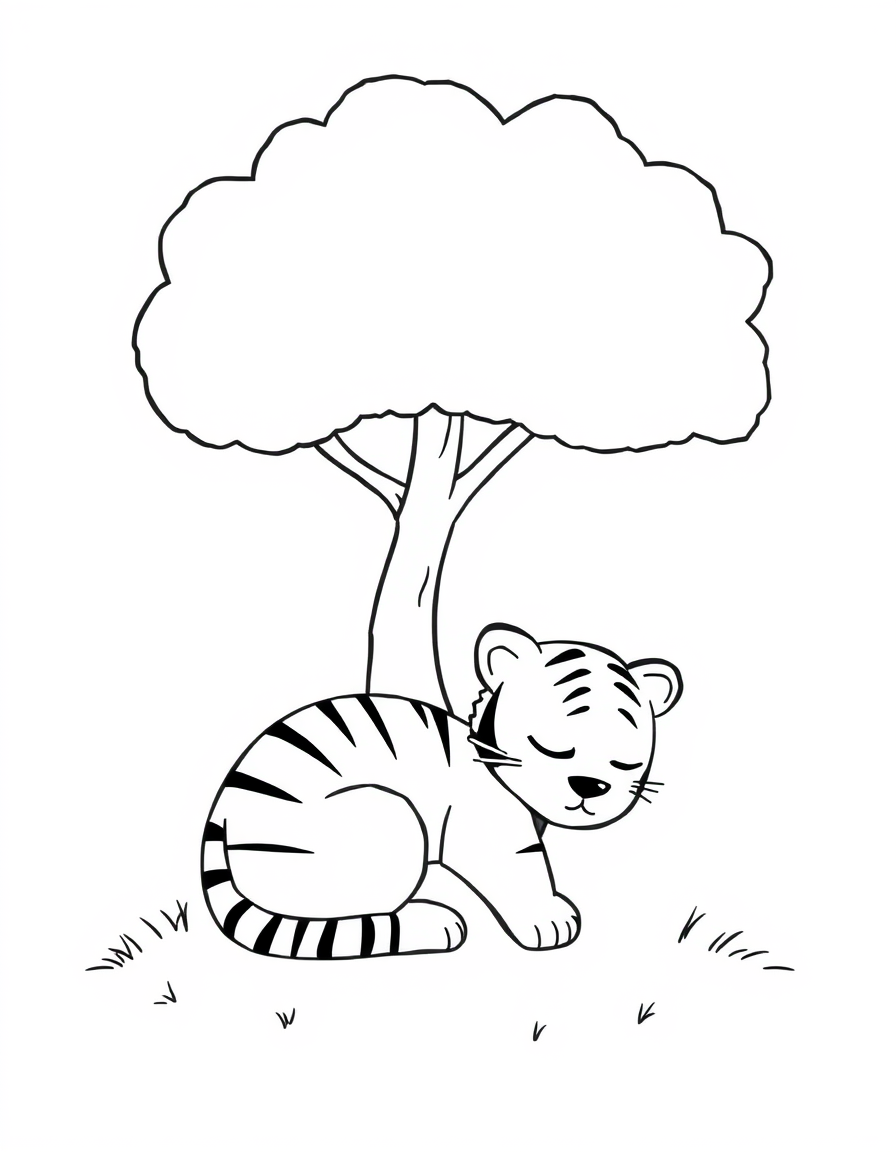
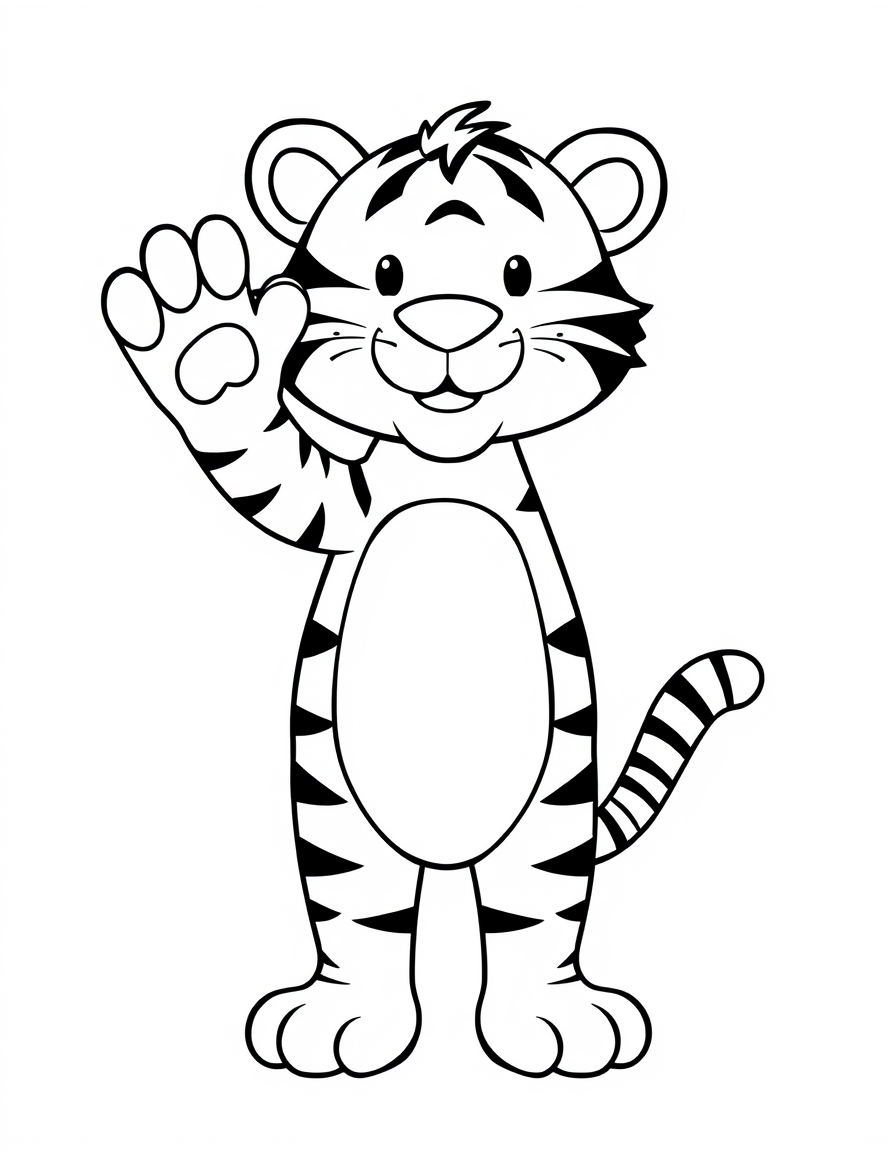
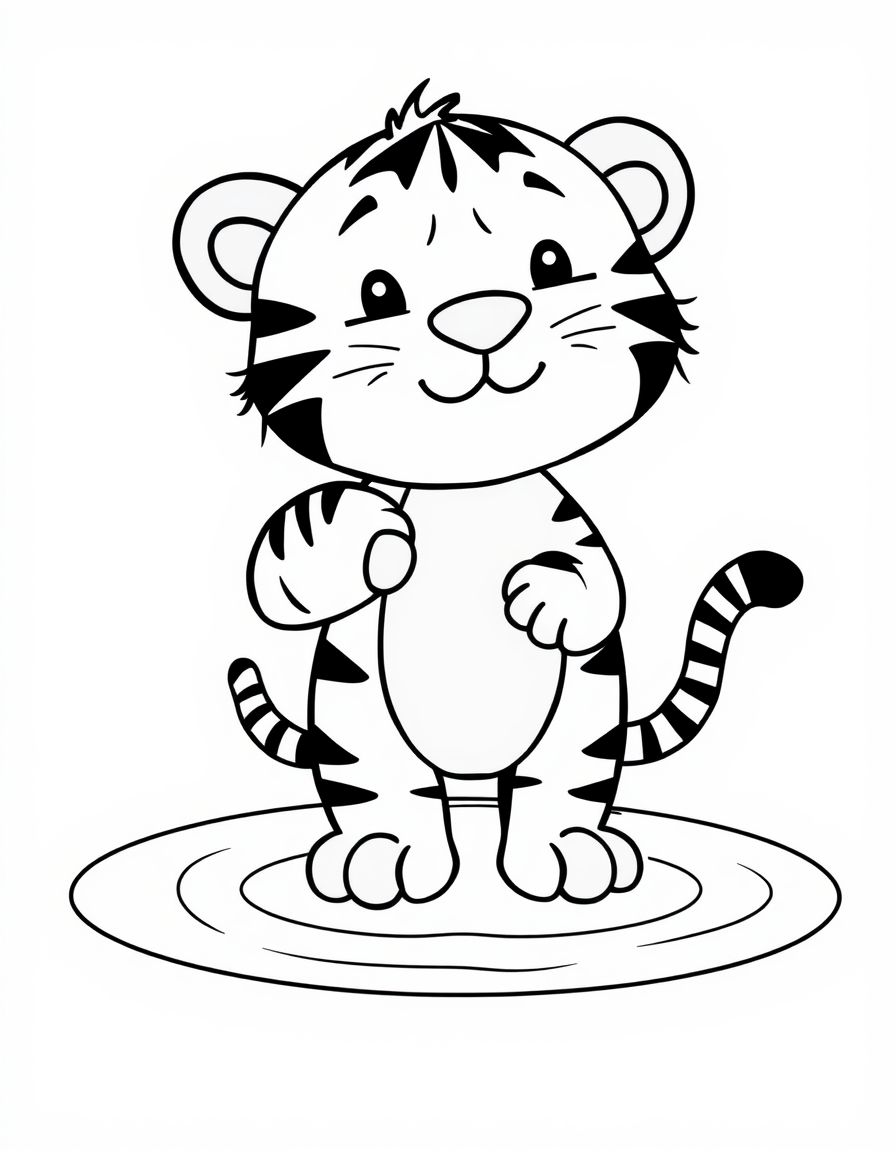
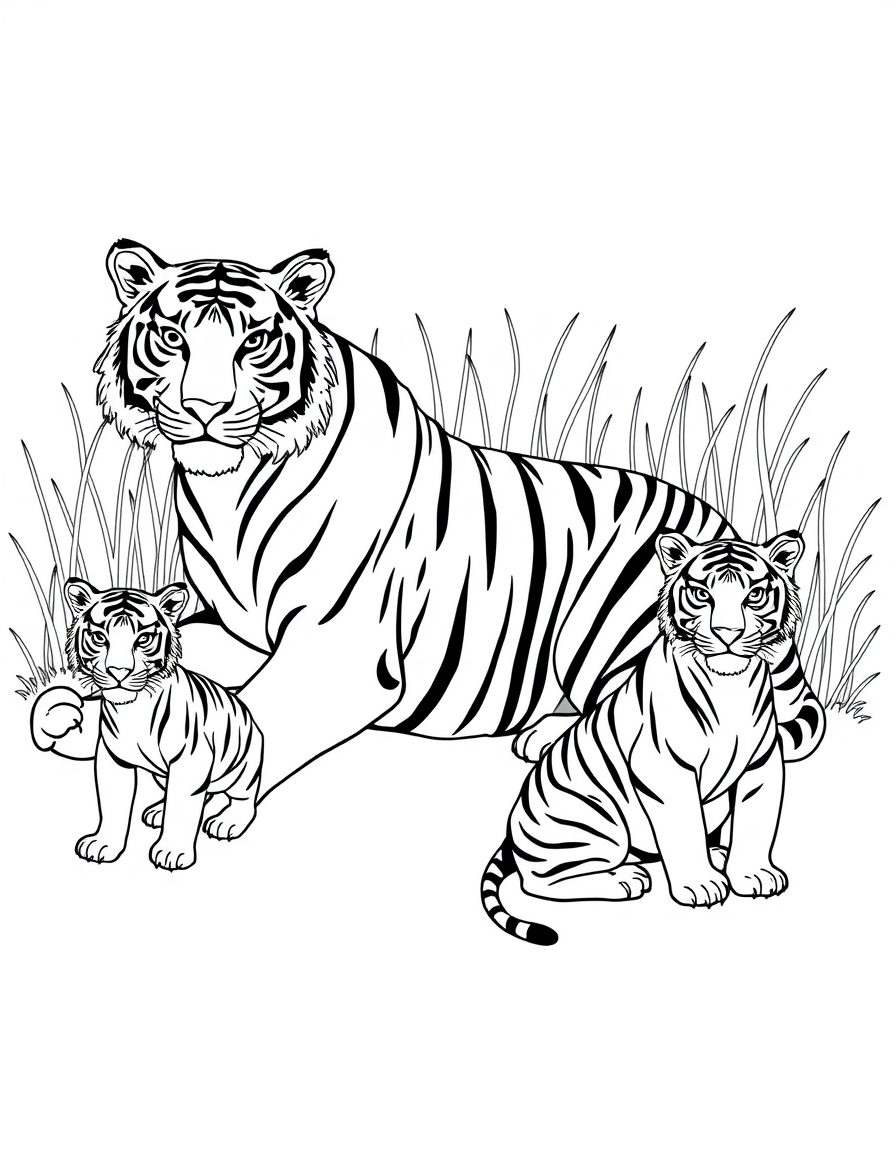
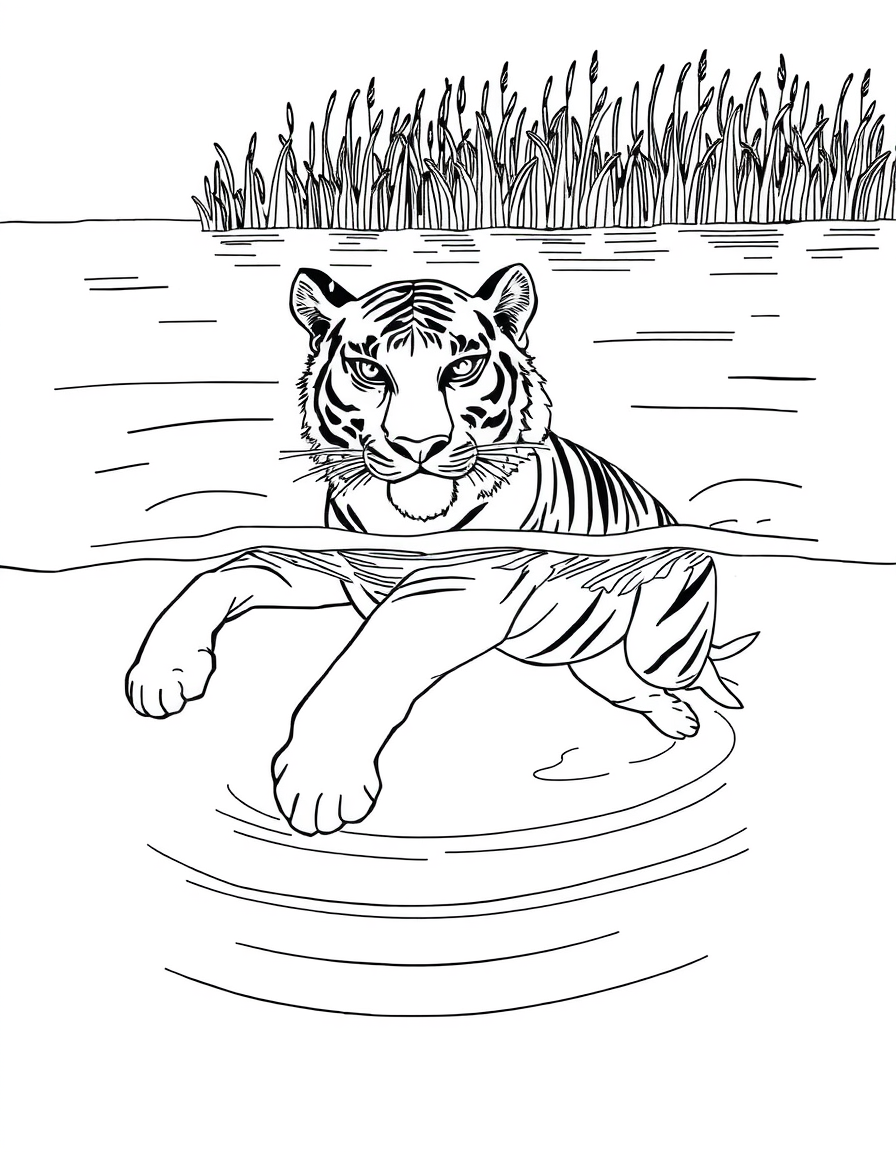
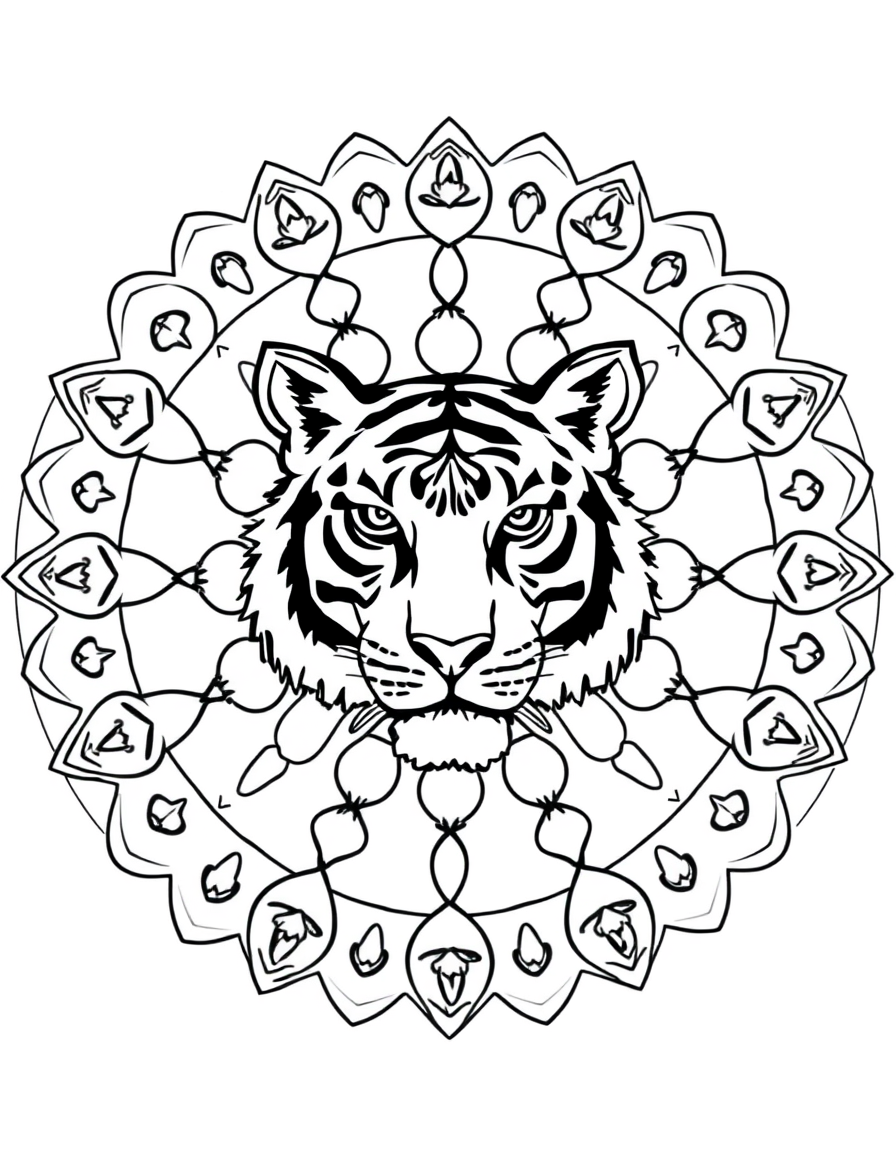
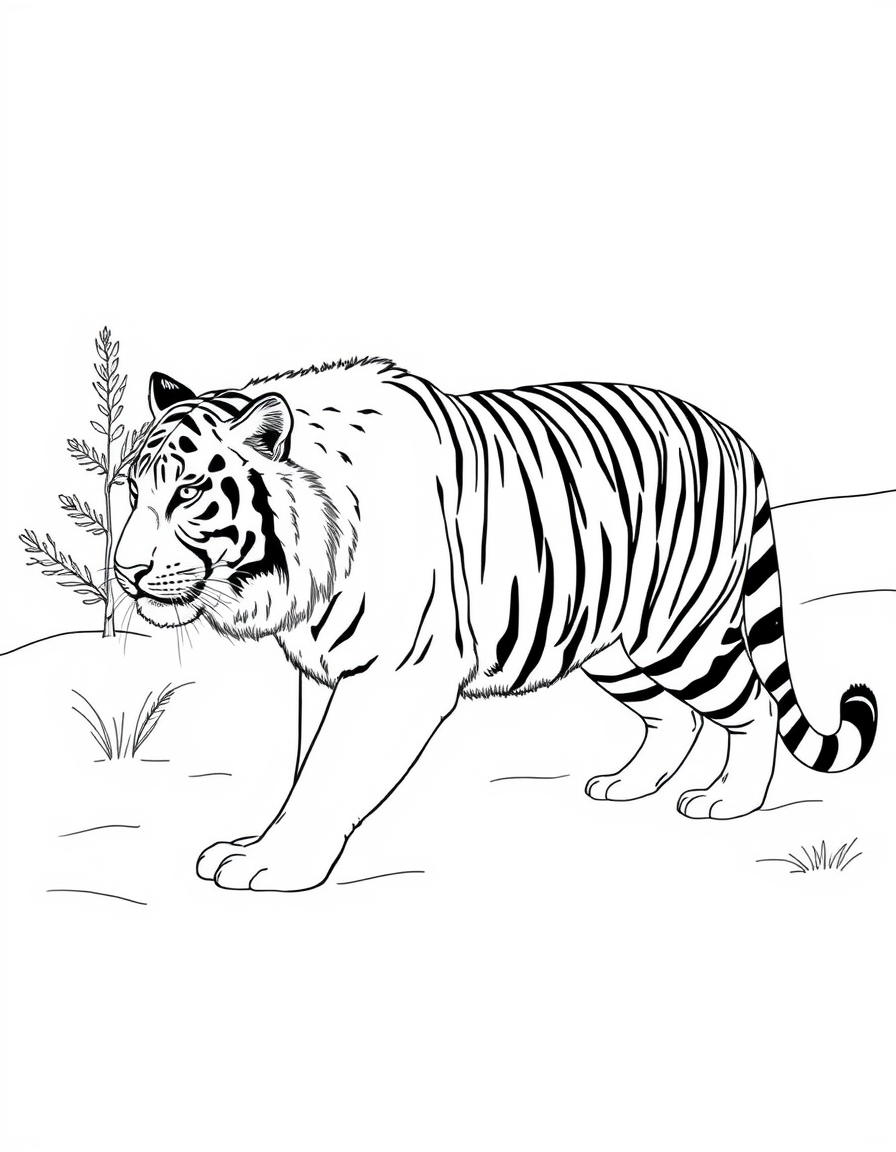
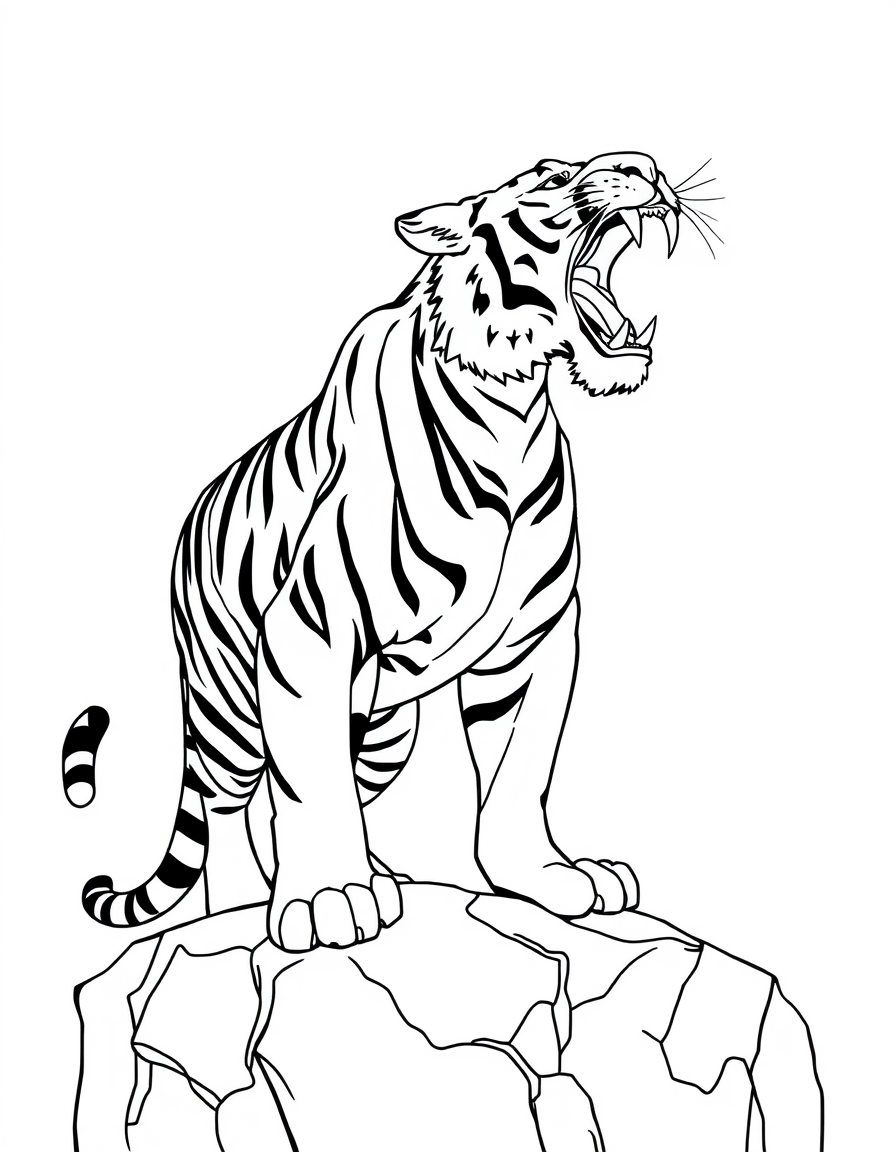
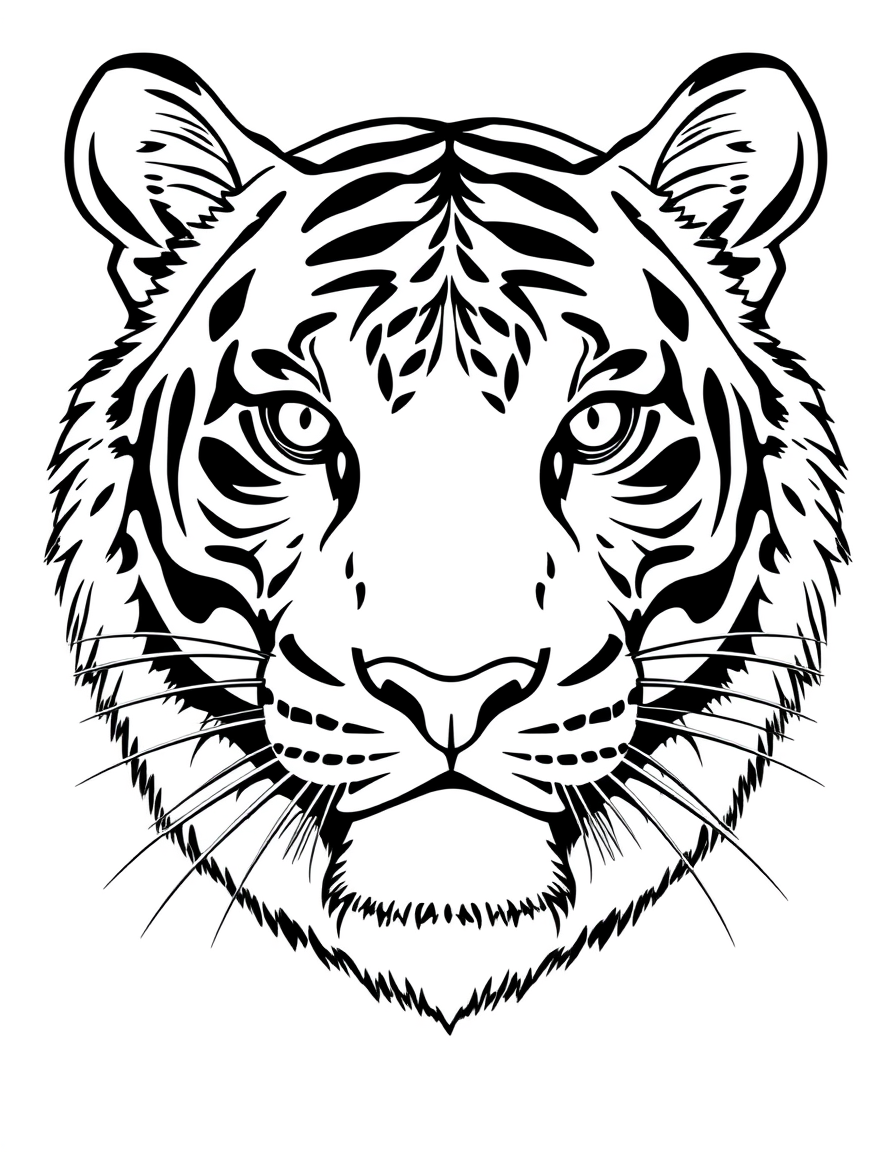
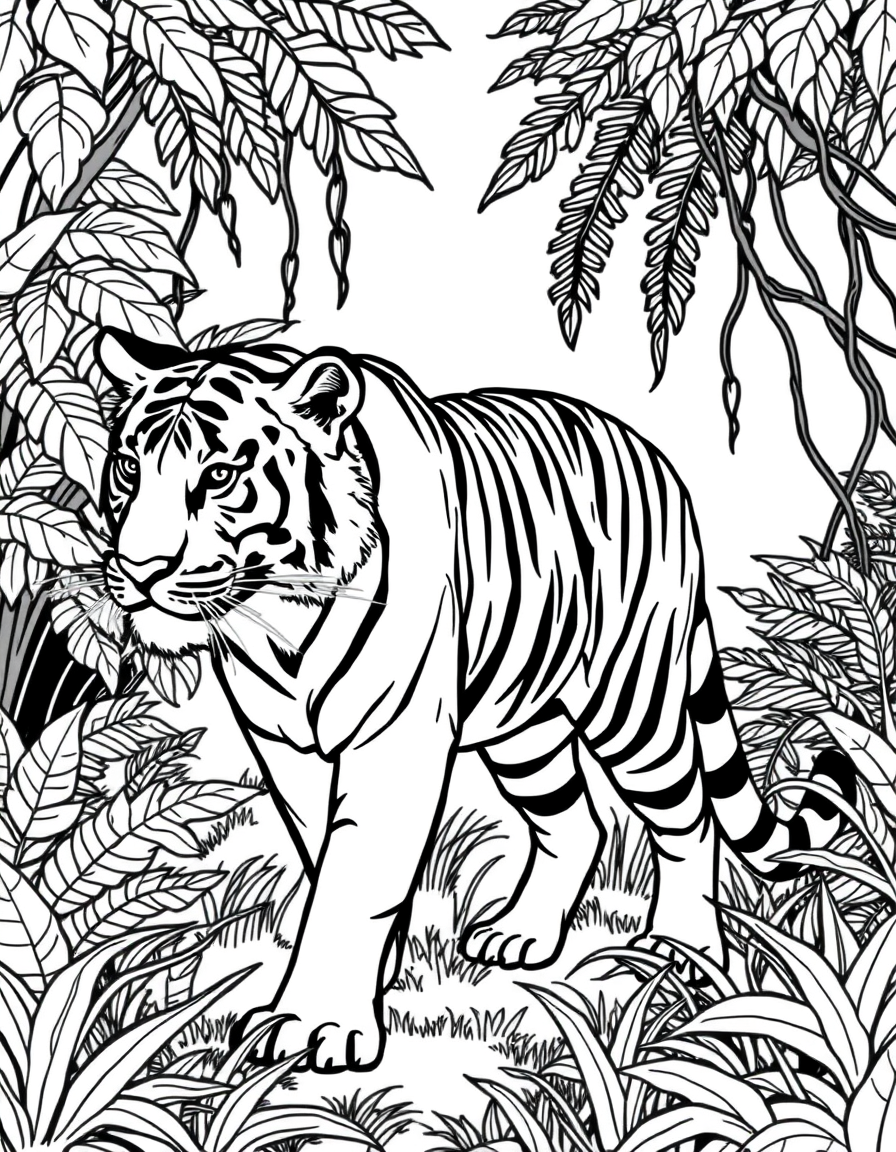
No two tigers wear the same coat. A tiger's stripe pattern is as individual as a fingerprint, and it grows out of the skin rather than the fur, so a shaved tiger still shows its markings. Field researchers count wild tigers by photographing flanks and matching the patterns one animal at a time. That fact is what makes this animal such a good coloring subject: the stripes are the drawing, and every sheet here hands you a different arrangement to work through. These 15 tiger coloring pages download as free printable PDFs sized for US Letter paper.
The cute sheets lead the set, because baby tiger coloring pages are what most people arrive looking for. Cute Baby Tiger Cub Sitting, Smiling Tiger Face Close Up and Tiger Cub Chasing a Butterfly use heavy outlines and large open shapes, so a three year old can fill them without fighting the lines. Two Tiger Cubs Sitting Side by Side, Happy Cartoon Tiger Standing in the Grass, Tiger Cub Sleeping Under a Tree, Cartoon Tiger Waving Hello and Tiger Cub Splashing in a Shallow Pool keep the same friendly faces and give a slightly older child more areas to fill.
The realistic tiger coloring pages put the anatomy back in. Realistic Tiger Head Portrait With Detailed Stripes gives the whole sheet to one face, from the whiskers to the ruff along the jaw. Bengal Tiger Prowling Through Jungle Leaves and Tiger Roaring on a Rock Ledge set the animal in habitat and fill the space around it, while Siberian Tiger Walking Through Snow shows the heavier winter coat and the thick neck ruff that a Bengal never grows. Tiger Mandala With Stripe Patterns breaks the markings into repeating rings for adult colorists. Set aside an hour or more for any of those four.
Color is where a tiger sheet goes wrong most often, and the problem is almost always too much orange. A real tiger carries a lot of white: the chin, the chest, the belly, the inside of all four legs, the ruff on the cheeks and a bright patch above each eye. Leave those areas as bare paper and the animal reads correctly straight away. The stripes are very dark brown rather than pure black, and the orange works best in layers. Lay a pale yellow over the whole coat, bring orange across the back and flanks, then push a rust tone into the shoulders and haunches where the legs meet the body. Save the stripes for last, because they cover the layers underneath rather than mixing with them.
The back of each ear is worth a second look on the detailed sheets. Tigers carry a white spot on the dark back of both ears, and biologists think those spots work as false eyes for a predator approaching from behind and as a marker cubs can follow through tall grass. Color the ear backs dark, leave the two spots white, and the head gains depth without any shading.
Tiger Swimming Across a River is accurate rather than invented. Tigers are the one big cat that seeks out water, and they will cross wide rivers and lie in shallow pools through the heat of the day. Mother Tiger With Her Two Cubs in Tall Grass covers the other end of tiger life, since a cub is born blind and stays with its mother for roughly two years before it hunts alone. Those two sheets close out the printable tiger coloring sheets in this set.
More big cat line art: Lions, Cats and Zoo Animals.
Frequently Asked Questions
What colors do I need for a tiger coloring page?
Three tones of orange and one dark brown will carry every sheet here. Start with a pale yellow orange for the base coat, add a mid orange over the back and flanks, then a rust or burnt orange in the deepest areas. Use dark brown for the stripes instead of black, since a black pencil flattens the coat and leaves nothing darker in reserve. White stays as bare paper on the chin, chest, belly and inner legs.
How many stripes does a tiger have?
Roughly 100 on most animals, though the count varies by subspecies. Sumatran tigers wear the narrowest and most crowded stripes, and Siberian tigers the fewest and palest. No two individuals match, which is why the detailed sheets on this page give you a different pattern each time rather than one design repeated.
Which tiger coloring page suits a preschooler?
Cute Baby Tiger Cub Sitting has the fewest separate areas and the heaviest lines, so it works from about age three. Smiling Tiger Face Close Up and Cartoon Tiger Waving Hello are the natural next steps. Leave the jungle scenes, the snow scene and the mandala for age eight and up, or for adults.
Do tigers really swim?
Yes, and they are strong at it. A tiger will swim several miles across a river, and cubs play in water from a few months old. Most cats avoid getting wet, so this is one of the clearest behavioral differences between a tiger and the lion it shares a zoo enclosure wall with.
Why does a tiger look orange to us but not to a deer?
Deer see color with two types of receptor rather than three, so orange and green fall close together for them. A tiger crossing dry grass reads as green on green to the animal it is hunting, which is why an orange coat works as camouflage. Coloring the grass a warm yellow green on the prowling sheets makes that point visible on the page.
Can I print these tiger coloring sheets for a whole class?
Yes. Every design downloads as a free PDF and prints on standard US Letter paper, so run as many copies as a classroom, library group or birthday party needs.