Monkey Coloring Pages
Free printable monkey coloring pages featuring cheeky cartoon monkeys, cute baby monkeys, bananas, vines and jungle scenes.
Create a Custom Coloring Page
Describe what you'd like and we'll generate it free, no account needed
Family-friendly only · 1 free per day
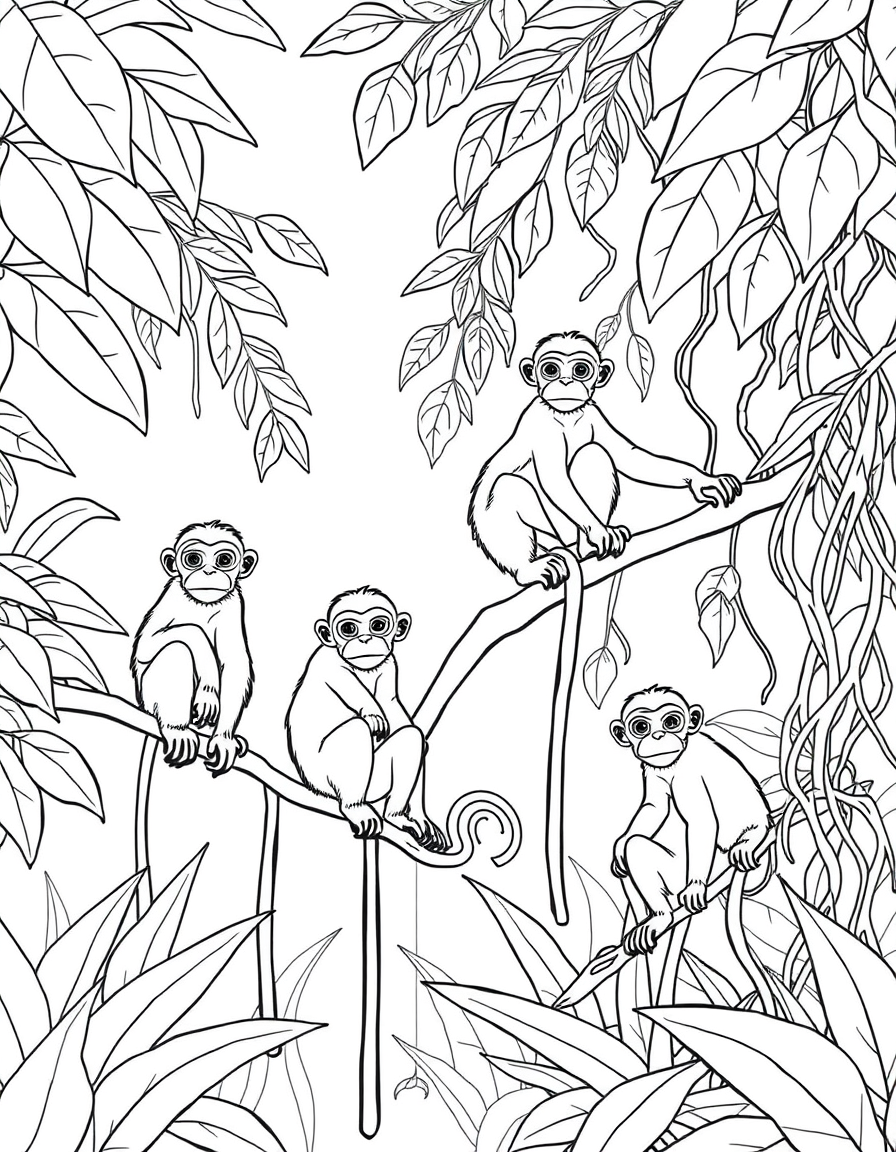
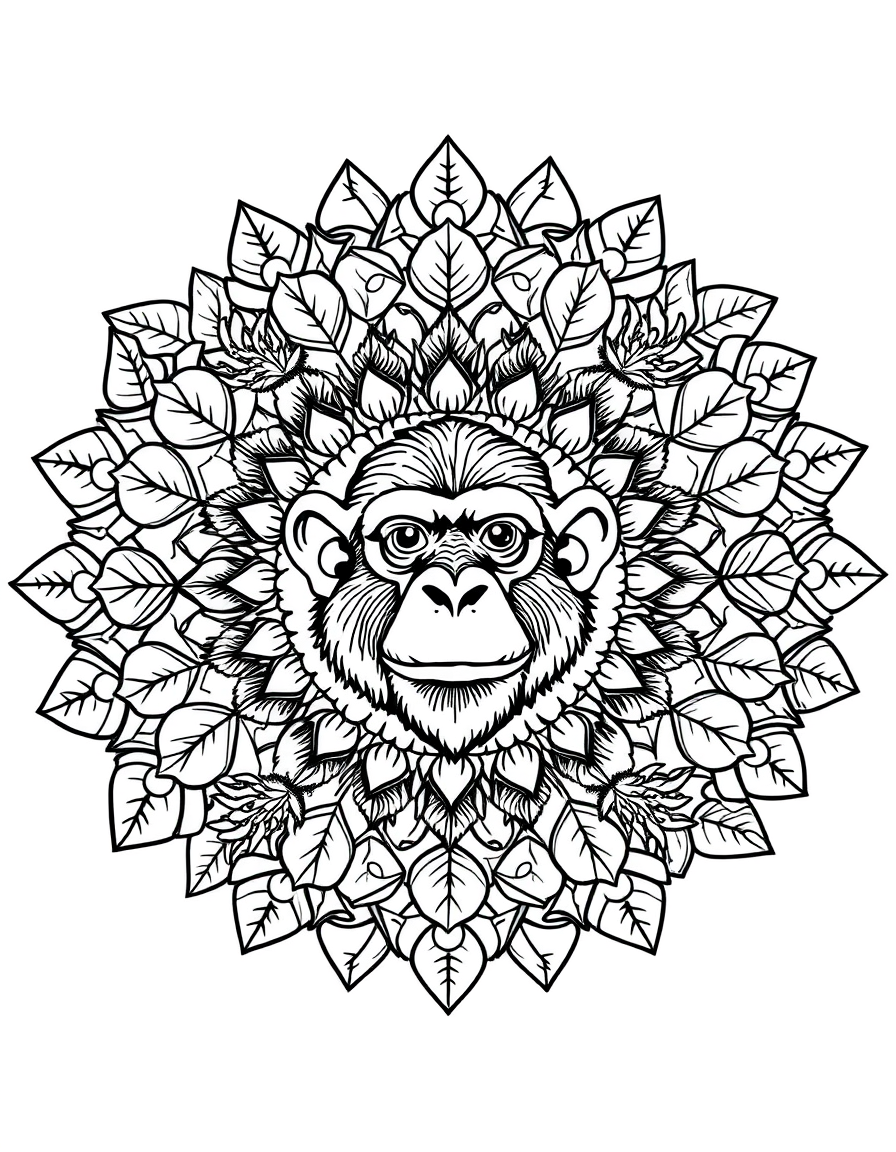
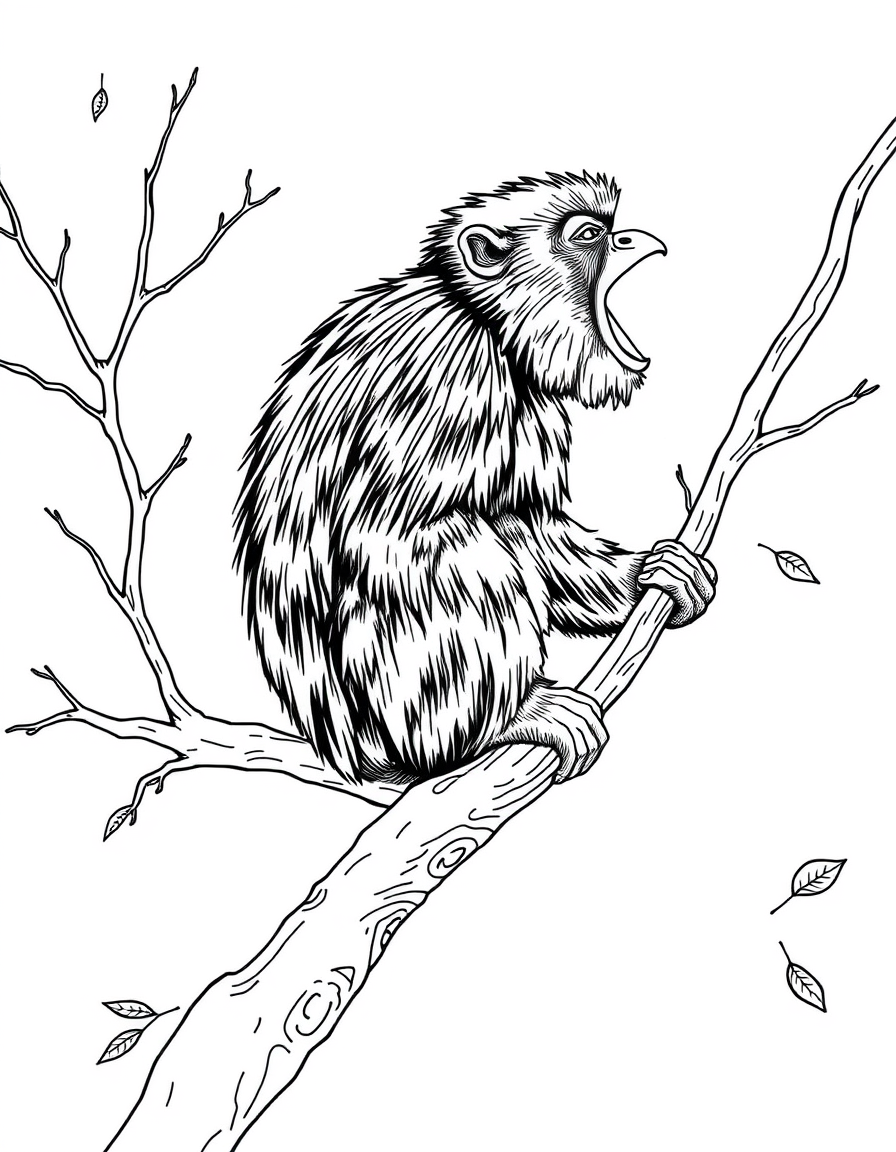
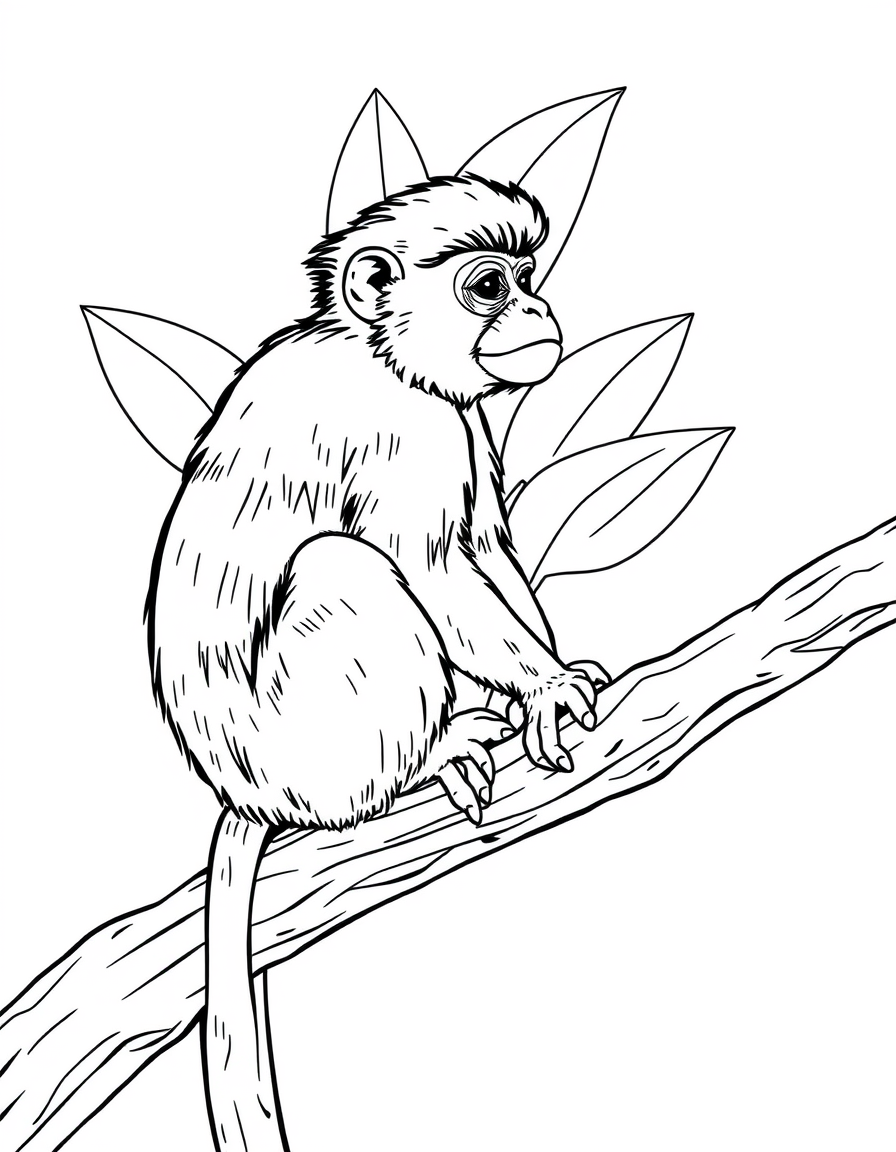
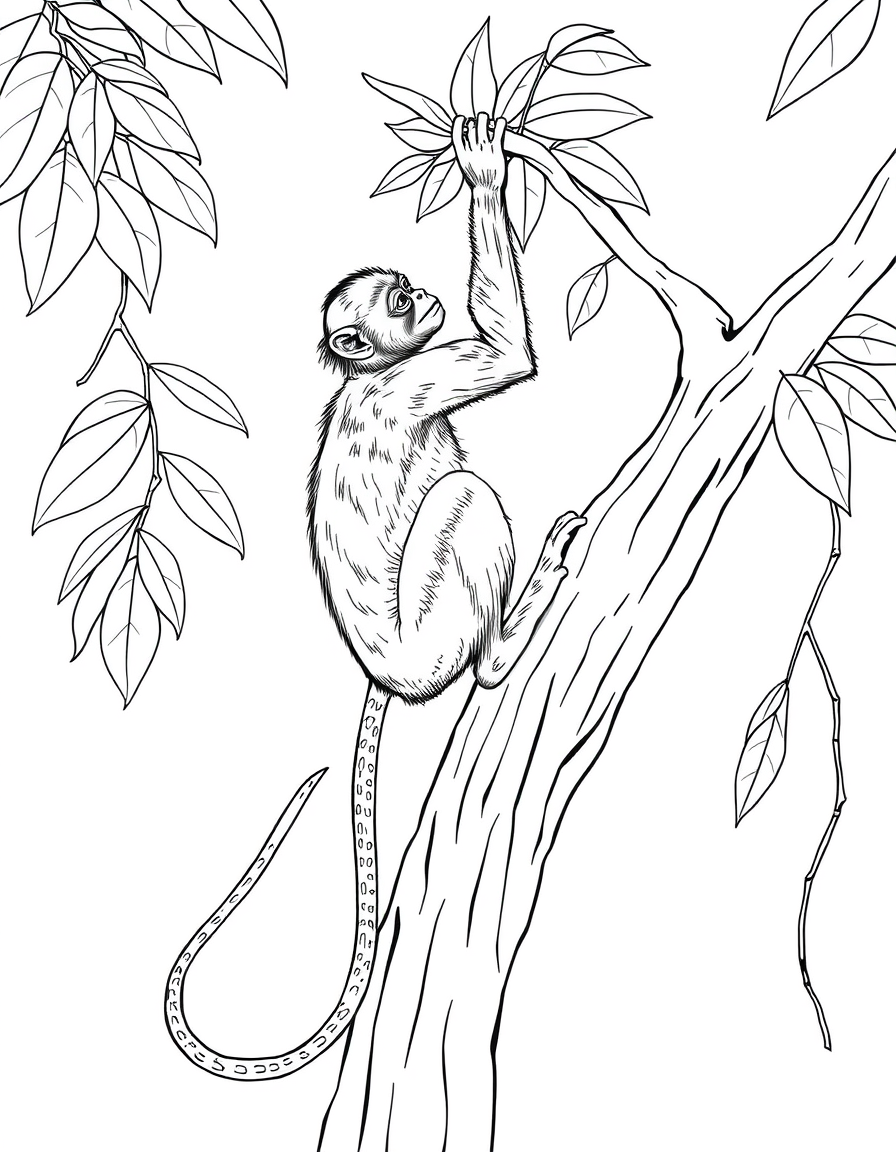
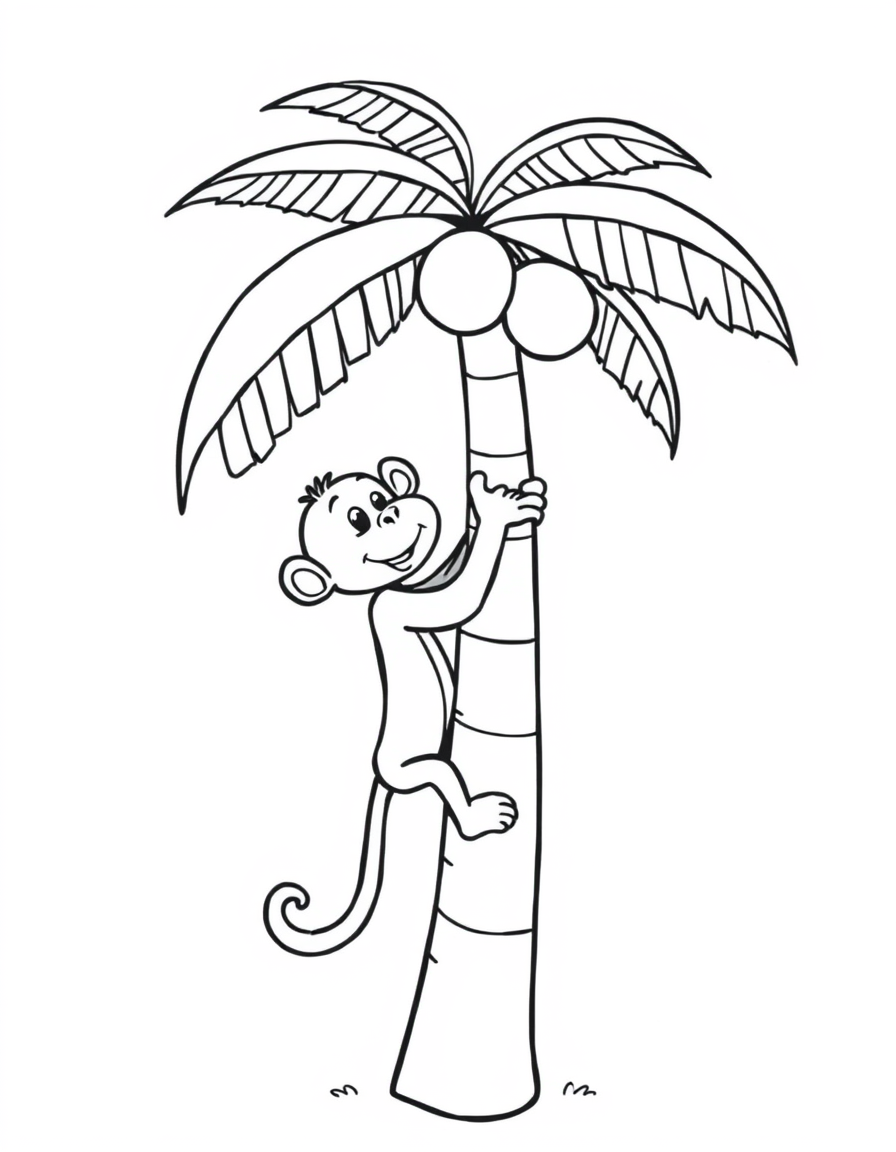
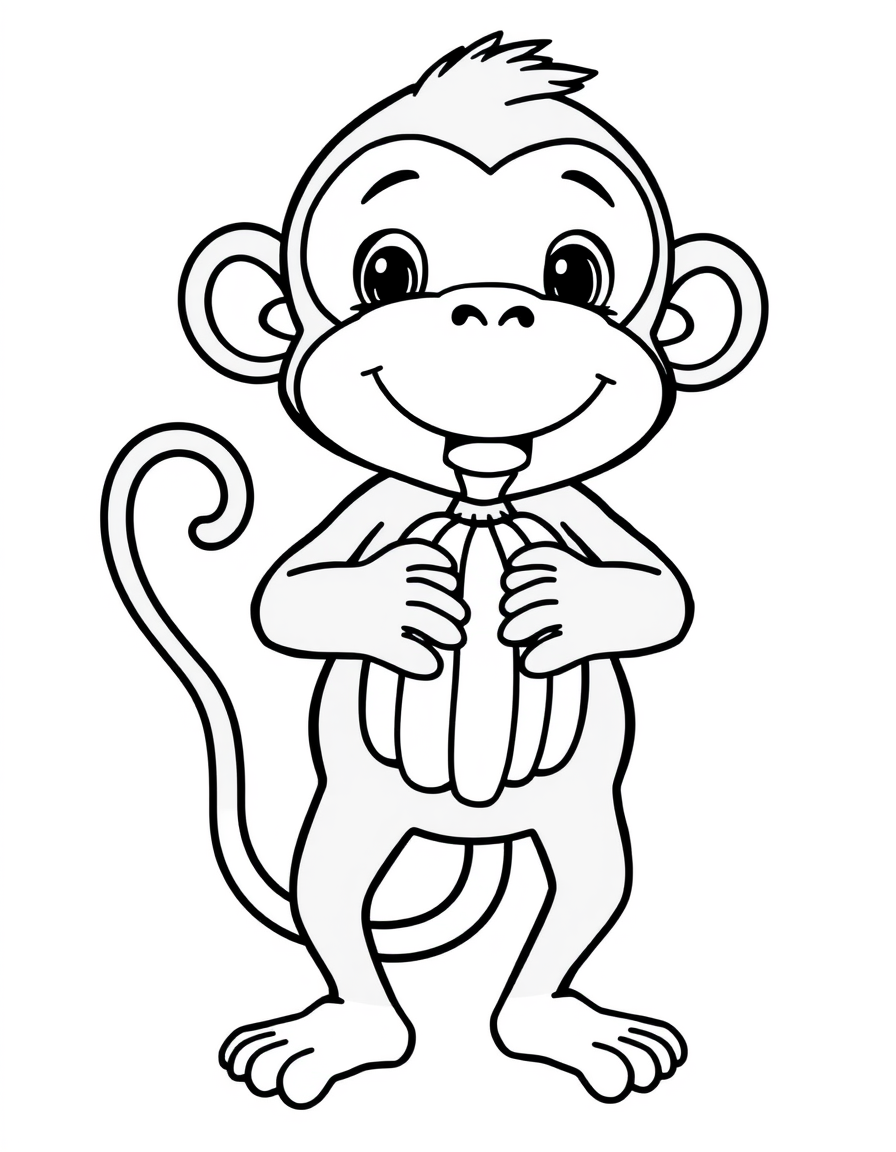
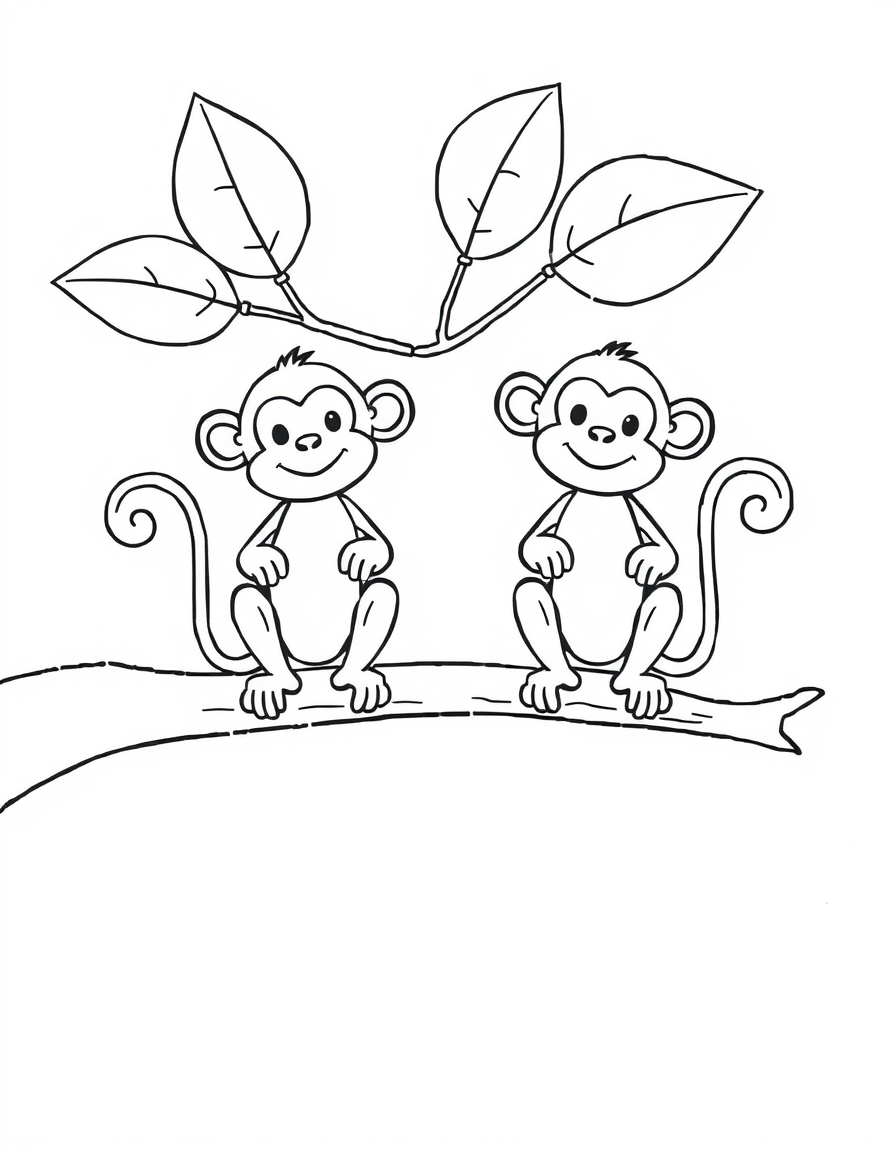
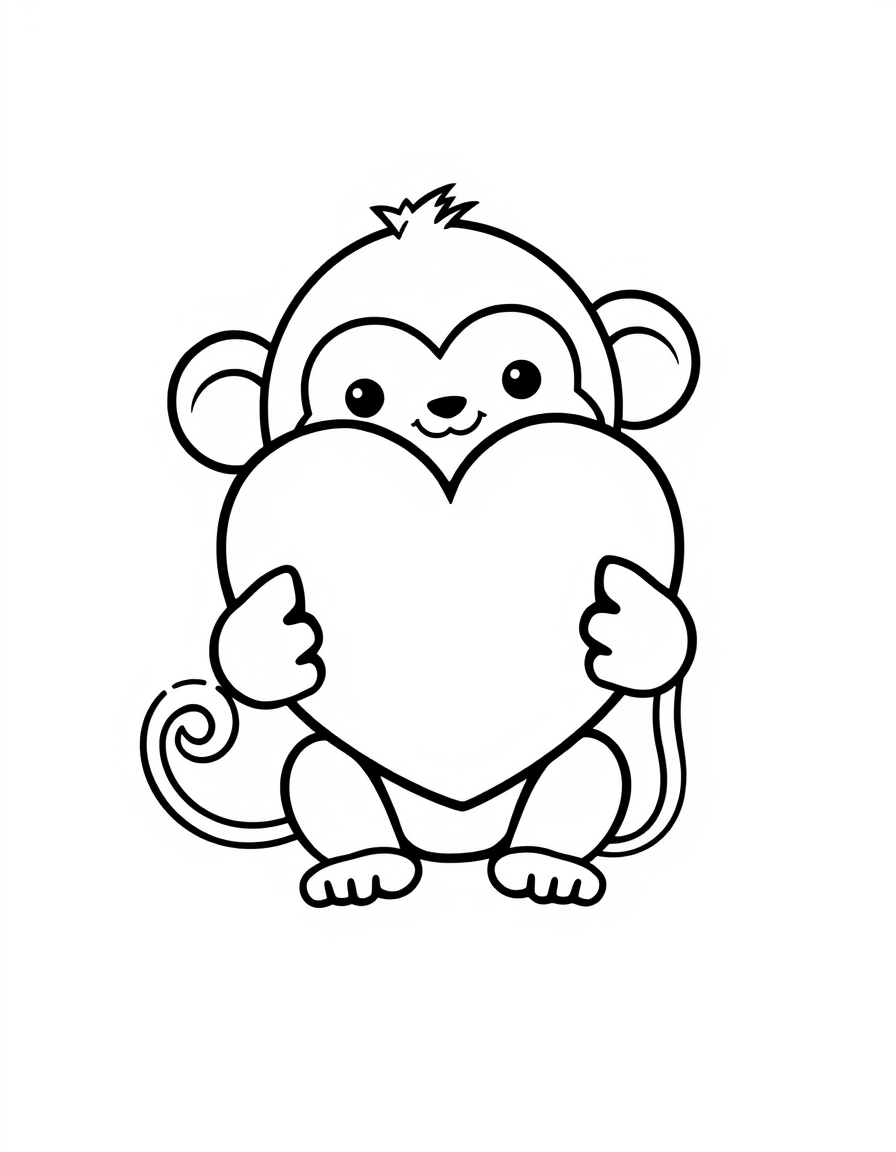
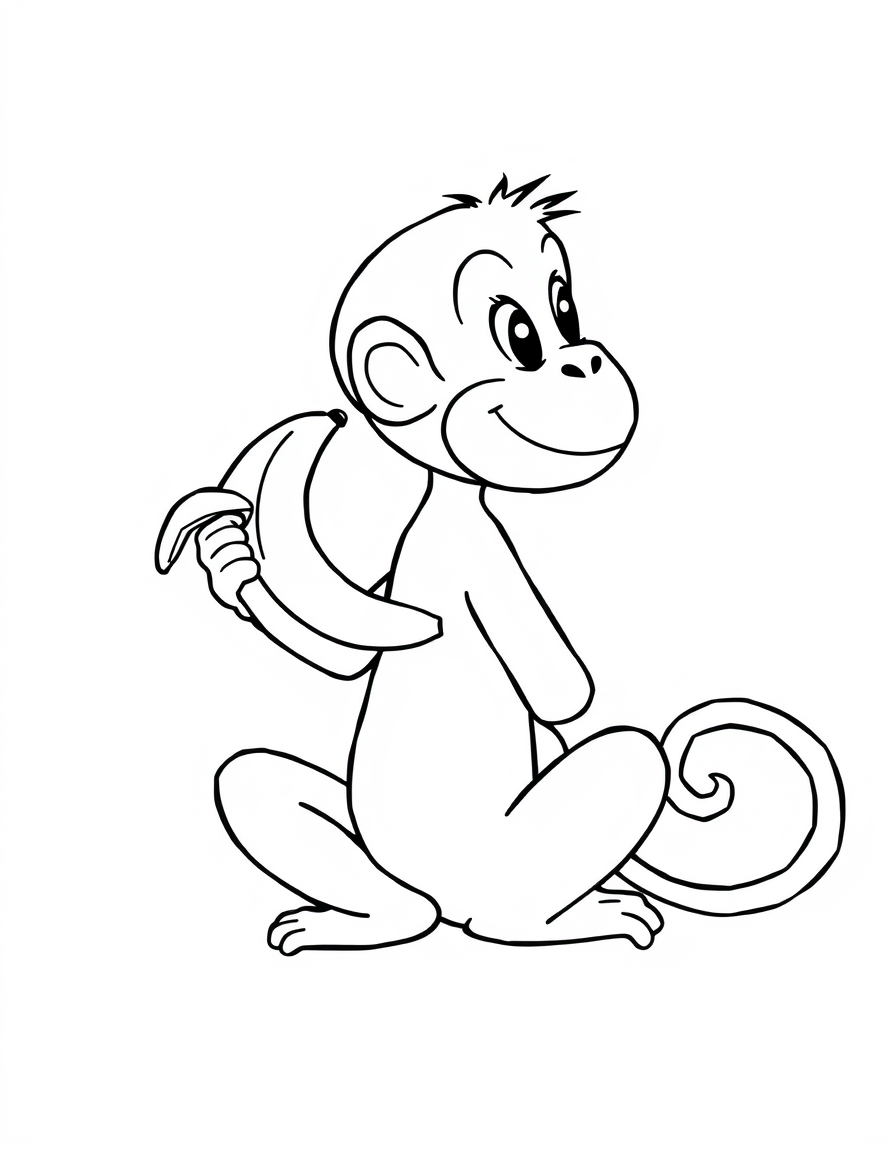
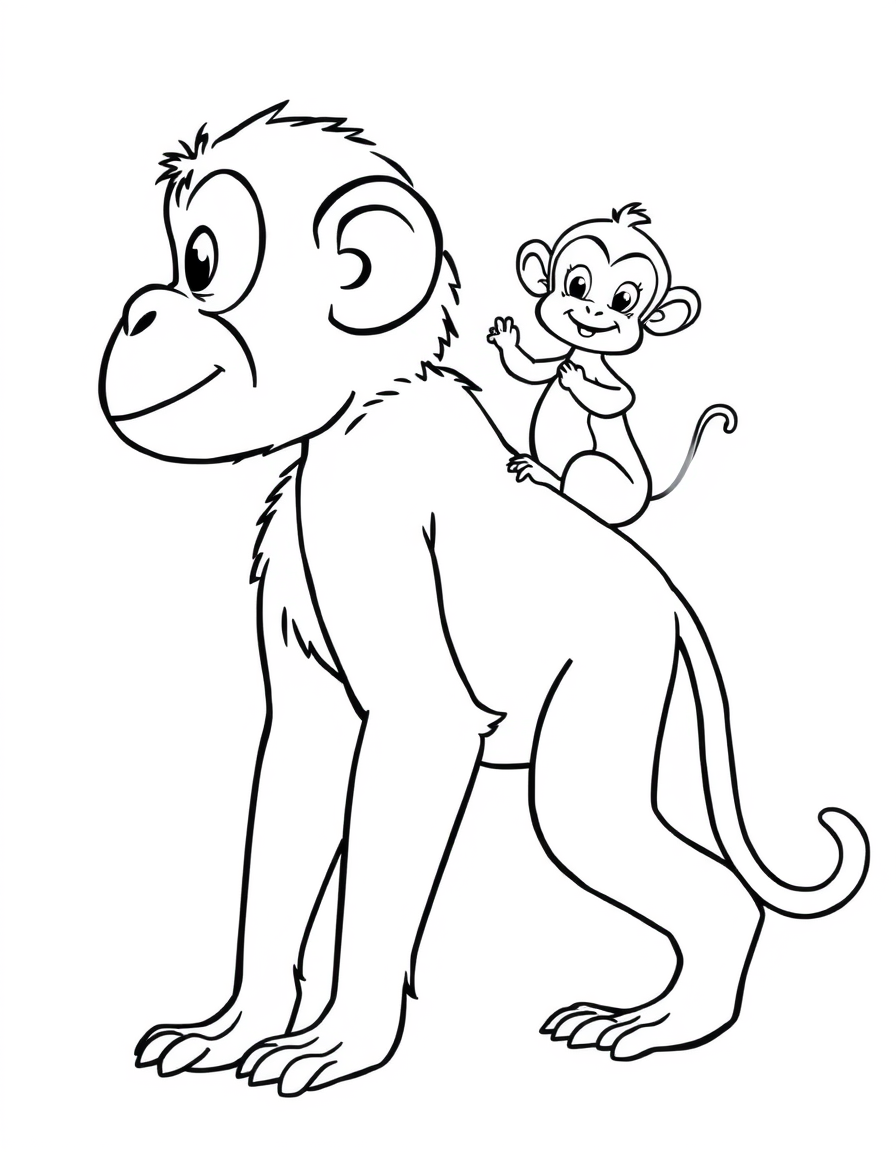
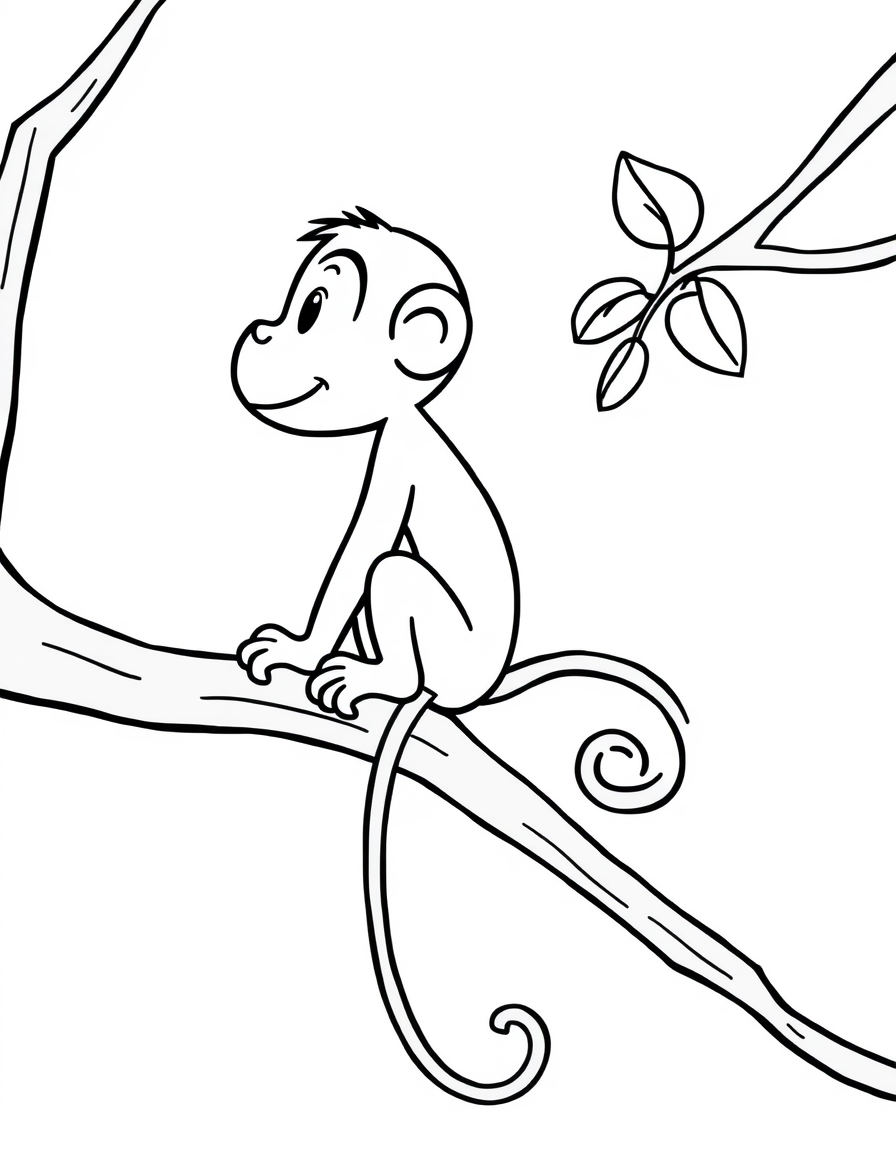
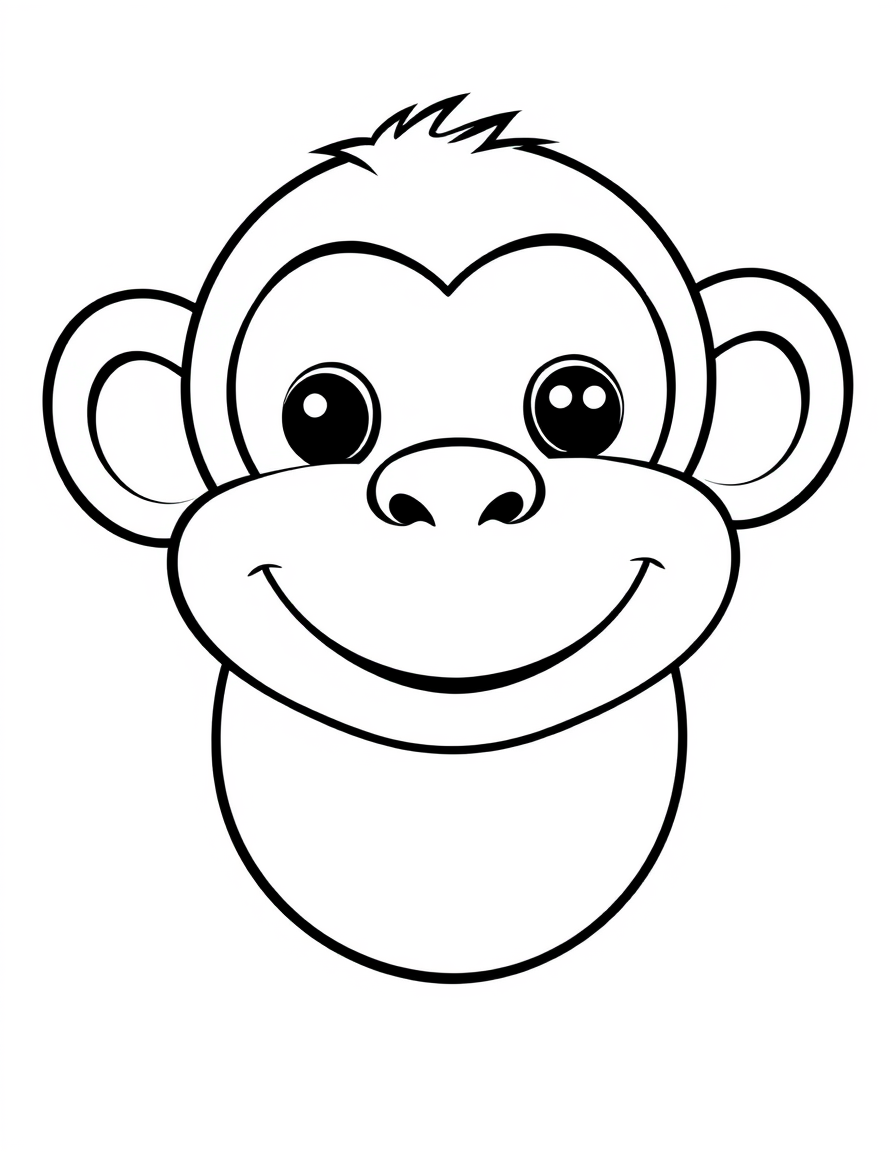
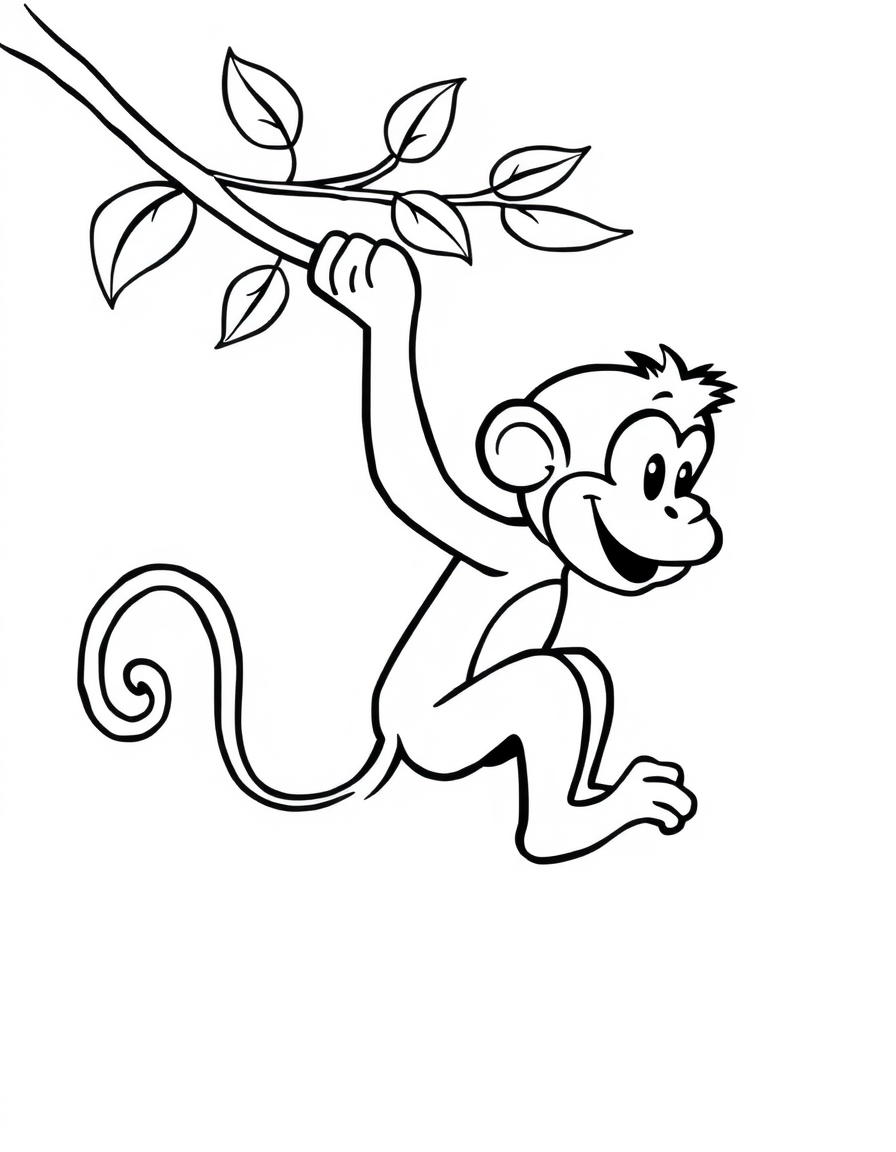
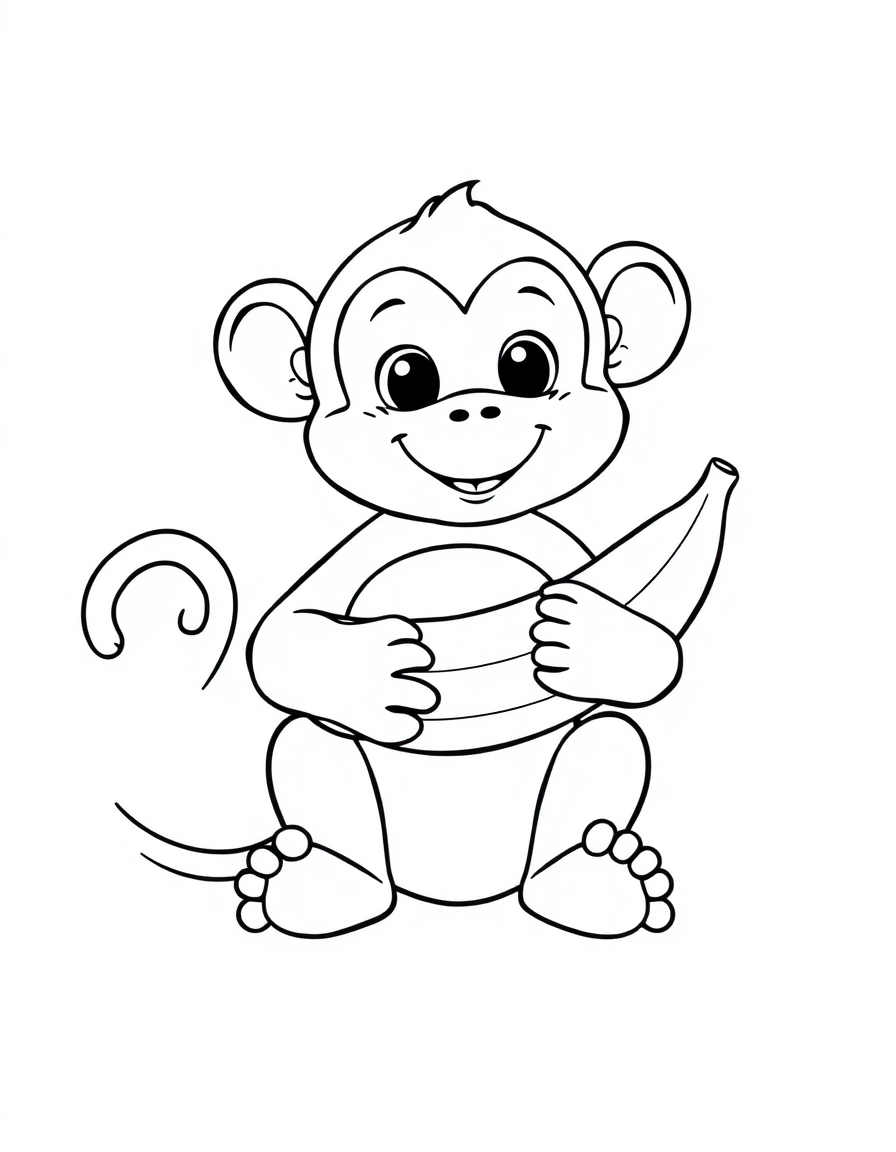
A monkey uses its hands the way you use yours. It grips, peels, unlatches, steals, and in the case of a capuchin it cracks a nut with a stone it carried to the job. That is the animal these 15 monkey coloring pages are built around, from a chubby baby clutching a banana to a whole troop spread through the canopy. Every design downloads as a free printable PDF sized for US Letter paper, so you can run one copy at the kitchen table or thirty for a classroom.
The cute baby monkey coloring pages come first, because that is what most people arrive looking for. Cute Baby Monkey Holding a Banana and Smiling Monkey Face Close Up carry the thickest lines in the set and leave the largest blank areas, so a three year old can fill them without fighting the outlines. Kawaii Monkey Holding a Big Heart reduces the whole animal to a few rounded shapes and doubles as a homemade card. Monkey Eating a Banana adds a second object to color without adding any difficulty.
The cartoon monkey coloring page group puts the animal up a tree. Cartoon Monkey Swinging on a Jungle Vine catches the pose everybody pictures first. Monkey Sitting on a Tree Branch slows the same animal down, Monkey Climbing a Palm Tree hands you two coconuts and five broad fronds to work through, and Monkey Holding a Big Bunch of Bananas turns six separate fruits into a counting game before any color goes down. Two Monkeys Playing Together in a Tree and Baby Monkey Riding on Its Mothers Back each put two animals on one sheet, which settles the argument when two children want the same page.
Choose your browns before you start, because almost no monkey is one flat color. Most species wear a darker back and shoulders, paler fur across the chest, and hands, feet and face in a different shade again. Lay a mid brown over the body, drop a warm tan on the chest and muzzle, then run a cooler gray brown down the tail and along the limbs. Leave the muzzle and the skin around the eyes lightest of all, since that pale mask is what makes the face read as a monkey rather than a bear. On the cartoon sheets you can throw all of that out and color the animal purple, and it still works.
Five sheets step up in difficulty and drop the cartoon proportions. Spider Monkey Climbing a Rainforest Tree and Howler Monkey Calling From the Treetops show two South American species with tails that grip like a fifth limb, something no African or Asian monkey can do. Capuchin Monkey Sitting on a Jungle Branch gives the most intelligent monkey in the Americas a quiet moment on a branch. Troop of Monkeys in a Jungle Scene holds more separate areas than anything else here, and Monkey Mandala With Jungle Leaves and Bananas aims squarely at adults, with rings of leaves and fruit radiating out from a single face.
More printable animal line art in the same style: Zoo Animals, Baby Animals and Lions.
Frequently Asked Questions
What colors should I use on a monkey?
Reach for browns, tans and gray browns rather than a single flat color. Spider monkeys and howlers run dark chocolate to near black, capuchins pair a cream face and shoulders with a dark brown cap and body, and the macaques most people picture from zoos sit somewhere in the middle at a dusty golden brown. Keep the muzzle and the skin around the eyes lighter than the fur in every case, because that contrast is what carries the face.
Are chimpanzees and gorillas monkeys?
No, they are apes. The quickest test is the tail: monkeys have one and apes do not. Apes are also larger, have broader chests and longer arms, and swing hand over hand rather than running along the tops of branches. Chimpanzees, gorillas, orangutans, bonobos and gibbons all sit on the ape side of the line, so none of them belong on a page of monkey coloring sheets.
Do monkeys really eat bananas?
Not the ones in your fruit bowl. Wild monkeys eat leaves, seeds, insects, flowers and small wild fruits, and the sweet yellow banana we buy is a farmed variety they would almost never meet. Several zoos have cut back on feeding them for exactly that reason, since cultivated bananas carry far more sugar than anything a monkey finds in the forest. The banana still earns its place on a coloring page, because it gives a child one big obvious shape to fill in a color that is not brown.
Which monkey coloring page is easiest for a preschooler?
Smiling Monkey Face Close Up has the fewest separate areas and the heaviest outlines, so it works from about age three. Cute Baby Monkey Holding a Banana and Kawaii Monkey Holding a Big Heart are the natural next steps. Save the rainforest species, the jungle troop and the mandala for age eight and up, or for the adult at the table.
What is the difference between a spider monkey, a capuchin and a howler?
A spider monkey is the long limbed acrobat, with arms and a tail far longer than its body and barely any thumb, which lets it hook over branches at speed. A capuchin is the small, pale faced problem solver that uses stones as tools and opens anything with a lid. A howler is the heavyset one with the enormous throat, and its call is the loudest sound any land animal makes in the Americas, carrying about three miles through thick forest. All three live in Central and South America.
Can I print these monkey coloring sheets for a whole class?
Yes. Every design here downloads as a free PDF and prints on standard US Letter paper, with no account and no limit on copies, so a classroom, a library group or a birthday party is all fine.