Easter Colors: The Pastel Palette and How to Get It on Paper
November 4, 2026
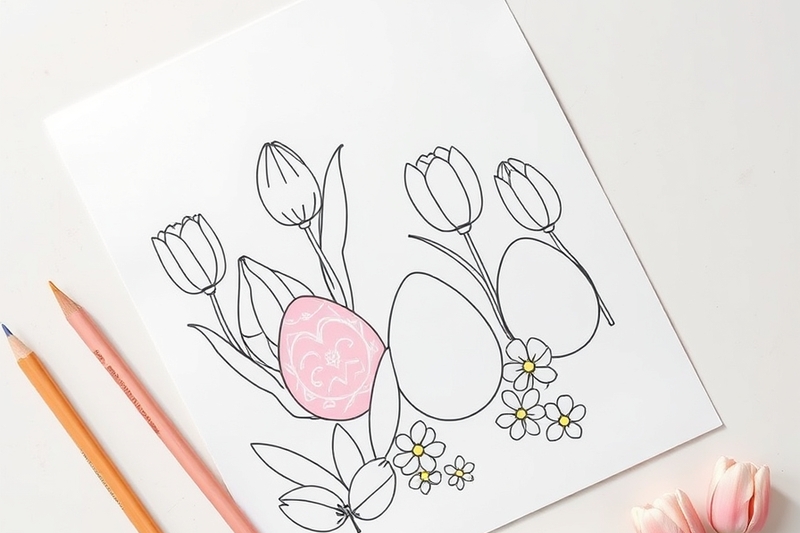
Key Takeaways
- The Easter palette is six colors: pastel pink, lavender, mint green, butter yellow, sky blue, and the white of the paper itself.
- A pastel is a tint, not a pigment, and on a printed page the white is the paper itself. You make one with less pressure, not more, so Easter is the holiday palette built by pressing lighter.
- White and gold are the Catholic church's Easter colors. Violet belongs to Lent, which ends before Easter Sunday begins, so the pastel palette is a spring convention rather than a religious one.
- Red is the oldest Easter color of all. Early Christians in Mesopotamia dyed eggs red for the blood shed on the cross, and Greek Orthodox households still do on Holy Thursday.
Who this is for: Parents, teachers, and adult colorists choosing colors for Easter coloring pages.
Search for Easter colors and you get a grid of pastel hex codes. A code like #FFD1DC is an exact instruction for a screen and little help with a pencil in your hand, because a screen builds a pastel by adding white light and a pencil cannot add white to white paper. This guide gives the palette as pigment and pressure instead: the six colors, where they came from, and four palettes that survive a sheet printed at home.
The six colors of the Easter palette
Pastel pink is the signature. It is red carrying a great deal of white, which on paper means a warm red or magenta laid down with almost no weight. Press harder and you get valentine red, so pink teaches the light hand the rest of the palette needs. See mixing pink.
Lavender is the one most sets get wrong. A violet pencil at full strength reads as purple, not lavender, and purple is a Lent color rather than an Easter one. Keep the pressure low, let a trace of pink in, and it lifts. See mixing purple.
Mint green has to stay cool. The green in a 24 pencil set leans yellow and reads as grass, fine for stems and wrong for an egg. A trace of blue walks it toward mint. See mixing green.
Butter yellow is the easiest of the six, because yellow is already the lightest pigment in the box. It covers chicks, daffodil trumpets, and flower centers, and it darkens badly, so leave it pale rather than shading it.
Sky blue does the work of air and shadow. Pale blue in the gaps between eggs separates shapes that would otherwise float, and it is the only color here that can go deeper safely.
White is the sixth color and it is not in your pencil case. On a printable, white is the paper, so you do not apply it, you protect it. Highlights on an egg, a rabbit's chest, and a lily work by deciding what to leave untouched first.
Why pastels are the hardest palette on a printed page
Every other holiday palette is built by pressing harder. Christmas wants deep fir green, Halloween saturated orange against black, and both reward layering. Easter is the exception.
A pastel is not a pigment, it is a tint: some hue with white mixed into it. A painter adds white paint and a screen adds white light, but a colored pencil has no white to add, because the white is already underneath as paper. The only way to make a tint on a printed sheet is to put down less pigment and let the paper through. On an Easter page, lighter pressure is the technique, not a lack of effort.
The trap is the white pencil, which does the opposite of what you expect. On white paper it adds wax without adding lightness, and once the tooth is full of wax no further color will take. Use it at the end to soften an area you have already colored, never to make one paler.
The second difficulty is value range. Pastels sit close together in lightness, so a page of nothing else reads as washed out. Keep one or two small areas genuinely dark: a ribbon, a basket weave, the shadow under an egg. One dark note makes everything around it look deliberately pale rather than faint.
Paper weight matters less here than usual: a light palette asks very little of a 20 lb tooth, so Easter pages are forgiving of cheap paper. See our printer paper guide. A light hand also keeps the printed outlines crisp, since nothing is dragged across them.
Where Easter's colors actually come from
The pastel convention is the hardest part to source. No primary record says pastels were chosen for Easter, and the explanations disagree: spring flowers, baptismal robes, or twentieth century candy and greeting cards. It is a seasonal association nobody formally decided.
The church's colors are documented, and they are not pastel. Under the General Instruction of the Roman Missal, white is the color of Easter, with gold or silver permitted on solemn occasions in United States dioceses. Violet belongs to Lent, so a violet vestment is the one thing you will not see on Easter morning. Our Christmas colors guide covers the same track at the other end of the year.
Red is older than any of it. Dyeing eggs red began among early Christians in Mesopotamia, for the blood shed on the cross, while the hard shell stood for the sealed tomb. Greek Orthodox households still dye them red on Holy Thursday, and the attached legend has Mary Magdalene telling Tiberius of the resurrection and the eggs in her basket turning red as proof.
The Easter lily has the most traceable history of the lot. Lilium longiflorum is native to Taiwan and the Ryukyu Islands of Japan, and took the name Bermuda lily from the island that grew it for the American market. A virus destroyed that crop, Japan shipped up to 30 million bulbs a year until 1941, and the west coast growers who replaced them called the bulbs white gold.
Four Easter palettes that work on a printable
Classic pastel. Pink, lavender, mint, butter yellow, and bare paper. The default for Easter coloring pages of eggs, baskets, and rabbits. Add one dark accent or the page will float.
Spring garden. Daffodil yellow, leaf green, sky blue, and a single strong tulip pink. Deeper than the classic set and better on pages that are mostly plants, so it suits spring coloring pages and flower pages.
Church white and gold. Bare paper for the white, gold for crosses and lilies, and a thin violet shadow line. The most restrained of the four, and right for a page meant for a church or school.
Folk bright. Scarlet, deep blue, grass green, and gold at full strength on geometric egg patterns. This is the Eastern European and Greek tradition rather than the pastel one, and the easiest set for young children with crayons because nothing depends on a light touch. It also fits butterfly mandalas. Every page linked here downloads free as a printable PDF, no sign-up and no account.
Frequently Asked Questions
Is red an Easter color?
Yes, and it is the oldest one, though not part of the modern pastel set. Early Christians dyed eggs red for the blood of Christ, and Greek Orthodox families still do. The pastel convention is a recent association laid over a much older red tradition, so a page colored in scarlet and gold is not a mistake. Red is also the liturgical color of Palm Sunday and Pentecost, which bracket the season.
What color is Easter in the Catholic church?
White, with gold or silver allowed on the most solemn days in United States dioceses. White stands for joy and victory, and serves Easter and Christmas alike. The purple many people associate with Easter belongs to Lent, the forty days of penance ending before Easter Sunday. For a church group page, white and gold is the accurate answer, and the paper supplies the white free.
What color is the Easter bunny?
There is no settled answer. The hare of the German Osterhase tradition would have been wild brown, cartoons and decorations made white the common choice, and pastel rabbits are a modern idea. On a printed page white is strongest: leaving the body unshaded with only a soft gray shadow underneath gives a brighter white than any pencil can.
Why do we color Easter eggs?
The practice is older than the dye kits sold for it. Eggs were given up during Lent, so a surplus had built up by Easter and decorating them marked the end of the fast, while the egg itself read as a sealed tomb that life comes out of. A single red was the original; the multicolored pastel egg arrived with commercial dyes in the twentieth century.
Start Coloring
Easter is six colors and a light hand, and the habit that improves a page most is keeping one small area genuinely dark so the pastels read as pale on purpose. Protect your whites, build the tints in thin passes, and leave the white pencil until the end.
Browse Easter coloring pages at coloringden.com to put a palette to work, or try spring pages and flower pages. Every sheet is free and printable, needs no sign-up, and downloads instantly as a PDF. For the other end of the calendar, our Christmas colors and Halloween colors guides cover those palettes the same way.