Crayons vs Colored Pencils: Which Is Better for Coloring Pages?
October 19, 2026
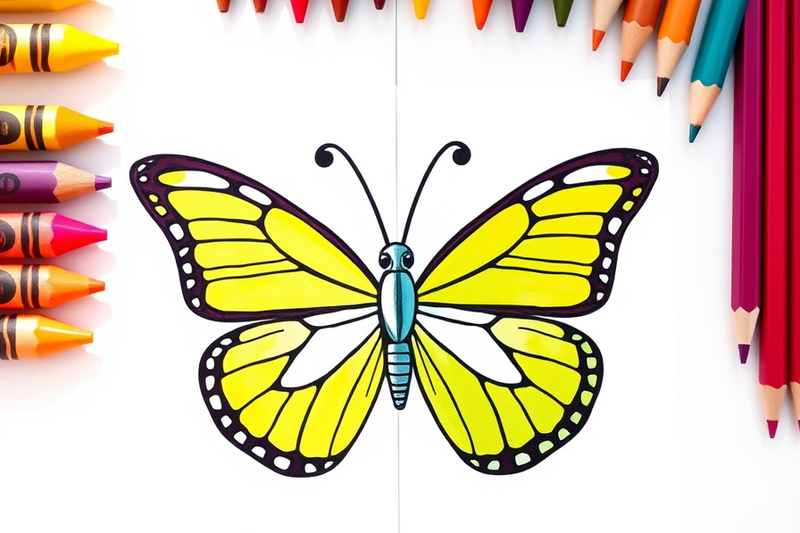
Key Takeaways
- A standard Crayola crayon measures 5/16 inch across, about 8 mm, so the thinnest line it can draw is roughly eight times wider than the line from a sharpened colored pencil.
- Colored pencils build color in three to five light layers, while a crayon fills the paper's tooth in one or two passes and then resists any further color.
- Artists' colored pencils carry a lightfastness rating from I to V under ASTM D6901, and only pencils rated I or II may be labeled as meeting that standard, while crayons carry no lightfastness rating at all.
- Crayons suit shapes larger than a quarter and colorists under six, colored pencils suit shapes smaller than a dime and any page that needs shading.
Who this is for: Parents, teachers, and colorists choosing between a crayon box and a pencil set for printable coloring pages.
You have a page printed and two boxes on the table: 24 crayons that cost less than a sandwich, and a set of colored pencils that needs sharpening. Which one finishes this page better? The honest answer depends on the size of the shapes in front of you, not on which supply is more grown up. This guide explains what each tool is made of, what that composition lets it do, where markers fit as a third option, and how to pick in about five seconds by looking at the page.
What Crayons and Colored Pencils Are Actually Made Of
A crayon is pigment suspended in paraffin wax, molded into a solid stick and wrapped in paper. There is no wood and no separate core. The entire crayon is the drawing material, which is why you can peel the wrapper off and color with the long side.
A colored pencil works differently. Manufacturers mill pigment into a binder, extrude that mixture into a thin core, and glue the core inside a wooden barrel. The binder decides how the pencil behaves. Prismacolor Premier uses a wax binder, which feels soft and burnishes easily. Faber-Castell Polychromos uses an oil binder, which holds a sharper point and resists the hazy white bloom that wax pencils sometimes develop on finished work.
That structural difference, a thick wax stick versus a thin bound core protected by wood, drives everything below.
Crayons Win on Speed, Coverage, and Young Hands
A standard Crayola crayon measures 5/16 inch in diameter, roughly 8 mm. While the crayon is new, that tip width is the narrowest mark it can make. Turn it on its side and you can flood an entire sky or a tractor body in seconds. No pencil set matches that speed.
Crayons also forgive pressure. A toddler who grips hard and scrubs will snap a pencil core and tear the paper. A crayon just deposits more wax and keeps going. Crayola crayons are certified AP nontoxic and conform to ASTM D-4236, the safety standard for labeling art materials, which matters when the colorist is three and still puts things in their mouth.
A 24 count crayon box also costs a couple of dollars, survives being dropped and forgotten in a bag, and needs no sharpener.
Crayons fail on one thing: anything small. Thin petals, fish scales, lettering, and the inner rings of a mandala all defeat an 8 mm tip. Children usually solve this by coloring straight over the lines, which is perfectly fine for fun and genuinely frustrating for a child who wanted the page to look neat.
Pick big, bold line work for crayons. Our farm animals pages and alphabet pages use thick outlines and large open shapes that a crayon fills quickly and cleanly.
Colored Pencils Win on Detail, Layering, and Control
Sharpen a colored pencil and the point drops under 1 mm. That is roughly eight times finer than a crayon tip, and it is the whole reason detailed pages belong to pencils.
Layering is the second reason. A colored pencil deposits a thin film of pigment on each pass, so three to five light layers build depth, shift hue, and create believable shadow. Press once at full force instead and you burnish the paper's tooth flat, after which almost no further color sticks. A crayon reaches that burnished point almost immediately, because every pass lays down far more wax.
Permanence is the third reason. ASTM D6901, the standard specification for artists' colored pencils, rates lightfastness from I, meaning very lightfast, down to V, meaning fugitive. Only pencils rated I or II may be labeled as complying with the standard. Crayons carry no lightfastness rating of any kind. If a finished page goes on the fridge for two weeks, this does not matter. If it goes in a frame on a sunny wall, it does.
The tradeoff is time. A detailed mandala in colored pencil is a 45 minute to two hour project, not a five minute one. Treat that as the point rather than the cost. Our lotus mandalas and art nouveau pages are drawn for exactly that kind of slow, layered work, and how to blend colored pencils covers the technique in detail.
Where Markers Fit as a Third Option
Plenty of people weighing crayons against colored pencils are really choosing among three supplies, because markers sit between them. A fine marker tip runs about 1 mm, so markers color far more precisely than crayons and lay down flat, saturated color much faster than pencils.
Markers carry two real costs. First, bleed-through: alcohol markers soak straight through standard 20 lb printer paper, so you need a scrap sheet underneath or heavier stock. Second, markers do not layer lightly. What you put down is what you get, and a second pass over a dried area usually darkens it unevenly instead of blending. Our guide on how to color with markers covers the stroke order that avoids streaking.
How to Choose Based on the Page in Front of You
Look at the smallest enclosed shape on the page and decide from that:
- Shapes larger than a quarter, colorist under six: crayons.
- Shapes smaller than a dime, or any page that needs shading: colored pencils.
- A page with both: color the detailed areas in pencil first, then fill the big background shapes with crayon around them. Doing it in the other order does not work, for the reason in the FAQ below.
- Paper matters too. Standard printer paper is 20 lb, while cardstock runs 65 lb to 110 lb. Crayons work fine on 20 lb. Heavy pencil layering and markers both behave better on the heavier sheet. Our guide to the best printer paper for coloring pages covers the specifics.
Every coloring page on ColoringDen is free, prints at full size, downloads instantly as a PDF, and requires no sign-up and no account. That means you can print the same page twice at no cost and run the experiment yourself, once in crayon and once in colored pencil, which teaches the difference faster than any article can. The puppies pages are a good test case, since they mix large body shapes with fine fur detail on a single sheet.
Frequently Asked Questions
Do professional artists use crayons?
Yes, but rarely the paraffin wax crayons from a school box. Professional work described as crayon usually means oil pastels, water-soluble wax pastels such as Caran d'Ache Neocolor II, or conte crayons. Those products carry artist grade pigment concentrations and published lightfastness information. Standard school crayons stay in classrooms because their pigment load is low and they carry no lightfastness rating.
At what age should kids switch from crayons to colored pencils?
Most children handle colored pencils comfortably once they can hold a standard pencil for writing, which typically develops between ages five and six. There is no hard cutoff in either direction. Hand a four year old pencils if they ask for them, and keep crayons on the table at age eight, because the right choice depends far more on the detail level of the page than on the child's birthday.
Can you color with colored pencils on top of crayon?
No, not reliably. Crayon wax fills and seals the paper's tooth, and a colored pencil needs that tooth to grab pigment, so the pencil skates across the waxy area and leaves a patchy, streaky mark. Work in the opposite order instead. Finish every colored pencil detail first, then fill the large background areas with crayon up to the edges of the pencil work.
Do crayons expire or go bad?
No, crayons do not expire. Paraffin wax is chemically stable, and a crayon stored at room temperature stays usable for decades. The real failure modes are physical rather than chemical. Crayons soften and fuse into a single lump in summer heat, which is what happens to a box left in a closed car, and the paper wrappers absorb odors from whatever they sit beside in storage.
Start With the Page, Not the Supply
Crayons and colored pencils are not competing for the same job. Crayons cover large shapes fast, survive rough handling, and cost almost nothing. Colored pencils reach small detail, layer into real shading, and hold their color for years. The page in front of you decides which one is correct today, and most households are better off owning both than picking a winner.
Browse coloringden.com and print something to test this on. Every page is free, downloads instantly as a printable PDF, and needs no sign-up and no account. Start with the butterflies pages, which reward both tools on a single sheet.