What Colors Make Teal? How to Mix Teal for Coloring Pages
October 1, 2026
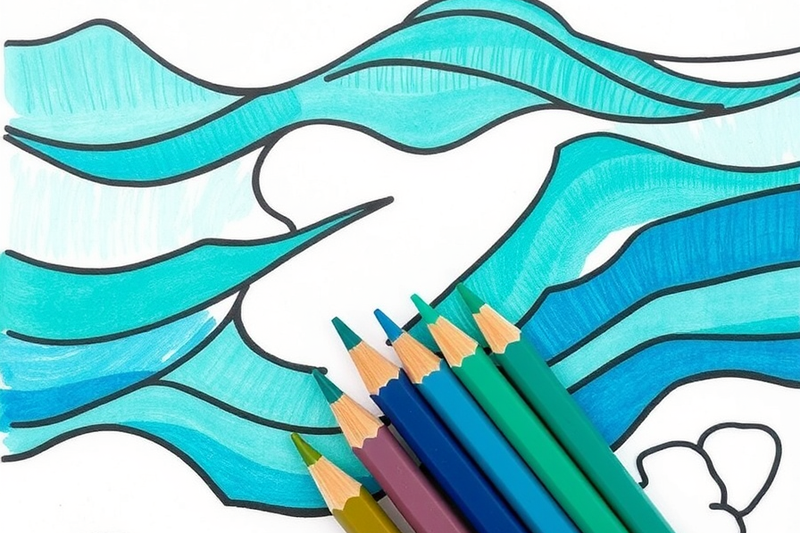
Key Takeaways
- Teal is blue mixed with green at roughly two parts blue to one part green. Push the green up and you get turquoise, push the blue up and you slide toward navy.
- In hex code teal is #008080, which is exactly equal green and blue at half intensity, and it is one of the 16 original named colors in the HTML specification.
- Colored pencils cannot be premixed, so you layer instead: green goes down first, blue goes over it, and three to five light passes hold more pigment than one heavy press.
- Teal and turquoise are not the same color. Turquoise is #40E0D0, which is lighter and greener, while teal at #008080 is darker and sits closer to blue.
Who this is for: Kids, parents, and adult colorists working with pencils, markers, or crayons who want a teal that looks deep instead of muddy.
Teal is one of the hardest colors to get right on a coloring page. Most pencil and marker sets ship without a true teal, so you have to build it yourself, and the first attempt usually lands either as a flat navy or a washed out mint. The fix is knowing the ratio and knowing what order to put the colors down in, because those two things matter more than how expensive your set is. This guide covers the exact mix, how it changes between pencils, markers, and crayons, and how to push teal lighter, darker, or greener once you have a base down.
What Two Colors Make Teal
Teal is blue plus green. Start at two parts blue to one part green and adjust from there.
The color sits between blue and green on the color wheel, which is why neither one alone ever looks right. In digital terms teal is #008080, or RGB 0, 128, 128. That is equal green and equal blue, both at half intensity. Pure cyan is RGB 0, 255, 255, so teal is effectively cyan turned down to half brightness. That explains the character of the color: cyan reads as electric, and teal reads as deep.
The blue you choose matters more than the green. A cool blue such as phthalo blue or cerulean gives a clean teal. Ultramarine leans toward violet, and that violet bias fights the green and drags the mix toward a dull slate. If your set only labels colors by number, hold the blues next to each other and pick the one that looks coldest.
The color takes its name from the common teal, a small duck with a band of iridescent blue green across its head. That band is a useful reference for what you are aiming at: saturated, slightly closer to blue than green, and darker than it first appears.
If your set has no green at all, you can still get there. Mix blue and yellow to build a green first, then layer blue back over that green at about a two to one ratio. It works, though it costs you an extra layer.
How to Mix Teal With Pencils, Markers, and Crayons
Each medium wants a different order, and getting the order backwards is the usual reason a teal turns muddy.
Colored pencils: green first, blue second. Pencil pigment sits in a binder that fills the tooth of the paper, and once that tooth is full, nothing else grips. So the color you want dominant goes on last. Lay three to five light passes of green, then build blue on top until the balance looks right. Binder type changes your pass count: Prismacolor Premier pencils use a wax binder, which is soft and fills the tooth in fewer layers, while Faber-Castell Polychromos use an oil binder, which is harder and holds more layers before the surface goes slick. With wax pencils, go lighter than you think you need to.
Markers: blue first, green second, and work fast. Marker ink is transparent dye, so the two colors blend in the paper rather than stacking on it. Put the lighter blue down, then go over it with green within a few seconds while the first pass is still wet. If you wait, the edge dries and you get a visible band instead of a blend. Markers also bleed through standard 20 lb printer paper, so slide a scrap sheet underneath or print the page on 65 lb cardstock.
Crayons: press light twice, then smooth. Wax crayon is thick and resists layering, so heavy pressure on the first color locks out the second. Lay green lightly, lay blue lightly over it, then go back across the whole shape using the side of the blue tip at a shallow angle. That third pass melts the two together and takes out the streaks.
How to Shift Teal Lighter, Darker, and Greener
Once the base is down, four small moves cover nearly every teal you will need.
To go lighter, press softer and leave a little paper showing through rather than adding white on top. A white pencil fills the remaining tooth and turns the area chalky. Save white for burnishing the surface smooth at the very end.
To go darker, add a trace of deep red or burgundy rather than black. Teal's complement on the color wheel is a dark red near #800000, and a complement darkens a color while keeping it alive. Black does not darken teal so much as drain it.
To go greener, toward turquoise or a tropical shallow water look, add more green and a single light pass of yellow.
To go bluer, toward deep ocean, add more blue and a whisper of violet.
Test every one of these in the page margin before you commit it to the artwork. Two light passes in the white border tell you more than guessing does, and the margin gets trimmed or ignored anyway.
Pages Worth Practicing Teal On
Teal rewards subjects that already want a blue green: water, scales, feathers, and wings.
Start with ocean animals, where you can run teal across an entire background and see how the ratio reads at scale. Fish are the best drill for shifting teal along a gradient, since a single body can move from green near the belly to deep blue along the spine. Mermaid pages give you large tail sections that show every streak, which makes them a strict test of your layering. For smaller controlled areas, try butterflies, and for iridescence try bird pages, where peacock feathers sit almost exactly on teal. Every page linked here downloads free as a printable PDF with no sign-up and no account.
Frequently Asked Questions
Is teal blue or green?
Teal is both, and the color code settles the argument: #008080 is exactly equal green and blue, so teal sits at the true midpoint of the two and belongs to the cyan family. Most people call it blue because the colors teal usually gets compared against, turquoise and aqua, are lighter and greener. Against that company, teal looks like the blue one.
Can blue and yellow make teal?
Not by themselves. Blue and yellow make green, and green is only half of what teal needs. You have to run three steps: mix blue and yellow into a green, then layer roughly twice as much blue back over it. The result works but usually comes out duller than mixing a ready made green with blue, because every extra pigment you stack costs you some brightness.
What colors make turquoise?
Blue and green in the reverse ratio from teal, roughly two parts green to one part blue, kept light enough that the paper still shows through. The codes show the gap clearly: turquoise is #40E0D0 and teal is #008080, so turquoise is both greener and more than twice as bright. If your teal came out too pale, you likely made turquoise.
What colors go with teal?
Coral, mustard yellow, cream, and warm gray. Teal's direct complement is a deep red near #800000, which is why coral and rust hold up next to it instead of clashing. Cream and warm gray calm a page down when teal is doing the heavy work. Avoid pairing teal with navy, since the two sit close enough that the shapes stop reading apart.
Start Mixing
Teal comes down to one ratio and one rule. The ratio is two parts blue to one part green. The rule is that the dominant color goes on last with pencils and first with markers. Get those two right and the rest is adjustment, which is quick once you are testing in the margin instead of guessing.
The fastest way to learn the mix is to run it across a page large enough to show your mistakes. Browse the full library at coloringden.com and print something with a lot of water or sky in it. Every page is free, printable, and downloads instantly as a PDF with no sign-up required.