How to Color Skin With Colored Pencils: Any Skin Tone
September 14, 2026
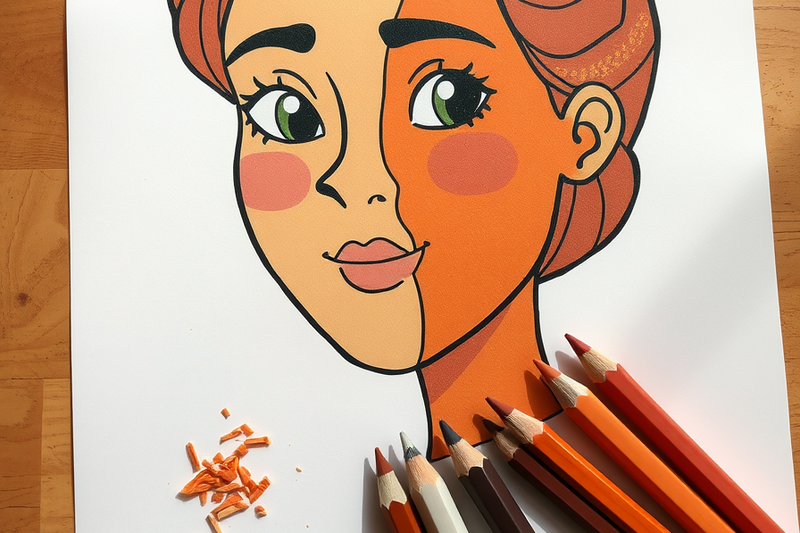
Key Takeaways
- Skin is never one pencil. Layer a pale base, a warm mid tone, and a deep shadow color in that order, and even a basic 12 pencil tin will produce believable skin.
- Prismacolor's portrait pencils cover most complexions with four sticks: PC927 Light Peach, PC939 Peach, PC943 Burnt Ochre, and PC947 Dark Umber, running from the lightest layer to the deepest shadow.
- Shade skin with violet, cool red, or blue laid over your base color instead of black or gray, because black cancels the warmth that makes skin read as living tissue.
- Leave the paper bare on the forehead, the bridge of the nose, the cheekbones, and the chin. Those four untouched highlights do more for a face than any blending trick.
Who this is for: Colorists of any level working on printable pages with people in them, including fairies, mermaids, princesses, superheroes, and anime characters.
Faces are where most colorists stall. The flowers went fine, the dragon went fine, and then a princess turns up on the page and one flat peach pencil makes her look like a sticker. Skin is hard to color because every viewer has seen it ten thousand times, so every shortcut shows.
The fix is an order of operations, not an expensive pencil set. This guide covers the three layer stack that builds any complexion, the combinations for light, medium, and deep skin, why your shadow pencil should never be black, and how to blend without flooding the printed lines.
Skin Is a Stack of Three Layers, Not a Single Pencil
Real skin is translucent. Light passes into it, bounces off blood and fat underneath, and comes back warmer than it went in. One flat pencil cannot fake that, which is why a single pass of peach looks like plastic.
Build three layers instead, working light to dark, because colored pencil is close to transparent on white paper. You can deepen a passage but almost never lift one back out.
- Base. Cover the whole skin area with your palest tone at very light pressure, skipping the four highlight spots. Use small overlapping circles, which hide the direction of your hand.
- Mid tone. Add your second color wherever the form turns away from the light: the sides of the face, under the cheekbones, along the jaw, and the sides of the neck.
- Shadow. Drop the darkest color only into the pockets light cannot reach. Under the chin, inside the ear, under the nose, and under the hairline.
Most beginners use too much of layer three and none of layer one. Ninety percent of a face should be layers one and two.
Mix Light, Medium, and Deep Skin Tones
You do not need a dedicated portrait set, just one pale warm, one mid warm, one deep brown, and something cool for the shadows.
Light skin takes cream or ivory as the base, peach as the mid tone, and a light brown or burnt ochre in the pockets. Add a whisper of pink on the cheeks, nose tip, ears, and knuckles. Those spots flush in real life because the blood runs close to the surface, and adding them is the fastest way to stop pale skin looking gray.
Medium and olive skin takes a light peach base, burnt ochre or golden tan as the mid tone, and a medium brown shadow. Olive complexions carry a green cast, so a light pass of olive or sage over the jaw and temple reads as more accurate than more brown does.
Deep skin is not flat brown, it is luminous, and reaching straight for a dark brown at heavy pressure is the usual error. Lay a warm orange or red base first, build mid tones with burnt ochre and sienna, then use dark umber for shadow. That warm underlayer glows through and keeps the skin from going muddy. Use indigo or violet over the brown for the deepest shadows.
Brands differ here. Prismacolor Premier uses a wax binder and runs to 150 colors, while Faber-Castell Polychromos uses an oil binder and runs to 120. The wax pencils blend more easily under pressure, and the oil pencils hold a point longer for lips and eyelids. Crayola's Colors of the World colored pencils offer 24 shades grouped into almond, golden, and rose families, an inexpensive starting point for kids coloring faces.
Shade Skin With Color Instead of Black
Black is the most common mistake in skin. It contains no hue, so it flattens whatever it touches and turns skin the color of ash.
Shadows on skin are cooler than the lit areas, not simply darker. Reach for violet, a cool red, a blue gray, or indigo, and lay it lightly over your existing base rather than next to it. Violet over peach gives a shadow that still looks like flesh. Black over peach gives a bruise.
This also solves the neck, usually the darkest part of a portrait and where a black pencil looks most obviously wrong. A firm layer of violet or deep red brown under the chin separates the head from the body and keeps the face warm. Our guide on how to shade with colored pencils covers light direction in more depth.
Blend and Burnish Without Flooding the Lines
Blend only after all three layers are down, because blending early just smears a thin base around. A colorless blender pencil, such as the wax based Prismacolor PC1077, fuses layers without adding pigment of its own. Work it in small circles over the boundary between your mid tone and your shadow.
Heavy pressure crushes the tooth of the paper, so burnish last. Solvent blending with rubbing alcohol will buckle standard 20 lb printer paper and can lift the printed line art, so print on cardstock if you want to blend wet. Our notes on how to blend colored pencils compare each method side by side.
Pages That Teach Skin Tones Fastest
Practice on faces that are large and simple before attempting a detailed portrait. Big, uncluttered skin areas let you see your layers working.
- Princess coloring pages give you full faces at a generous size, ideal for a first attempt at the three layer stack.
- Mermaid coloring pages pair a face with large arm and tail areas, so you repeat the same skin tone within one sheet.
- Fairy coloring pages suit smaller features and more overlap between skin and costume.
- Anime coloring pages use flatter, stylized skin, a gentler place to practice highlights.
- Superhero coloring pages put skin beside bold costume color, training your eye to keep skin from turning gray next to a saturated hue.
Every page linked above downloads free as a printable PDF with no sign-up and no account, so you can print the same face three times and try a different combination on each copy.
Frequently Asked Questions
What colors make skin color?
Skin color starts as orange, which is red plus yellow, then gets muted and adjusted. Add white or leave more paper showing for lighter complexions, add brown for deeper ones, and add a touch of blue or violet to knock back the orange so it stops looking like a traffic cone. With a basic 12 pencil tin, a light pass of orange over yellow with a red blush on the cheeks will already read as skin.
How do you color skin with Prismacolor colored pencils?
Layer four pencils in order: PC927 Light Peach as the base, PC939 Peach as the mid tone, PC943 Burnt Ochre in the turning areas, and PC947 Dark Umber only in the deepest pockets. Prismacolor sells these in a 24 pencil Portrait set. Because the binder is wax and the core is soft, use light pressure for the first passes and save heavy pressure for the final burnish.
How do you shade skin with a graphite pencil?
Use three grades and keep the paper white as your lightest value. An HB handles the broad mid tone, a 2B builds the shadow under the jaw and nose, and a 4B goes only in the darkest pockets such as the nostril and the inner ear. Blend with a paper stump rather than your finger, because skin oil from a fingertip leaves patches that will not erase.
What colors make skin color with markers?
Markers need a pale flesh or barely beige tone first, then one or two shades deeper in the same family, applied while the first layer is still damp so the edges fuse. Marker ink is far less forgiving than pencil because it cannot be lightened at all, so always test your combination on scrap paper first and always print on paper heavy enough to stop the bleed.
Are skin tone colored pencil sets worth buying?
Yes, if you color people often, mostly because they save mixing time rather than because they do anything you cannot do by hand. A 24 count skin tone set gives you matched families that already work together, which removes the guesswork of pairing a base and a shadow. If you color faces only occasionally, four well chosen pencils from a general set will get you the same result.
Print a Face and Try It Tonight
Skin stops being intimidating the moment you stop treating it as one color. Lay a pale base, add a warm mid tone, keep the shadows violet instead of black, and leave the paper bare on the forehead, nose, cheekbones, and chin.
Browse the full collection at coloringden.com and print as many practice copies as you like. Every page is free, printable, and downloads instantly as a PDF with no sign-up required.