Best Oil Pastels: What Works on a Printed Coloring Page
November 6, 2026
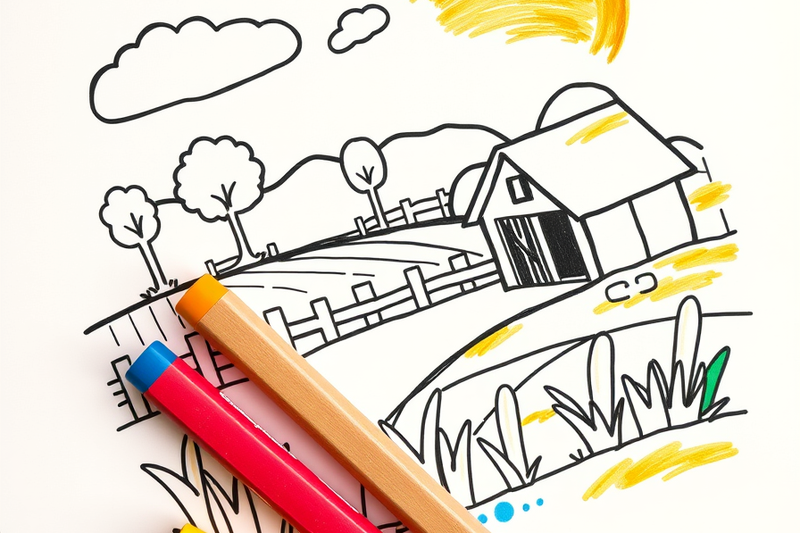
Key Takeaways
- An oil pastel stick measures about 10 mm across and cannot be sharpened to a point, so the width of the shapes on your page matters more than the price of the set.
- Sakura Cray-Pas Expressionist, Mungyo Gallery Soft, Caran d'Ache Neopastel and Sennelier cover the whole useful range, running from firm enough to hold a snapped edge to soft enough to spread like lipstick.
- The softest artist-grade sticks are the wrong first pick for a printed coloring page, because dragging a loaded stick along the printed outline lifts the ink and drags it into the color.
- A 24-color set is enough for printed pages, since oil pastels mix directly on the paper, and Sennelier's 120-color range answers a studio need rather than a coloring one.
Who this is for: Adults and older kids who want to use oil pastels on printed coloring pages, and anyone buying a first set.
Every oil pastel roundup ranks sticks the same way: pigment load, creamy feel, lightfastness on a 140 lb pastel pad. None of that describes what happens when you open a set over a coloring page you printed two minutes ago on 20 lb copy paper. The stick is wider than half the shapes, and the printed outlines move. This guide ranks the four brands worth knowing by how they behave on a printed page, explains why softer is not automatically better, and tells you which pages to print first.
Softness Is the One Spec That Changes How a Stick Behaves
An oil pastel is pigment held in wax plus a non-drying mineral oil. That second ingredient is the whole category: it never cures, so the mark stays movable forever. The wax-to-oil ratio is the only specification that changes how a stick feels, and no manufacturer prints it on the box. You learn it by brand.
At the firm end sit Pentel, Crayola and Cray-Pas Junior Artist, which carry more hard wax and leave a thin mark. In the middle sit Cray-Pas Expressionist and the standard Mungyo line, then Mungyo Gallery Soft and Caran d'Ache Neopastel. At the far end sit Sennelier and Holbein, soft enough to deform under thumb pressure.
The two ends have different origins. Sakura shipped the first oil pastel in Osaka in 1925 and called it Cray-Pas, taking "cray" from crayon and "pas" from pastel. It was built for Japanese classrooms, so the brief was a stick that survived a child's hand. Sennelier arrived in 1949 from the opposite direction: the painter Henri Goetz asked Henri Sennelier for a color stick his friend Pablo Picasso could use on any surface without cracking, and Picasso chose the greys in that first range himself. The shelf still runs between a schoolroom tool and a painter's commission.
Why the Softest Stick Is the Wrong First Pick for a Printed Page
Soft wins on open paper, where your hand is the only thing deciding where the color stops. A printed coloring page takes that decision away, and three things change with it.
The first is geometry. A stick is roughly 10 mm across and blunt, and you cannot sharpen it, because a sharpener turns a soft oil pastel into a ribbon of paste. The only edge you get is the fresh corner left by snapping the stick in half. A firm stick keeps that corner for minutes. A Sennelier loses it in one stroke.
The second is the outline. On a printable, the black line is ink lying on the surface, not a groove in it. Inkjet dye lifts under almost nothing and laser toner drags under a loaded stick, so the softer the pastel, the more line you take with you. Work inward from each line rather than along it, which is the rule that governs blending oil pastels in general.
The third is film thickness. Printer paper is 20 lb, cardstock runs 65 lb to 110 lb, and pastel and watercolor papers start around 140 lb. Only the heavy stocks have enough tooth to shear a soft stick into the surface. On 20 lb paper the color piles up instead, and since oil pastels never dry, that film offsets onto the next sheet in a stack. Our guide to whether oil pastels dry covers fixative and storage.
The Four Sets Worth Buying, and Who Each One Is For
Sakura Cray-Pas Expressionist is the best starting set for printed pages. It snaps into a reusable edge, lays down a thin film that does not flood a small shape, and descends directly from the 1925 original. It will not blend as far as an artist-grade stick, which on a coloring page is mostly a feature.
Mungyo Gallery Soft is the value pick, and a genuinely different product from the cheap standard Mungyo sets that share the brand name. Pigment strength is close to artist grade at a fraction of the Sennelier price. Buy it when a 24-set stops being enough.
Caran d'Ache Neopastel is the artist-grade stick that still behaves on thin paper. It is noticeably firmer than Sennelier, so it holds a worked corner and resists dragging the outline while blending nearly as smoothly. If you buy one professional set and you mostly color printed pages, buy this one.
Sennelier is the finest oil pastel made and the one to buy last. The sticks are extraordinarily soft and the range runs to 120 colors, which is a studio asset and a liability on copy paper. Buy it once you have moved onto cardstock or a pastel pad.
How to Set Up a Printed Page for Oil Pastels
Choose the page for the stick. A 10 mm blunt tip needs enclosed shapes it can actually fill, which means animals, planets and simple landscapes rather than lace and filigree. Start with farm animal pages, mushrooms and space pages, where the shapes are broad and the lines are far apart. Every page on ColoringDen is free, printable, needs no sign-up, and downloads as an instant PDF, so a sheet you ruin while learning costs you one reprint.
Print on the heaviest stock your printer takes. Plain 20 lb paper works and cardstock works better. Snap a fresh stick in half before you start, work light colors first because a dark layer will not accept a light one on top, and give the darkest color the smallest area so you are not forcing a heavy film across a whole shape. Save intricate designs like lotus mandalas and art nouveau pages for colored pencils, and print a rainbow page when you want wide bands to practice blending on.
Frequently Asked Questions
What oil pastels did Picasso use?
Sennelier, which were made for him. In 1949 the painter Henri Goetz asked Henri Sennelier in Paris for a stick his friend Picasso could use on any surface without cracking or fading, and Sennelier developed the first professional oil pastel in response. Picasso selected the greys in that original range, which is why the line still carries an unusually wide spread of them.
Are Mungyo oil pastels artist grade?
The Gallery Soft line is, and the standard Mungyo line is not. Mungyo sells both under one brand, and the difference is large: Gallery Soft carries strong pigment in a soft oil-rich binder, while the basic student sets are hard, chalky and weak. Check for "Gallery" and "Soft" on the box, because the two products look almost identical on a shelf.
What paper is best for oil pastels?
Anything with tooth, which means 140 lb watercolor or pastel paper for serious work. On a printed coloring page you do not get that choice, so the realistic answer is to print on the heaviest stock your printer accepts: 65 lb to 110 lb cardstock holds a soft stick far better than 20 lb copy paper. Sanded pastel paper is the best surface of all and no home printer will feed it.
What is the difference between oil sticks and oil pastels?
Oil sticks dry and oil pastels do not. An oil stick is real oil paint stiffened with wax into a stick, so it uses a drying oil such as linseed and it skins over in a day or two, which means you can varnish it and hang it. An oil pastel uses non-drying mineral oil and stays soft permanently. They are not interchangeable, and oil sticks cost several times more.
Start With a Page That Fits the Stick
Buy on hardness rather than prestige. For printed coloring pages a firm Cray-Pas Expressionist set beats a Sennelier set costing several times more, because the problem on 20 lb paper is control rather than pigment. Move up to Neopastel or Mungyo Gallery Soft when you want deeper blends, and keep Sennelier for the day you switch to a pastel pad.
Then print something broad and forgiving and try it. Browse coloringden.com and download any page as a free printable PDF, with no account and no sign-up, so the only thing you spend on the first attempt is a sheet of paper.