What Colors Make Brown? How to Mix Brown for Coloring Pages
September 15, 2026
Key Takeaways
- Red, yellow, and blue mixed together make brown, and the shortcut version is to mix any two complements: blue with orange, red with green, or yellow with purple.
- Brown is not its own pigment family. It is orange at low brightness, which is why no band of brown appears in a rainbow.
- With colored pencils you build brown in three to five light layers rather than one heavy pass, because the wax sits on the raised tooth of the paper and a flattened surface stops accepting new color.
- Add red or yellow to warm a brown toward chestnut, add blue to cool it toward taupe, and use lighter pressure on the same recipe to get tan.
Who this is for: Colorists, parents, and teachers who need believable browns for fur, bark, soil, and hair from an ordinary pencil or marker set.
Brown does more work than any other color on a coloring page. It carries tree trunks, dog fur, horses, gingerbread, soil, and hair. Most pencil sets ship with exactly one brown, and that single brown looks flat the moment you put it next to anything else. Brown is also the easiest color to mix, because almost any muddy combination lands somewhere in the brown family. This guide covers the two reliable recipes, how to build them in colored pencil, and how to steer a brown warm, cool, dark, or pale.
The Short Answer: Mix All Three Primaries
Red, yellow, and blue together make brown. Start with more red and yellow than blue, because those two make orange and orange is the backbone of every brown. Blue is the ingredient that knocks the brightness down. A small amount turns orange into a warm chestnut. More blue pushes it toward coffee, then toward near black.
Blue is powerful, so add it last and add it slowly. The most common mistake is dumping in blue first and ending up with a gray sludge that no amount of red can rescue. Build the orange, then darken it.
This recipe works because pigment is subtractive. Every color you add absorbs more of the light hitting the page, so the mixture gets darker and duller with each ingredient.
The Shortcut: One Color Plus Its Opposite
You do not need all three primaries. Any color mixed with its opposite on the color wheel makes brown, and there are three pairs to choose from:
- Blue and orange
- Red and green
- Yellow and purple
Each pair contains all three primaries already, just pre-combined. Green is yellow plus blue, so red and green is the three-primary recipe wearing a disguise.
Pick the pair based on the brown you want. Blue and orange gives the most neutral, natural brown and is the one to reach for on bark and fur. Red and green leans warm and slightly dusty, which suits brick, terracotta, and autumn leaves. Yellow and purple gives the most unusual brown of the three, a soft olive brown that reads well on stone and dried grass.
How to Build Brown With Colored Pencils
Colored pencils do not mix the way paint does. Paint blends into one new substance in the well, while pencil pigment lands as separate flecks of wax or oil on the raised tooth of the paper and your eye combines them from a normal viewing distance.
Work in layers, lightest first. Lay down the orange or yellow base with light pressure, then pass the red over it, then touch in the blue. Three to five light layers hold far more pigment than one heavy layer, and they stay adjustable. A heavy first layer fills the tooth immediately and later colors slide off a surface that has nothing left to grip.
Pressure is your value control, not a second pencil. The same three pencils give a pale sandy brown or a dark walnut depending on how hard you press.
Paper matters more here than in any other technique. Standard printer paper is 20 lb and its tooth flattens after two or three layers. Cardstock runs 65 lb to 110 lb and takes five or six. If your browns keep turning out thin and streaky, print on the heavier stock before you blame the pencils.
Binder type changes how the layers sit, too. Prismacolor Premier pencils use a soft wax binder that lays down thick and burnishes easily, so browns come out creamy but fill the tooth fast. Faber-Castell Polychromos use an oil binder, which goes on thinner and lets you stack more layers before the surface closes up.
Warm Brown, Cool Brown, and Tan
Once you can make a basic brown, every other brown is an adjustment to the same mix:
- Chestnut or auburn: add more red. Good for red dogs, horses, and hair.
- Golden or tawny: add more yellow, or keep the blue to a whisper. Good for lions, wheat, and toast.
- Taupe or gray brown: add more blue. Good for stone, weathered wood, and shadows on white fur.
- Tan: use the exact same recipe with light pressure and leave more white paper showing through. Tan is pale brown, so you make it by removing pigment rather than by adding white.
Ready made browns follow the same logic. Burnt umber, raw umber, and burnt sienna are iron oxide earth pigments, and the ones labeled burnt were roasted, which shifts them redder.
Pages to Practice Brown On
Mixing looks abstract on a swatch chart and obvious on a real subject. These give you a large brown area with room to vary the temperature across it:
- Farm animal coloring pages for cow hide, horse coats, and barn wood, all in one scene.
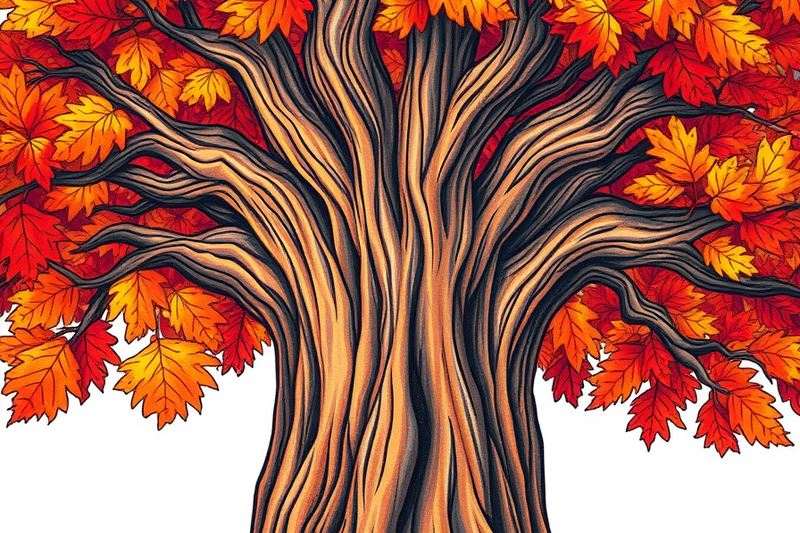
- Forest coloring pages for bark, which wants a cool blue brown in the shadows and a warm orange brown on the lit side of the same trunk.
- Dog coloring pages for fur, where layering direction matters as much as color.
- Teddy bear coloring pages for a simple shape to test three brown recipes on.
- Fall coloring pages for leaves that sit halfway between orange and brown.
Every page linked above downloads free as a printable PDF with no sign-up and no account, so you can print the same design three times and try a different brown recipe on each copy.
Frequently Asked Questions
What two colors make brown?
Blue and orange make brown, and they are the cleanest two-color route. Red and green also make brown, as does yellow and purple. All three pairs work for the same reason: each pair contains red, yellow, and blue between them. Start with about three parts of the warm color to one part of the cool one, then adjust.
Do red and green make brown?
Yes, red and green make brown when you mix pigment, because green already contains yellow and blue, so the pair covers all three primaries. It produces a warm, slightly dusty brown. Red and green light behaves completely differently and makes yellow, which is why the two colors that muddy each other in a pencil set glow on a screen.
How do you make a chocolate brown color?
Mix a standard brown, then darken it with extra layers instead of extra ingredients. Lay red over yellow, add a touch of blue, then repeat the whole sequence two or three times with firmer pressure. Adding black is the tempting shortcut, and it flattens the color, because black kills the red underneath that makes chocolate look warm.
How can I get brown if my set has no brown pencil?
Use the orange in your set as the base, which almost every set includes, then layer red over it and finish with a light pass of blue or purple. A basic 12-pencil set has everything you need. Skipping straight to black plus orange gives a dull result, so reach for blue first.
Why does my brown look muddy instead of rich?
Muddy brown usually means the layers went down too heavy, too fast. Wax fills the paper tooth within two hard passes and further color cannot grip, so the mix goes gray and dead. Restart with light pressure, build five thin layers, and keep one warm color on top as the final pass to bring the glow back.
Start Mixing
The difference between a flat brown tree and a convincing one is three layers and a little blue. Pick a subject with a large brown area, print it twice, and mix a warm version and a cool version of the same recipe so you can compare them side by side.
Browse coloringden.com for thousands of free printable coloring pages. Every page downloads instantly as a PDF, with no sign-up and no account needed, so you can print as many practice copies as your pencils will survive.