How to Color a Pumpkin: Three Oranges, Ribs, and the Stem
October 5, 2026
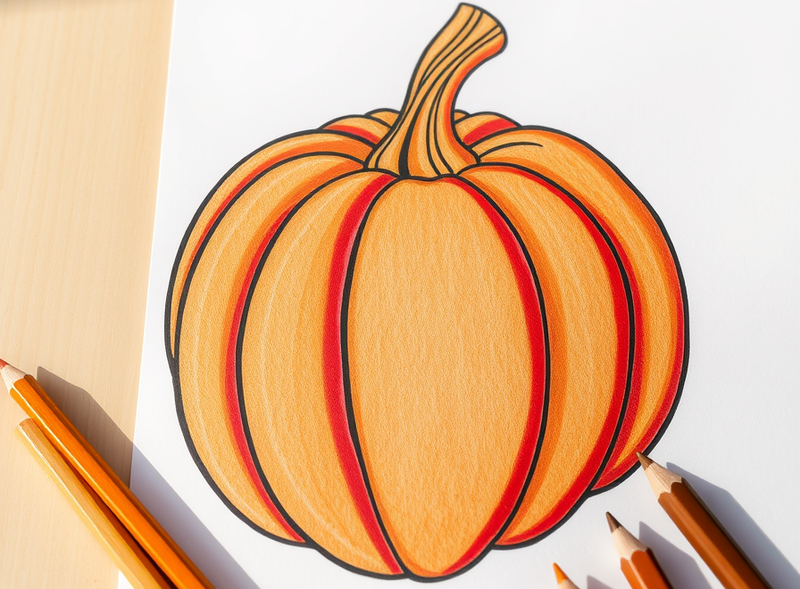
Key Takeaways
- A pumpkin needs three oranges, not one: a yellow orange for the lit part of each section, a straight orange for the body, and a red orange or burnt orange pressed into the grooves.
- The deep vertical grooves are called ribs, and they carry nearly all of a pumpkin's shadow, so shade along those lines and leave the rounded sections between them light.
- A mature pumpkin stem is tan to grey brown and woody, not green. A green stem only shows on a pumpkin cut within the last week or two.
- Not every pumpkin is orange. Lumina and Casper are white, Jarrahdale is slate blue, and Long Island Cheese is a flat buff tan, so a white or blue pumpkin page is botanically correct.
Who this is for: Kids, parents, and adult colorists working on pumpkin, Halloween, or fall coloring pages with colored pencils, markers, or crayons.
Most pumpkin coloring pages come out flat, and the reason is nearly always the same. The whole shape gets filled with one orange. A real pumpkin is not one color. It is a stack of rounded sections, each catching light along its curve and dropping into shadow at its edge, topped by a stem that is rarely the green most people reach for. This guide covers the three oranges worth owning, where the shadows actually belong, how to color a stem so it reads as wood instead of a leaf, and what to do when the pumpkin on your page is not orange at all.
Start With Three Oranges, Not One
Orange is a secondary color mixed from red and yellow, so you can push it warm toward red or bright toward yellow without ever leaving the family. That range is what makes a pumpkin look round instead of printed.
Choose three values before you put anything on the page:
- Light: a yellow orange or peach, for the part of each section that faces the light.
- Mid: a straight orange, for the main body of every section.
- Dark: a red orange, burnt orange, or brown orange, for the ribs and the underside.
A 24 count Crayola box already contains Orange, Red Orange, and Yellow Orange, so a 72 pencil set is not the entry fee here. If you own exactly one orange, you can still build all three values with pressure alone. Light pressure gives the highlight, normal pressure gives the mid tone, and three to five repeated light layers in the same spot give you the dark. Layering light passes holds more pigment and stays smoother than one heavy pass, because heavy pressure crushes the tooth of the paper flat and leaves you nothing to build on afterward.
Lay the mid orange across the whole pumpkin first and keep it light. That base coat is what the other two values sit on. Our guide to blending colored pencils covers the overlap technique that makes the three values meet without a visible seam.
Shade the Ribs, Not the Whole Pumpkin
This is the single change that separates a flat pumpkin from a round one. Beginners usually darken the outer edge of the whole pumpkin, like a halo. That is not how a pumpkin is shaped.
A pumpkin is a cluster of swollen vertical segments divided by grooves called ribs. Each segment bulges outward in the middle and tucks inward at its rib. Light hits the bulge. The rib sits in shadow. So your dark orange belongs in narrow strips running alongside every rib line, from the stem down to the base, following the curve rather than cutting straight down.
Work it this way:
- Press your dark orange into a thin band on both sides of each rib line.
- Soften that band outward into the segment with the mid orange so it fades instead of stopping.
- Leave the center of each segment as the mid tone, and lift your yellow orange over the segments nearest the light source.
- Darken the whole bottom third slightly, because the ground reflects less light up than the sky sends down.
If you want the shadow deeper without the color turning muddy, layer a light pass of blue or blue violet into the darkest part of the rib. Blue sits opposite orange on the color wheel, so it neutralizes and deepens rather than dirtying. This is the same logic behind mixing a believable shadow tone, which we unpack in what colors make orange.
Get the Stem Right
The stem is where most pumpkin pages fall apart, because the instinct is to color it green. On a mature, harvested pumpkin that is wrong. Pumpkin stems dry and harden as the fruit ripens, and the finished stem is woody, ridged, and somewhere between tan, grey brown, and dull khaki. Growers actually read stem color as a freshness signal: a stem still carrying real green was cut recently, and a fully dried grey brown stem has been off the vine a while.
So color the stem with brown, tan, or grey brown as the base. Then add two details that sell it:
- Pull a few vertical lines of a darker brown down the stem to suggest the ridges, because a pumpkin stem is grooved, not smooth like a tree branch.
- Leave a pale tan highlight on whichever side faces your light source.
A touch of dull green low on the stem where it meets the pumpkin is fine and often accurate. A bright grass green stem is the thing that makes a finished page look like a drawing of a pumpkin rather than a pumpkin.
Color Pumpkins That Are Not Orange
Orange is the default, not the rule. Several widely grown pumpkin varieties are genuinely other colors:
- Lumina and Casper are white, with pale green to tan stems.
- Jarrahdale is a dusty slate blue grey, deeply ribbed.
- Long Island Cheese is a flat buff tan, shaped like a wheel of cheese, which is where the name comes from.
- Many green striped and mottled varieties appear in decorative fall displays.
The technique does not change for these. You still need three values, and the shadow still lives in the ribs. For a white pumpkin, leave the paper itself as your highlight, use a warm grey for the mid tone, and a cooler grey or pale blue grey for the ribs. Never outline a white pumpkin in black. Let the grey shading define the shape instead. Mixing one white or blue pumpkin into a group of orange ones also makes the orange ones read as more orange by contrast.
Frequently Asked Questions
What color is a pumpkin stem?
A mature pumpkin stem is tan to grey brown, woody and ridged, with a dull khaki or faded green cast at the base where it joins the fruit. It is not bright green. Green only remains for roughly a week or two after cutting, which is why growers treat a green stem as a sign the pumpkin is freshly harvested. Color it with brown, tan, or warm grey.
What color are pumpkin seeds?
Pumpkin seeds are off white to pale cream, with a slightly darker tan rim around the flat edge and a faint ridge running around the outline. They are not yellow and not pure white. On a carved pumpkin or cross section coloring page, use cream or ivory for the body of the seed and a light tan for the rim, then leave a white highlight so the seeds read as wet.
Is there an official hex code for pumpkin orange?
No. There is no pumpkin color in the standard CSS or HTML named color list, so no single code is official. The value most often cited is #FF7518, which is the Crayola Pumpkin crayon. For digital coloring, treat that as a starting mid tone and build a lighter and a darker value from it rather than filling the whole shape with it.
What kind of paint sticks to a real pumpkin?
Acrylic craft paint adheres best to a real pumpkin, and it needs no primer. Wash the pumpkin in plain water, scrub off field dirt, and dry it completely first, because the natural waxy coating holds dust that makes paint lift later. Skip watercolor, which beads on the rind. Painting a real pumpkin is a different job from coloring a page, and the shading rules above still apply to both.
Start Coloring
A round pumpkin comes down to three habits: build three values instead of one, put your shadows in the ribs rather than around the outline, and color the stem brown instead of green. A basic 24 count box and patience with layering will out perform a 120 pencil set used flat.
Ready to practice? Browse our pumpkin coloring pages for classic and carved designs, our Halloween coloring pages for jack o lanterns and spooky scenes, our fall coloring pages for pumpkins in harvest and leaf settings, and our Thanksgiving coloring pages for pumpkins on the holiday table. Every page on ColoringDen is free and printable, downloads instantly as a PDF, and needs no sign up and no account.