What Colors Make Tan? How to Mix Tan for Coloring Pages
October 2, 2026
Key Takeaways
- Tan is orange plus white, not brown plus white. Start at roughly one part orange to three or four parts white, then cut the brightness with a pinpoint of blue.
- Tan's color code is #D2B48C, which converts to a hue of 34 degrees. That sits in the orange range, which is why an orange base mixes a cleaner tan than a brown base does.
- Tan and beige are different colors. Tan is #D2B48C, a light muted orange, while beige is #F5F5DC, a pale yellow that is far lighter.
- Colored pencils cannot be premixed, so build tan in layers: two or three light passes of a cream or sand pencil, then a light brown glazed on top. Pressing hard on that first layer fills the paper tooth and locks the second color out.
Who this is for: Kids, parents, and adult colorists who need tan for fur, sand, wood, and skin tones with pencils, markers, or crayons.
Tan looks like it should be easy. It shows up in half the animals you will ever color, and almost nobody mixes it correctly on the first try. The usual result is a chalky gray or a muddy mustard, and the reason is that most people reach for brown. Tan is not a pale brown. It is a lightened, muted orange, and mixed from that direction it comes out clean every time. This guide covers the starting ratio, how the mix changes between pencils, markers, and crayons, and how to push tan warmer, cooler, or darker.
What Two Colors Make Tan
Tan is orange and white. Begin at about one part orange to three or four parts white, and add the orange gradually, because white is the stronger of the two and a heavy hand on the orange turns the mix into apricot.
The color code proves the point. Tan is #D2B48C, which is RGB 210, 180, 140, or HSL 34, 44 percent, 69 percent. That first number is the hue, and 34 degrees lands in the orange band of the wheel. The 44 percent is saturation, so tan is only about half as intense as a pure color, and the 69 percent lightness sits well above the 50 percent midpoint. Those numbers describe orange that has been lightened and muted, which gives you the three moves: pick orange, add white, then take out some of the intensity.
That last move matters most. Orange and white alone give you a peachy, slightly artificial tan. To mute it, add the smallest trace of blue. Blue sits opposite orange on the wheel, and a complement pulls intensity out of a color while leaving it warm. Black does the opposite and drags tan toward a dead gray.
If your set has no orange, mix red and yellow into an orange first, then lighten it. Lean heavier on the yellow, since a red heavy orange carries toward terracotta.
Painters usually skip the mixing and reach for yellow ochre, a natural iron oxide pigment listed as PY43 in the Colour Index. Ochre is already a muted, earthy orange yellow, so ochre plus white lands on tan in one step with no blue needed. The name points at the target too: tan comes from tannum, the medieval Latin word for the oak bark used to tan leather.
How to Mix Tan With Pencils, Markers, and Crayons
The order of operations changes with every medium, and getting it backwards is the most common reason a tan goes muddy.
Colored pencils: light color first, dark glaze second. Pencil pigment sits in a binder that fills the tooth of the paper, and once the tooth is full the surface goes slick and refuses anything else. Lay two or three light passes of a cream, sand, or beige pencil, then glaze a light brown over the top until the value looks right. Binder type sets your layer budget: Prismacolor Premier pencils use a wax binder, which fills the tooth in fewer passes, while Faber-Castell Polychromos use an oil binder, which accepts more layers before slicking over. Never start with the white pencil, because white fills the tooth first and everything after it goes chalky.
Markers: your lightest marker is the base, and there is no white. Marker ink is transparent dye, so it cannot be lightened by anything added on top, and lightening has to come from the paper showing through. Put down your palest sand or ivory marker across the whole shape, then touch a light brown into the areas that need depth while the first pass is still wet. Markers also bleed through standard 20 lb printer paper, so slide a scrap sheet underneath or print on cardstock, which runs 65 lb to 110 lb.
Crayons: two light passes, then burnish. Large crayon boxes include a tan crayon outright, while small boxes often stop at brown and orange. If you are mixing, lay orange very lightly, go over it lightly with white, then make a third pass using the side of the tip at a shallow angle. Wax resists layering, so heavy pressure on that first pass locks the second color out. The shallow third pass melts the two together and removes the streaks.
How to Shift Tan Warmer, Cooler, and Darker
Once a base tan is down, four adjustments cover nearly every version of the color you will need.
To go warmer, toward golden fur, sand, and straw, add more orange or a pass of yellow ochre. Warm tans read as sunlit.
To go cooler, toward stone and weathered wood, add a whisper more blue or a light pass of warm gray. Cool tans read as shadowed or aged.
To go darker, toward saddle leather and tree bark, glaze burnt sienna or a light umber over the top rather than reaching for black. Both are iron oxide earth colors, so they deepen tan without changing its character.
To go lighter, press softer and let more paper show through instead of adding white on top. White pencil is for burnishing the surface smooth at the end, not for lightening a color you already laid down.
Test each of these in the white margin before you commit it to the artwork. Two light passes in the border tell you more than guessing does, and the margin gets trimmed or ignored anyway.
Pages Worth Practicing Tan On
Tan rewards subjects that are mostly one warm neutral with a few darker markings, because that is where a clean mix shows and a muddy one is obvious.
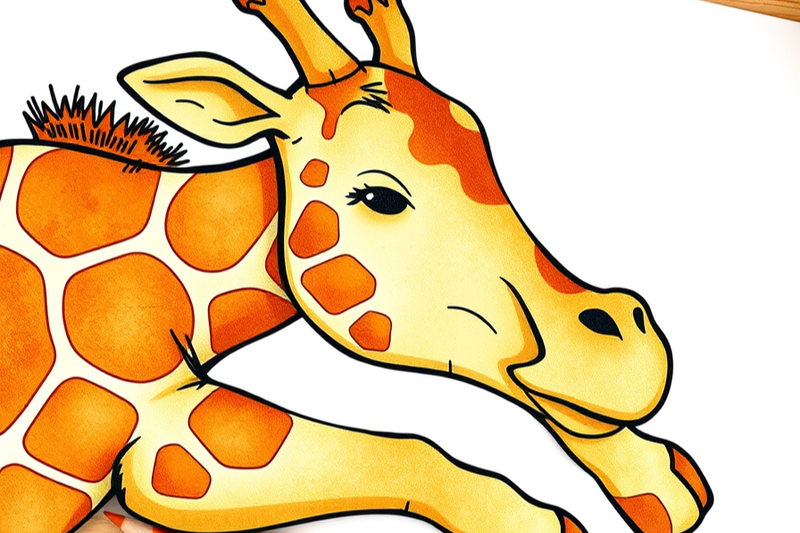
Start with giraffe pages, which are close to a perfect drill: a broad tan coat with brown patches over it, so you practice the base mix and the darker glaze in one sitting. Horse pages teach you to hold one tan across a large curved body without streaking, and a palomino coat is almost exactly #D2B48C. Puppy pages give you short fur, where tan shifts warmer in the light and cooler in the shadow across a small area. For range, work through zoo animal pages, since lions, camels, and meerkats each want a different tan, and bear pages push you to the dark end. Every page linked here downloads free as a printable PDF with no sign-up and no account.
Frequently Asked Questions
What colors make tan paint without brown?
Orange and white make tan with no brown at all, plus a trace of blue to mute it. This is actually the better mix, because brown pigments vary enormously between brands and some are closer to maroon than to orange. The CSS color named brown is #A52A2A, which is strongly red, and starting from a red leaning brown gives you a pink tan rather than a leather tan.
Is tan brown or beige?
Tan is neither, though it sits between them. Tan is #D2B48C at hue 34 and 44 percent saturation, beige is #F5F5DC at hue 60 and 91 percent lightness, and brown is darker than both. In plain terms, beige is a pale yellow that is nearly off white, tan is a clearly visible light orange, and brown is what tan becomes when you darken it.
Is tan a warm or cool color?
Tan is a warm color, and the hue number is why: at 34 degrees it sits in the orange range, and every hue from roughly red through yellow reads as warm. That said, tan is mild enough that a small amount of blue or gray will push a particular tan toward the cool side, which is how you get greige, stone, and driftwood tones without leaving the family.
What color can I substitute for tan?
Beige, sand, khaki, camel, and ecru all substitute for tan in most coloring work, and the one to reach for first is sand, since it is closest in both hue and lightness. The Prismacolor Premier line includes pencils named Sand, Beige, and Light Umber, which together cover the full tan range without any mixing at all.
Start Mixing
Tan comes down to one correction. Stop mixing it from brown and start mixing it from orange, because the color code says 34 degrees and 34 degrees is orange. Add white to lighten, a pinpoint of blue to mute, and a light umber glaze when you need depth. That sequence gives you leather, fur, sand, and bark from one starting mix.
The fastest way to lock it in is to run the mix across an animal large enough to show your mistakes. Browse the full library at coloringden.com and print something with a big tan coat on it. Every page is free, printable, and downloads instantly as a PDF with no sign-up required.